

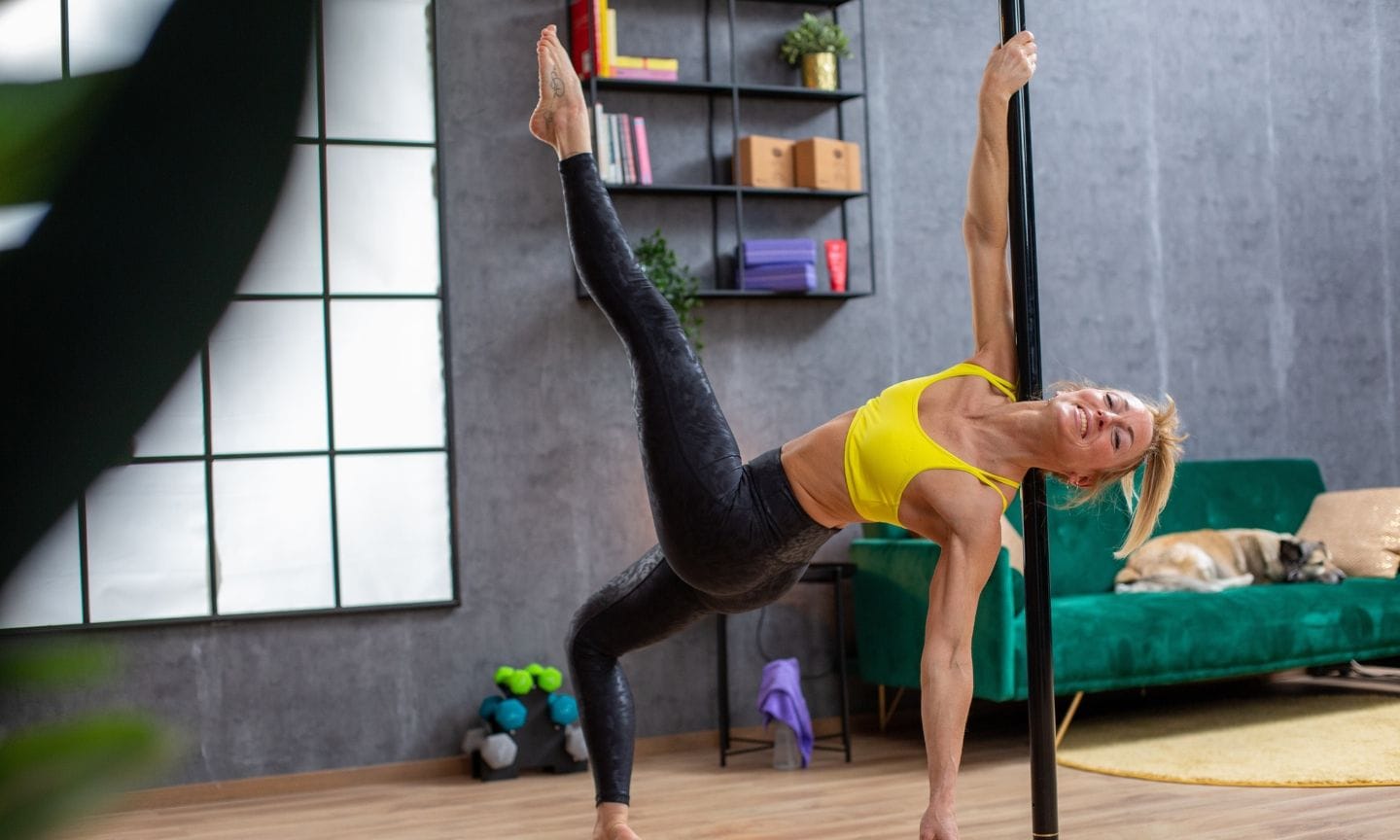
Pole sport is the competitive side of pole dancing. Athletes perform routines under set rules, and judges score them on difficulty, execution and artistry, with a code of points similar to gymnastics.
What does pole sport look like?
Think advanced tricks, big flexibility and clean lines. Pole sport athletes usually train and compete barefoot in shorts, because skin contact matters for every hold. Routines combine strength moves, spins, inverts and flexibility elements like splits, all connected into a performance.
Where does pole sport come from?
As the skill level in pole grew, so did competitions. The International Pole Sports Federation (IPSF) was founded in 2009, and in 2017 it received observer status from GAISF, the umbrella organisation of international sports federations at the time. Our article on the history of pole dancing tells the whole story, from Mallakhamb and Chinese pole to today’s studios.
Pole sport vs other styles
| Style | Focus |
|---|---|
| Pole sport | Competitive performance with set rules |
| Pole fitness | Strength, grip, control, clean tricks |
| Pole art | Storytelling, choreography, music |
| Exotic pole | Sensual expression, floorwork, heels |
Most dancers move between styles. You can borrow the discipline of pole sport without ever entering a pole competition.
Do you need pole sport to enjoy pole?
No. Pole sport asks for advanced strength and flexibility and is a goal for some dancers, but you do not need it to have fun on the pole. The base is the same for everyone: spins, climbs, holds and solid conditioning. If you want to start, the 12-Week Starter Course builds that base step by step, and pole fitness vs pole dance helps you find the style that fits you.