

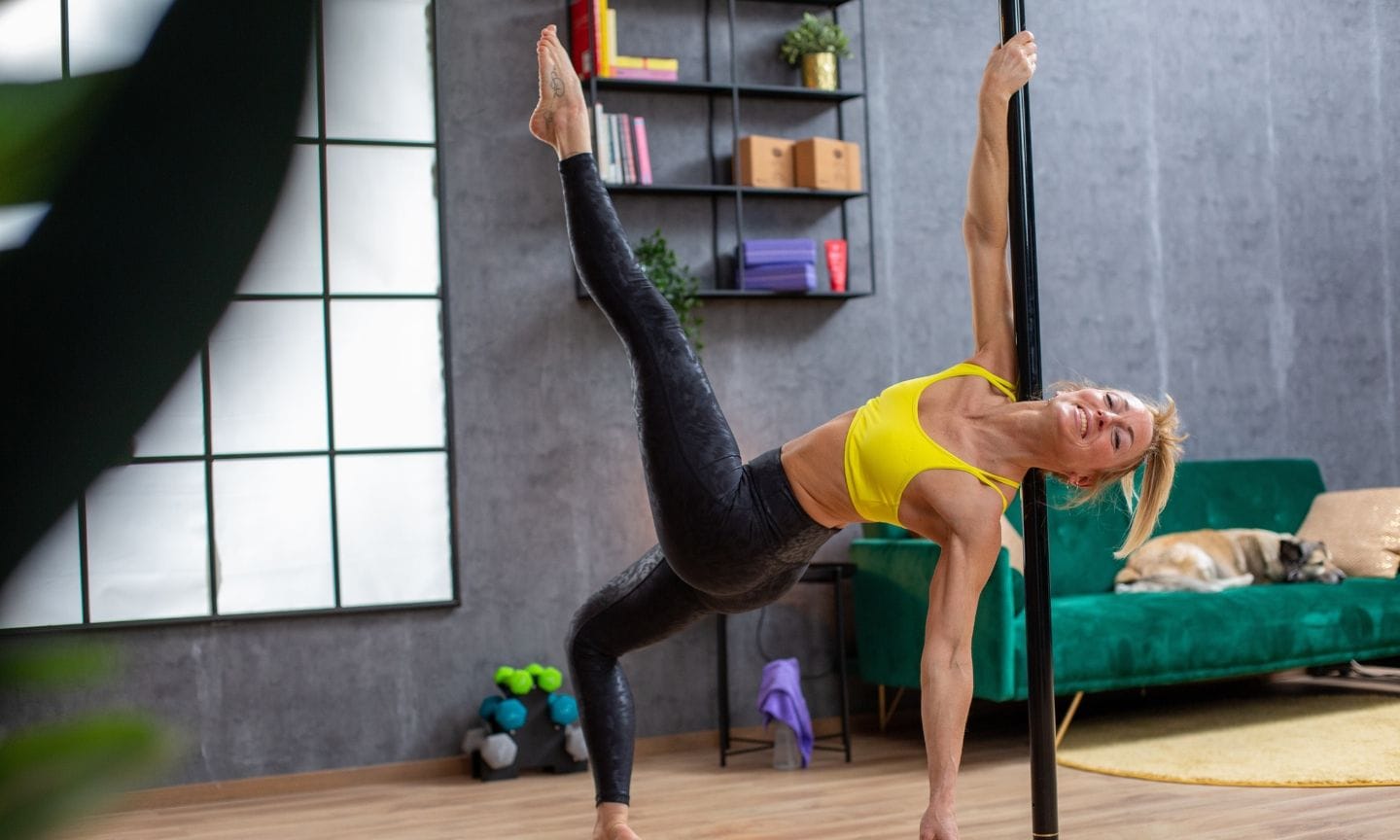
Pole fitness is a workout on a vertical pole. You hold, lift and turn your own body weight around it, so the pole works a bit like a climbing wall, a pull-up bar and a dance floor in one.
What does a pole fitness session look like?
A typical session has a warm-up, some conditioning, technique on the pole and a cool-down with stretching. The moves are the same ones you see in pole dance: spins, climbs, sits, holds and, later, inverts. The difference is the goal. In pole fitness you work on doing each move cleanly and with control. How it looks to music is a nice extra, not the main point.
What do you train?
- Strength: shoulders, back, core and arms carry your body weight.
- Grip: hands, forearms and skin learn to hold the pole. More in baseball grip and split grip.
- Flexibility and coordination: shapes get bigger and cleaner over time.
Pole fitness vs pole dance
They overlap a lot. Pole dance is the umbrella term, pole fitness puts the workout side first. Most classes include both. Pole fitness is usually trained barefoot, because your feet help you on the pole, while heels belong to more dance-focused styles like exotic pole. Competitive athletes take it further in pole sport. Our guide to pole fitness vs pole dance compares all styles in detail.
Can you do pole fitness at home?
Yes, with a safely installed pole, enough space and step-by-step classes. Strength and flexibility grow with training, so you do not need either to start. Your first moves are usually the Fireman Spin and the Basic Climb. The 12-Week Starter Course walks you through spins, seats and climbs with no experience needed, and off the pole, exercises like the hollow body hold build the core you need.