
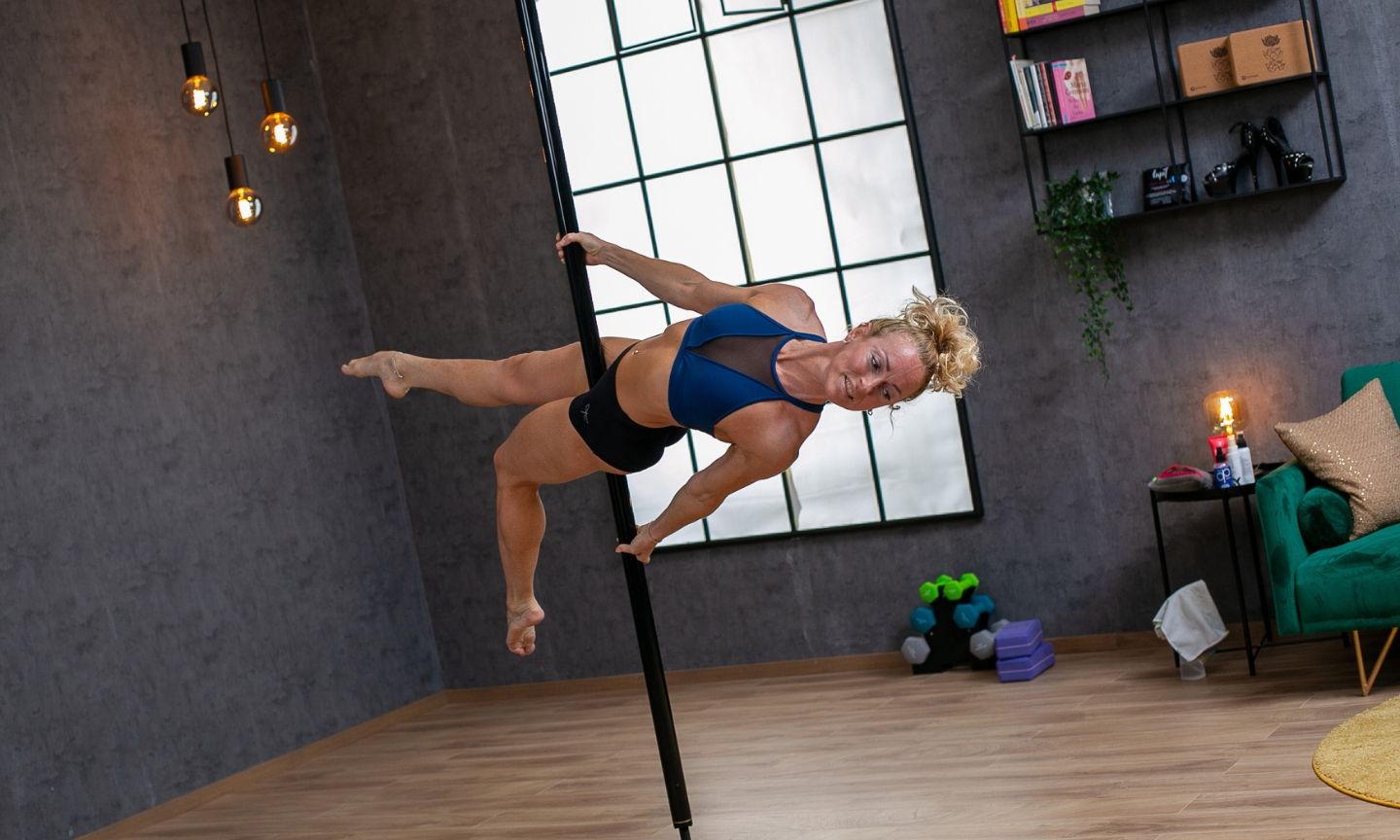
Pole fitness is pole dancing with the focus on strength, grip and body control: you learn spins, climbs and holds as a full-body workout. Pole dance is the wider term and adds music, flow and expression on top of the same moves. In practice the two overlap so much that most classes are a bit of both.
So the question is less “which one is real pole” and more “what do I want from my training”. This guide explains the styles, what each one trains and how to find the one that fits you.
What is pole fitness?
Pole fitness uses a vertical pole as training equipment. You hold, lift and turn your own body weight around it, so the pole works a bit like a climbing wall, a pull-up bar and a dance floor in one.
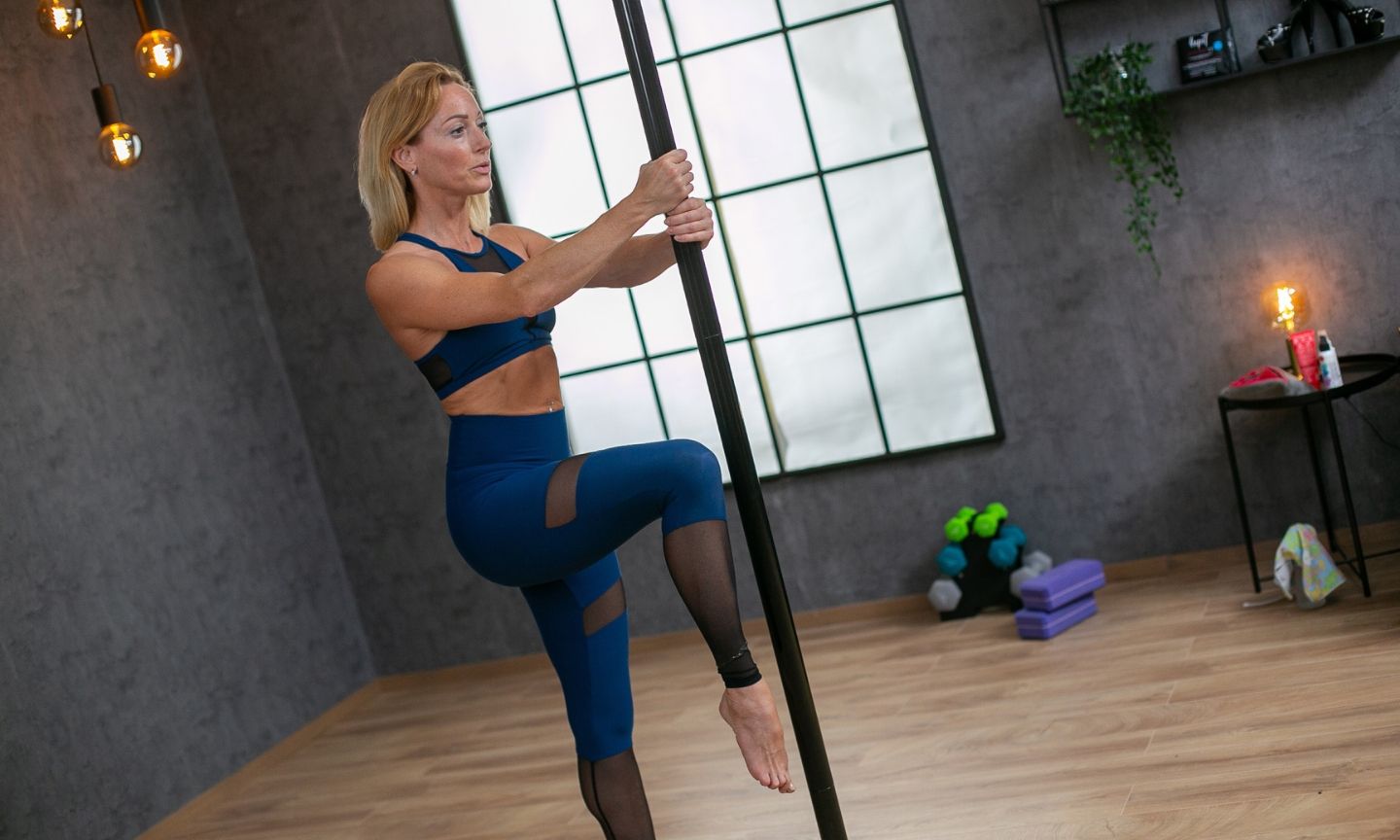
A typical pole fitness session has a warm-up, some conditioning, technique on the pole and a cool-down with stretching. The moves are the same ones you see in pole dance: spins, climbs, sits, holds and, later, inverts. The difference is the goal. In pole fitness you work on doing the move cleanly and with control. How it looks to music is a nice extra, not the main point.
The name became popular when pole moved into gyms and studios as a workout. It made it easier for many people to try pole without feeling they had to be a dancer first.
Pole fitness vs pole dance: what’s the difference?
Pole dance is the umbrella term. Everything that happens on a pole is pole dance in the broad sense. Within it, people use different names for different focuses.
| Style | Focus | Typical look | Footwear |
|---|---|---|---|
| Pole fitness | Strength, grip, control, clean tricks | Spins, climbs, holds, conditioning drills | Barefoot |
| Pole dance (general) | Moves plus flow and musicality | Spins and transitions connected to music | Barefoot or heels |
| Exotic pole | Sensual expression, floorwork, heels technique | Slow, fluid, grounded movement | Usually heels |
| Pole sport | Competitive performance with set rules | Advanced tricks, flexibility, routines | Barefoot |
Pole fitness and pole dance
The line between these two is soft. A pole fitness class will still teach you to move from one spin to the next, and a pole dance class will still make you stronger. If a studio calls its classes “pole fitness”, expect more drills and conditioning. If it calls them “pole dance”, expect more choreography.
Exotic pole
Exotic pole dancing is the most dance-focused style. It is about sensual movement, floorwork, slow transitions and usually pole heels. It trains strength too, but the way you move matters more than the trick itself.
Pole sport
Pole sport is the competitive side. Athletes perform routines that are judged on difficulty, execution and artistry. It asks for advanced strength and flexibility and is a goal for some dancers, but you do not need it to enjoy pole fitness.
What do you train with pole fitness?
Pole fitness works your whole body, often in ways you do not notice until the next day.
- Strength: Arms, shoulders, back and core do a lot of work when you lift and hold yourself. Your legs help in climbs and sits.
- Grip: Hands, forearms and the skin on your legs learn to hold the pole. Grip grows with training, so it feels hard at first and easier over time.
- Flexibility: Lines and shapes get prettier with more mobility in your shoulders, back and hips. You do not need to be flexible to start.
- Coordination and body awareness: Many moves ask your body to do different things at once, for example pulling with one hand and pushing with the other while your legs find their place.
A lot of this happens off the pole. Pole dance conditioning means strength, flexibility and mobility work that prepares your body for the moves. At POLEPLACE you will find it in the strength workouts and flexibility workouts, which you can also do on days without the pole.
If you have an injury or a health condition, talk to your doctor or physio before you start.
Which style fits you?
There is no wrong choice, and many dancers mix styles over time. These questions can help you decide where to start.
- You love the idea of getting stronger and want clear goals? Start with pole fitness. Each new spin or climb is a step you can feel.
- You want to dance and express yourself to music? Pole dance with a focus on flow, or later exotic pole, will feel right.
- You like heels, floorwork and slow, sensual movement? Exotic pole is your style. Build a base first, then add heels.
- You dream of advanced tricks and maybe a stage one day? Start with pole fitness and see where it takes you. Pole sport is something you can grow into.
- You are not sure? Start with beginner basics. They are the same for every style, and you will find out what you enjoy along the way.
Can you do pole fitness at home?
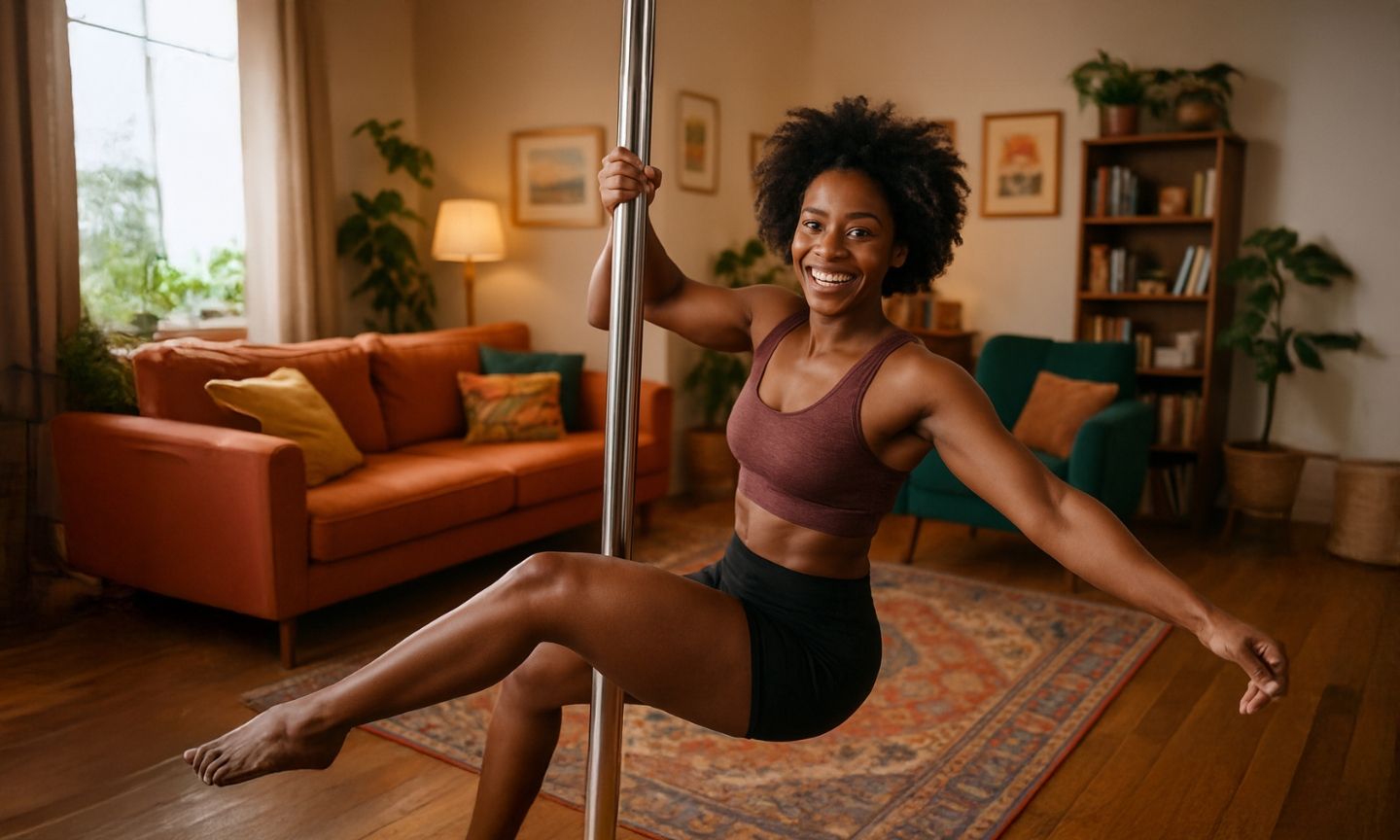
Yes. Pole fitness works well at home, as long as you have a safely installed pole and enough space around it. At home you can train when it suits you, repeat a move as often as you like and nobody watches you while you figure it out.
What you need:
- A pole: a removable pole that is installed correctly and fits your ceiling height. Our guide to choosing the best pole for beginners helps you pick one.
- Space: enough room around the pole so you can spin and kick without hitting furniture.
- Guidance: classes that break moves down step by step, so you know what to practise and in which order.
Online pole fitness classes
Online pole fitness classes give you structure without a studio. At POLEPLACE you can follow on-demand classes and programs in English and German, in the browser or the app, and join live classes with coaches. You choose the pace. Rewind, pause and repeat as often as you need.
Pole fitness for beginners: your first moves
Every style starts with the same basics. These moves are a good first step on the way.
Fireman Spin
The Fireman Spin is the spin most pole journeys start with. You hold the pole with both hands, step around it and lift off for a short, flowing spin. It teaches grip, momentum and control, which you will need in almost every spin that follows.
Basic Climb
The Basic Climb takes you off the floor and up the pole. Arms and legs take turns doing the work, so you move up in small stages. It builds grip, arm and shoulder strength and, above all, the ability to hold yourself with your legs. Wear shorts for this one, because your skin needs contact with the pole.
Then: build your base
After your first spins and a climb, the Essentials series collects the key techniques for each level in one place. It is a good way to see what comes next and to make sure your base is solid before you move on.
FAQ
What is pole fitness?
Pole fitness is a workout on a vertical pole. You learn spins, climbs and holds that build strength, grip, flexibility and coordination. It uses the same moves as pole dance, with more focus on control and technique than on choreography.
Is pole fitness the same as pole dance?
They overlap a lot. Pole dance is the umbrella term, pole fitness puts the workout side first. Most classes include both: technique and strength, plus some flow between the moves.
Do I need to be strong or flexible to start pole fitness?
No. Strength and flexibility grow with training. Beginner moves are made for people who are just starting.
Can I learn pole fitness at home?
Yes, with a safely installed pole, enough space and step-by-step classes. Online classes let you train at your own pace and repeat moves as often as you need.
Do I need heels for pole fitness?
No. Pole fitness is trained barefoot, because your feet help you on the pole. Heels belong to more dance-focused styles like exotic pole.
What next?
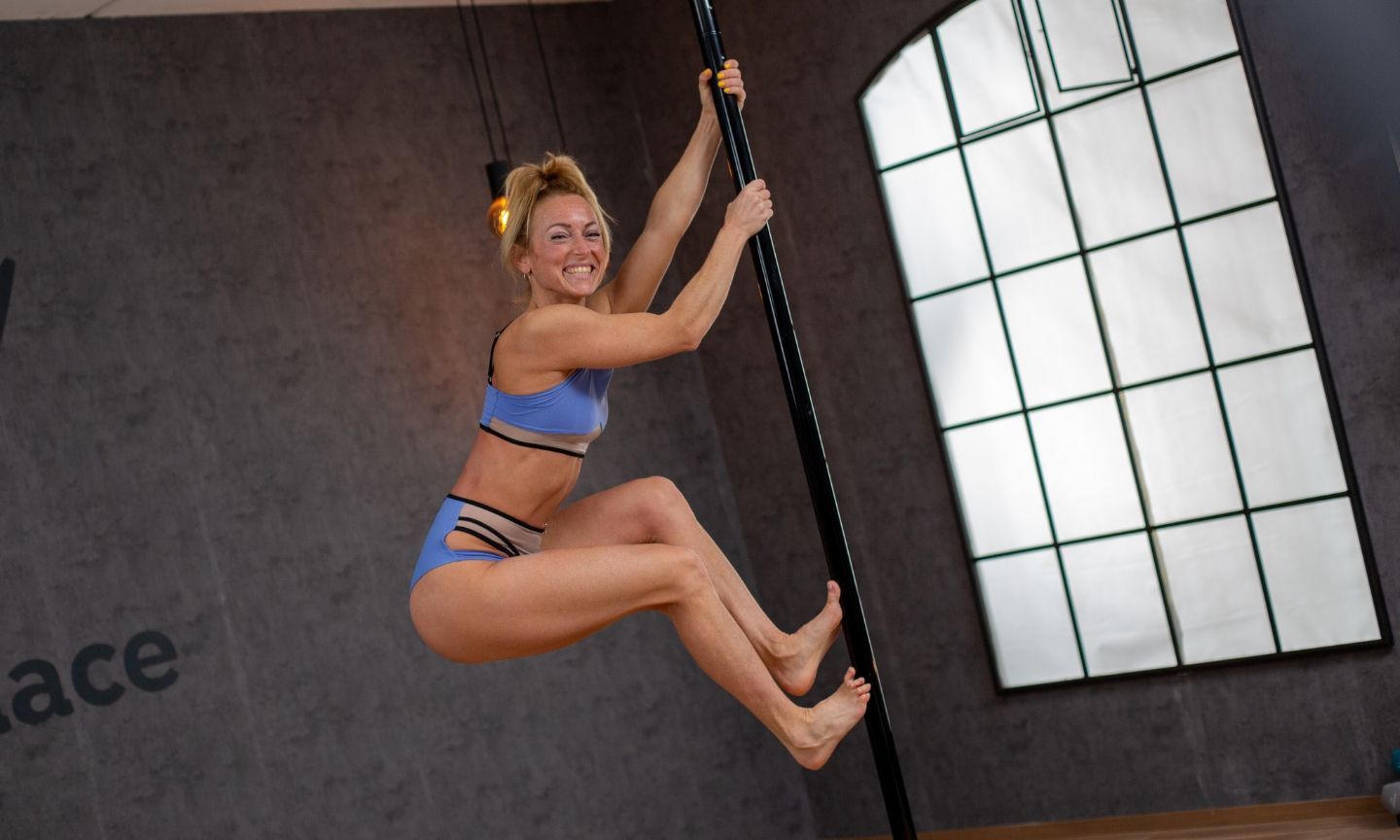
If you want to start pole fitness at home, the 12-Week Starter Course walks you through spins, seats and climbs step by step, with no strength or experience needed. You can try it 7 days for free.
What next?
Start with Class 1 of our 12-Week Starter Course. Every move is taught with our Floor-Stand-Air Method™: on the floor first, then standing, then in the air.