

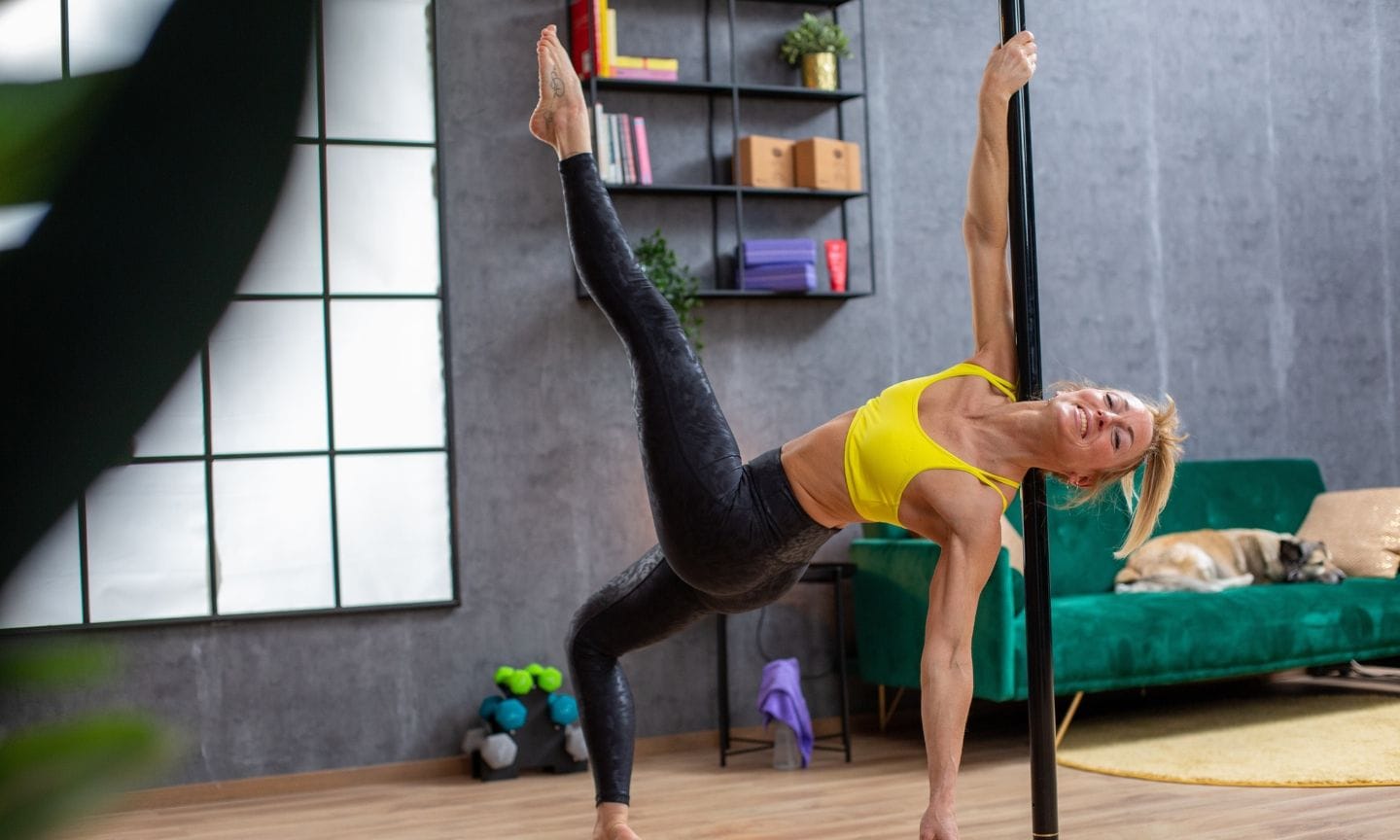
Pole flow is the way you connect pole moves, floorwork and transitions into one smooth, continuous dance. Instead of doing a spin, stopping and starting the next move, you let one movement lead into the next.
Why does flow matter?
Flow is what turns single tricks into dancing. A Fireman Spin on its own is a move. A Fireman Spin that lands softly, rolls into a body wave and rises into a Chair Spin is flow. It also makes you more aware of your body, your timing and the music.
What is pole flow made of?
- Transitions: the little links between moves, like a step, a turn or a slide down the pole.
- Floorwork: rolls, slides and waves on the ground, for example the Hip Roll.
- Momentum: using the swing of one move to carry you into the next, which matters even more on a spinning pole.
- Musicality: slowing down, pausing and speeding up with the song.
Pole flow in different styles
Flow lives in every style. Exotic pole is full of slow, grounded flow, often in heels. Pole art uses it to tell a story. Even in pole sport, the way tricks are connected is part of the score.
How do you practise flow?
- Take two moves you know and practise just the link between them.
- End each session with a few minutes of freestyle to music, without planning.
- Film yourself and look for the moments where you stop. Those are your transition spots.
- Try it on both sides.
Our guide to how often you should pole dance suggests a flow block in every session. For guided practice, the Flow & Glow Challenge and Floorwork: The Basics are good places to start.