
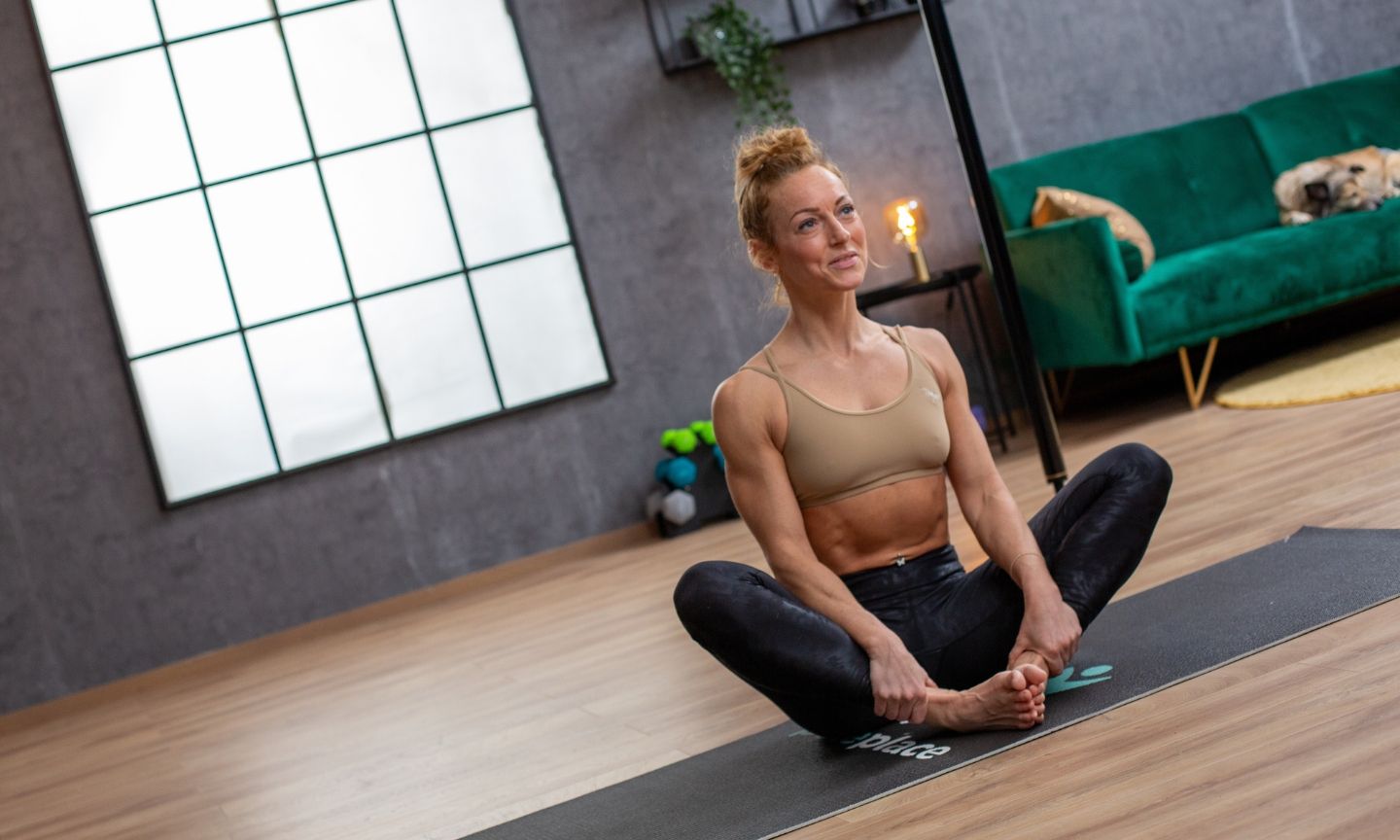
How often should you pole dance as a beginner? For most beginners, two or three pole sessions a week with rest days in between is a good place to start. Your skin, grip and joints need time to recover, and that recovery is where much of your progress happens.
More is not always better in pole. This guide explains why rest matters, which signs tell you to take a break, and what a balanced beginner week can look like, with pole days, conditioning, flexibility and rest. You will also see how a single session is built and how to track your progress at home.
Why rest and recovery matter in pole dancing
Pole is unusual because it trains more than your muscles. Several parts of your body adapt at different speeds.
Skin
Your skin is what holds you on the pole. In the first weeks, the backs of your knees, your inner thighs and your hands can feel sore or sensitive, and small bruises are common while your skin gets used to the pressure. This settles with time, but only if you give your skin a break between sessions.
Grip
Grip strength builds fast in the first weeks, but your hands and forearms also tire quickly. A tired grip makes moves feel harder and less secure. Training on tired hands usually leads to sloppy technique, not faster progress.
Joints and tendons
Muscles adapt relatively quickly. Tendons and joints, especially in your shoulders, elbows and wrists, take longer. This is one reason beginners can feel strong enough for a move before their body is ready to repeat it often. Rest days give these structures time to catch up.
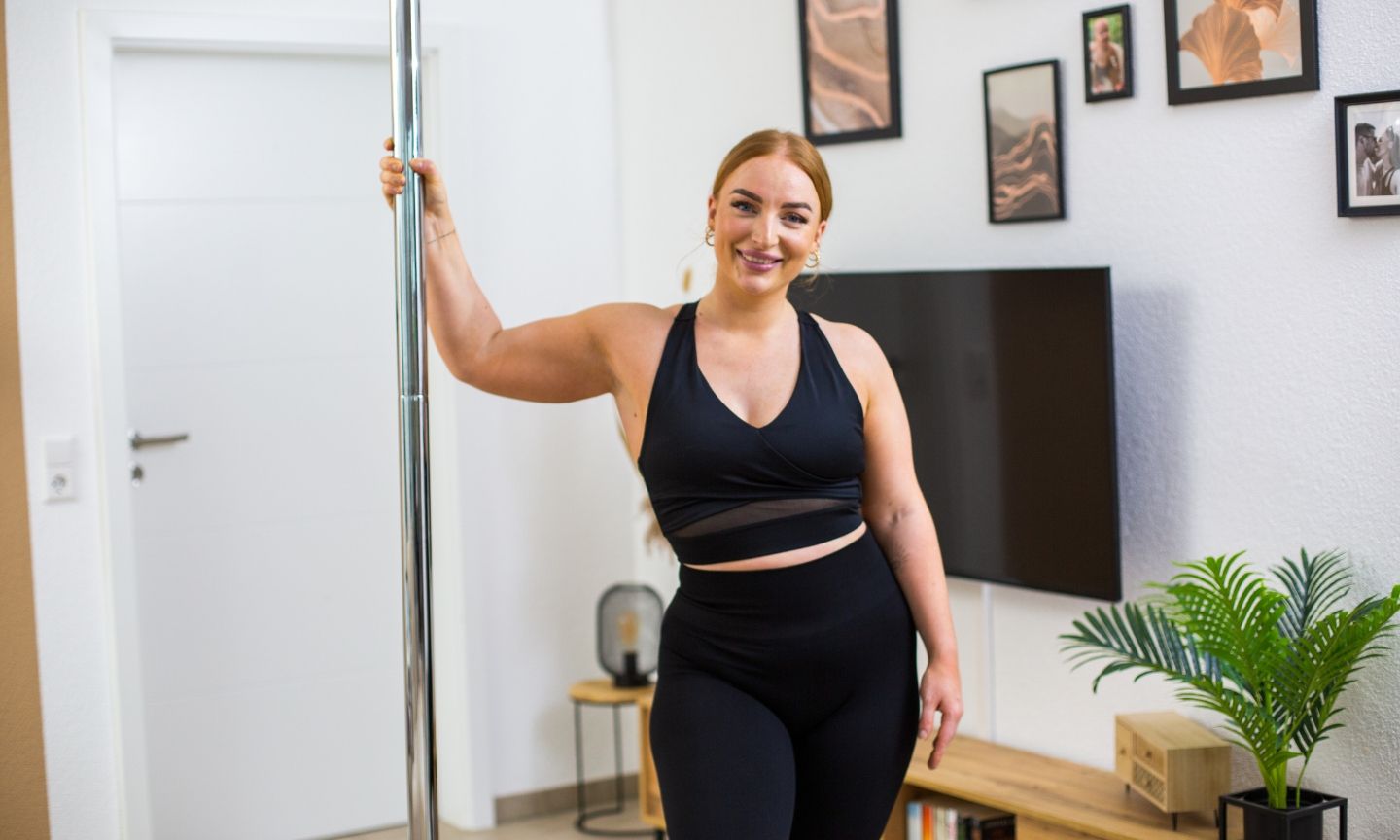
How often should you pole dance as a beginner?
There is no single right number, but a few principles help:
- Leave space between pole days. Avoid training pole on several days in a row at the start, so your skin and grip can recover.
- Use other days for support work. Conditioning and flexibility training help your pole without putting the same load on your hands and skin.
- Keep at least one full rest day. Rest is part of the plan, not a missed session.
- Consistency beats intensity. A regular rhythm you can keep is worth more than an intense week followed by a long break.
As you get more experienced, you can slowly add sessions. Listen to how your body responds before you increase.
Signs you need a rest day
Your body tells you when it needs a break. Take a rest day, or switch to a gentle session, if you notice:
- your grip gives out much sooner than usual
- moves you could do last time suddenly feel unsafe
- your skin is raw, very bruised or painful to touch
- joint pain, especially in your shoulders, wrists or elbows, that does not go away after a warm-up
- you feel tired, low on motivation or dread your session
- you sleep badly or feel sore for days
Muscle soreness after a new move is normal. Sharp pain, pain in a joint or pain that gets worse while you train is not. Stop, rest, and talk to your doctor or physio if it does not improve.
A sample beginner week: pole dance training plan
Here is an example of how a balanced pole dancing routine for beginners can look. It is a suggestion, not a rule. Move the days around to fit your life, and shorten or skip sessions whenever your body asks for it.
| Day | Example focus | What it can include |
|---|---|---|
| Monday | Pole | Warm-up, basic spins and walks, a short flow, cool-down |
| Tuesday | Flexibility | Gentle stretching for hamstrings, hips and shoulders |
| Wednesday | Rest | Walk, light mobility or nothing at all |
| Thursday | Pole | Warm-up, repeat Monday’s moves, add one new move, cool-down |
| Friday | Conditioning | Core, shoulder and grip exercises without the pole |
| Saturday | Pole or flow | Freestyle to music, floorwork, practise transitions |
| Sunday | Rest | Full recovery |
If this feels like too much, start with two pole days, one conditioning or flexibility day and four rest days. You can always build up later.
For the support days, the flexibility workouts and strength workouts give you ready-made sessions to follow. The glossary explains more about pole dance conditioning and why it helps your pole moves.
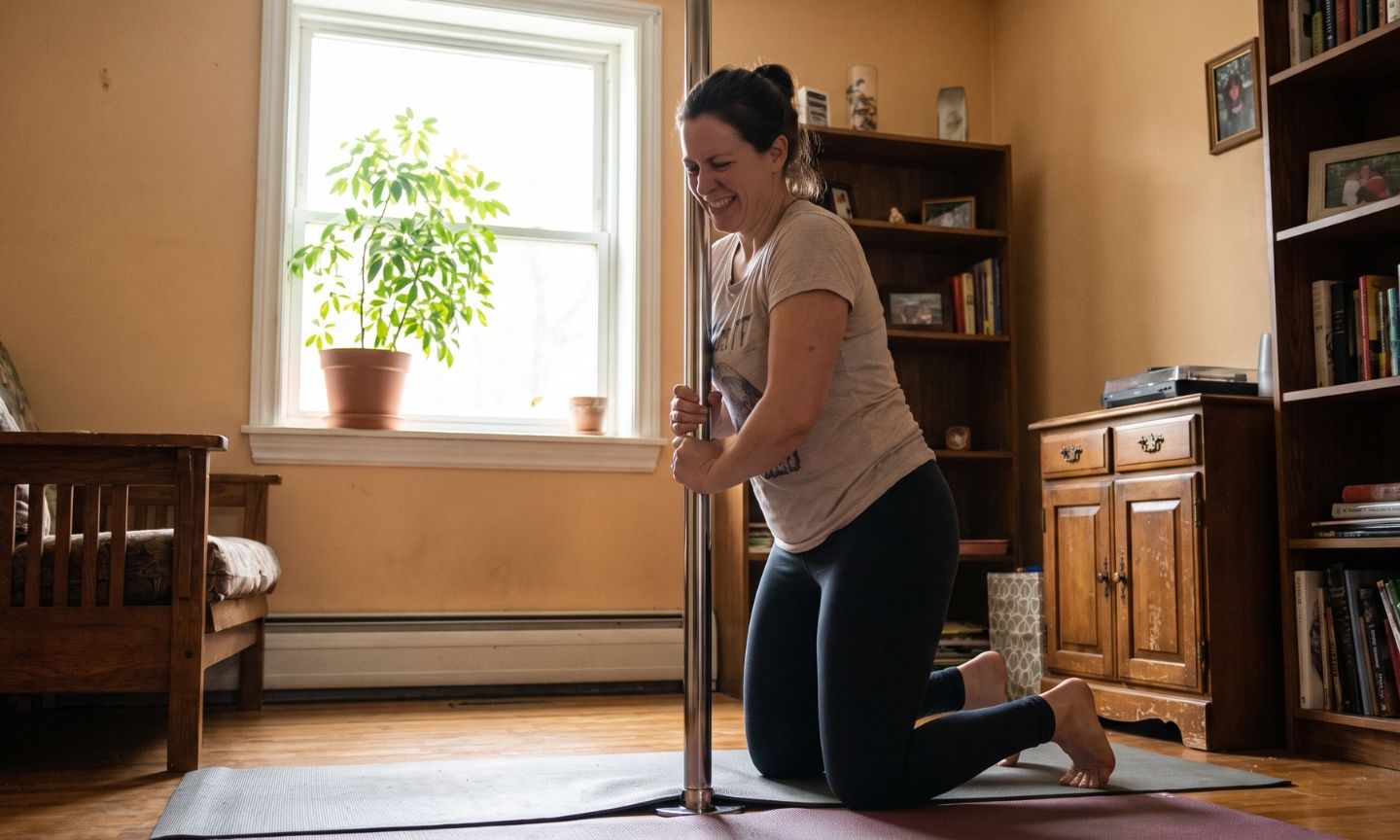
What a good pole session looks like
Every session, short or long, can follow the same four parts.
1. Warm-up
Raise your heart rate a little, then mobilise your wrists, shoulders, spine and hips. A good warm-up prepares your joints for grip and weight-bearing. The warm-ups and cool-downs program gives you routines you can use before every pole session.
2. Skills
This is where you practise moves. Start with something you already know, then work on one or two newer moves. Practise both sides when the move allows it. Quality matters more than the number of repetitions, so stop a move once your technique starts to slip.
3. Flow
Connect what you know. Put on a song and move between walks, spins and floorwork. Flow is where pole starts to feel like dancing, and it trains your transitions and musicality without adding much load.
4. Cool-down
Bring your heart rate down and stretch gently. This is a good moment for a few minutes of flexibility work, while your body is warm.
How to track your progress
Progress in pole can feel slow from week to week, which is why tracking helps. A few simple ways:
- Keep a training log. Write down the date, the moves you practised and how they felt.
- Film yourself. Short clips show you changes you cannot feel, like straighter legs or smoother transitions. Compare clips from a few weeks apart.
- Note how long you can hold. Seconds in a hold or the number of spins before your grip tires are easy to compare.
- Write down how you feel. Confidence, enjoyment and energy are progress too.
Look back every few weeks rather than every day. That is where you will see how far you have come.
Pole dancing at home: why a structured plan helps
Training at home gives you freedom, but it also means nobody tells you what to do next. Many beginners either repeat the same moves for weeks or jump to moves they are not ready for. A structured plan solves both. It tells you how often to train, which moves come next and when to repeat.
That is what the 12-Week Starter Course is for. It gives you a clear weekly rhythm, builds your moves step by step and includes the warm-up and cool-down you need. If you want to train with others from home, the live classes add a group session to your week.
FAQ
How often should you pole dance as a complete beginner?
Two or three pole sessions a week with rest days in between is a good starting point. Use the other days for flexibility, conditioning or rest.
Can I pole dance every day?
As a beginner, daily pole training usually does not give your skin, grip and joints enough time to recover. Alternate pole days with support work and rest days instead.
How long should a beginner pole session be?
It depends on your energy and schedule. A shorter, focused session with a proper warm-up and cool-down is better than a long one where your grip and technique fade.
Should I train when I have bruises?
Small bruises are common at the start. Avoid putting pressure on very sore spots and give your skin a rest if it hurts. Talk to your doctor if bruises appear without reason or do not heal.
Is conditioning important for pole beginners?
Yes. Conditioning builds the core, shoulder and grip strength that pole moves rely on, and it lets you train on days when your skin needs a break from the pole.
What next?
If you want a plan that tells you what to do each week, start the 12-Week Starter Course. Your membership begins with 7 days free, so you can try your first week and see how the rhythm fits your life.
What next?
Start with Class 1 of our 12-Week Starter Course. Every move is taught with our Floor-Stand-Air Method™: on the floor first, then standing, then in the air.