

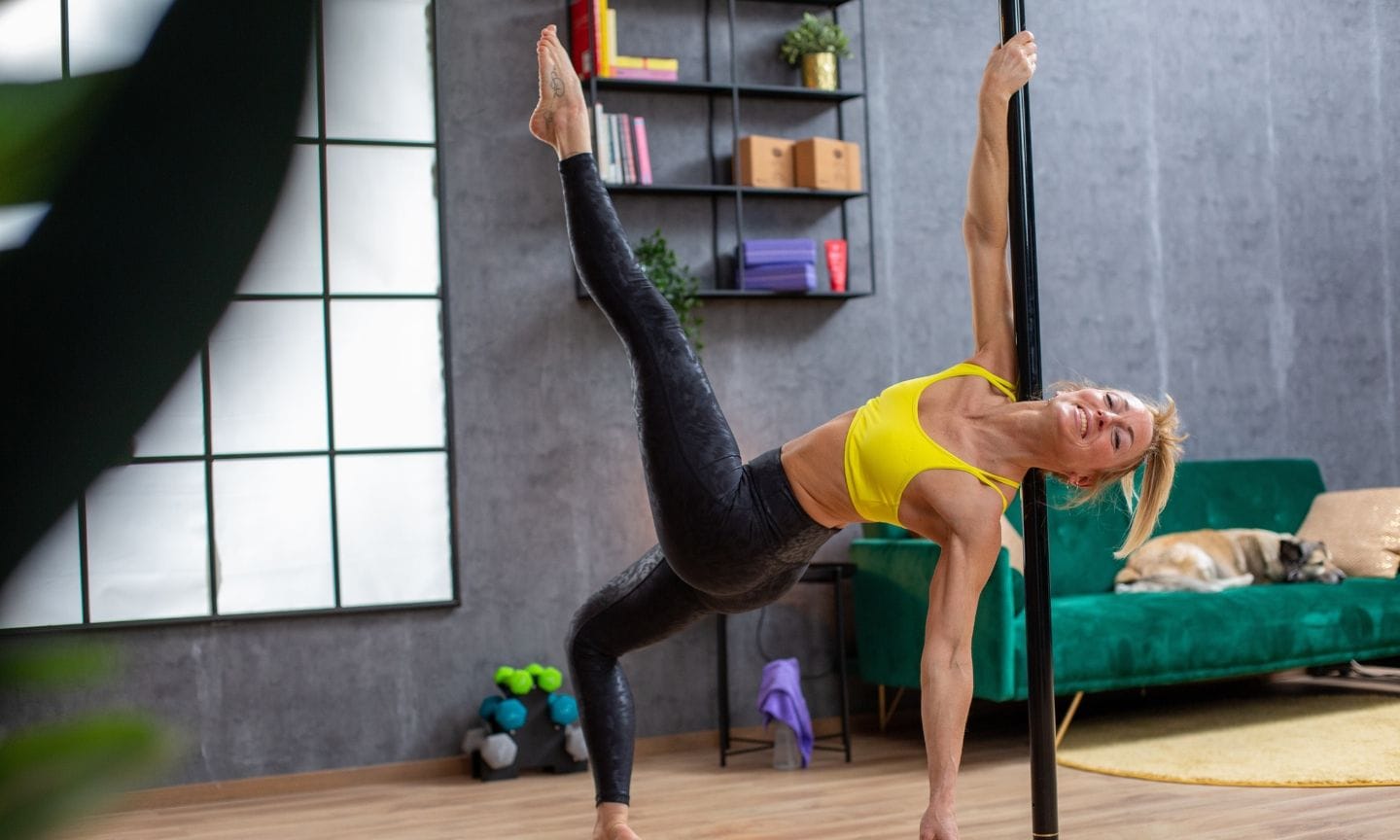
Pole art is the artistic side of pole dancing. Instead of tricks for their own sake, pole art puts storytelling, choreography and music first, and performances often come with costumes and a touch of theatre.
What makes pole art different?
In pole sport, a routine is judged on difficulty, execution and artistry. In pole art, expression leads. A move is there because it tells part of the story, fits the music or creates a mood. A slow body wave can matter as much as a big trick.
What does pole art look like?
- Flow: moves connected smoothly, often with floorwork and transitions that make the whole piece breathe.
- Music: the choreography follows the music closely, from tempo to lyrics.
- Character: costumes, props and facial expression help tell the story.
- Any level of tricks: some pole art pieces are full of advanced moves, others stay close to the floor.
Pole art and the other styles
| Style | What it focuses on |
|---|---|
| Pole sport | Tricks, strength, flexibility, competition rules |
| Pole art | Storytelling, choreography, music |
| Exotic | Sensual movement, floorwork, heels technique |
| Pole fitness | Strength and conditioning through pole |
Most dancers move between styles. Our article on the history of pole dancing explains how these styles grew.
How do you get into pole art?
You do not need a stage. Pick a song you love, put two or three moves you know together and focus on how they connect. Freestyle to music at the end of a session is a great way to start, and pole flow practice trains the smooth transitions pole art depends on. If you are just starting, the 12-Week Starter Course gives you the base moves to build your first pieces.