

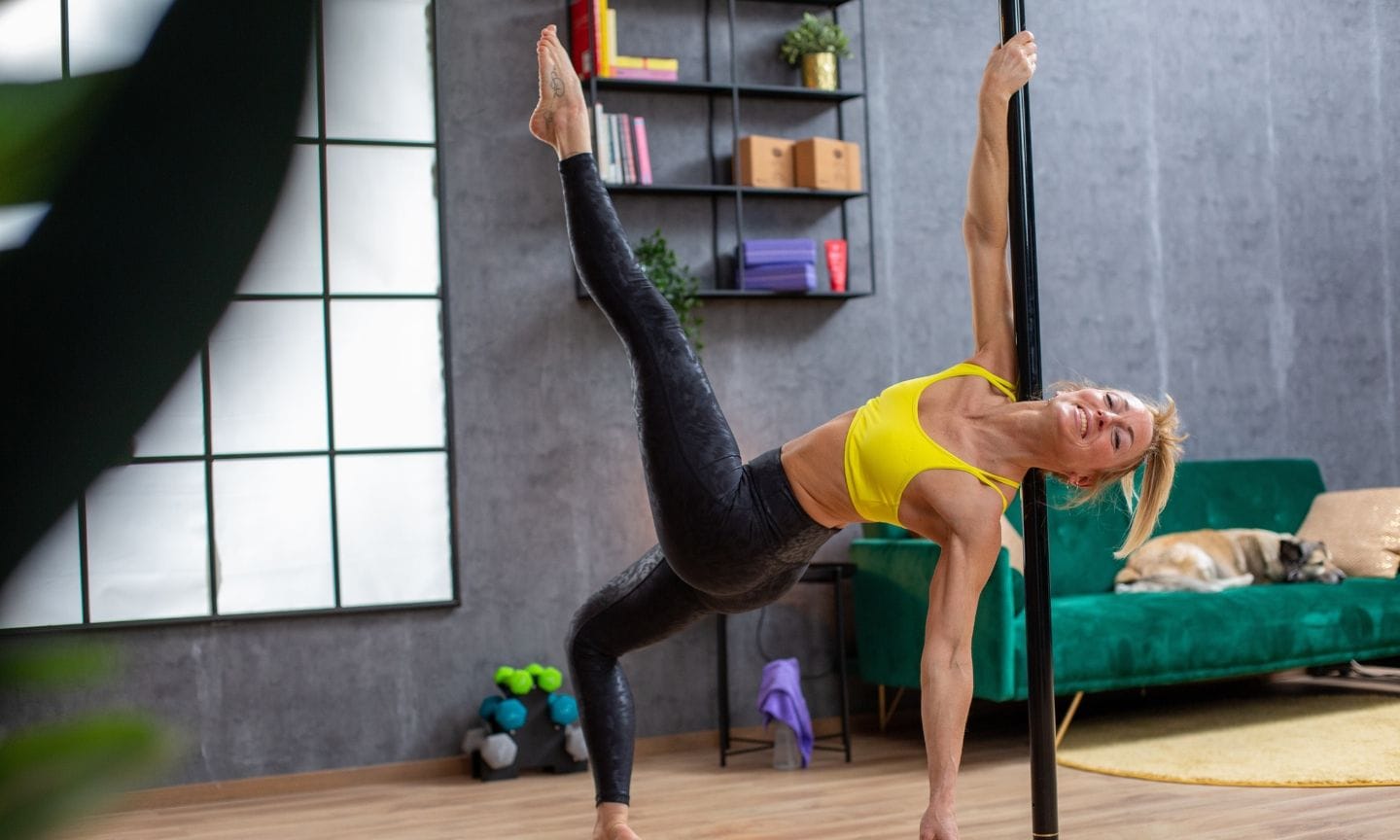
A scapula pull is a small strength movement you do from a dead hang: your arms stay straight while you pull your shoulder blades down and slightly together, so your body rises a little. Then you lower back down slowly. Small movement, full control.
How do you do a scapula pull?
- Hang from a pull-up bar with straight arms.
- Without bending your elbows, pull your shoulder blades down and slightly together.
- Feel your body rise a few centimetres.
- Lower back down slowly into the hang.
- Repeat for a few controlled reps, then rest.
If your full body weight is too much, keep your feet on the floor or a box to take some of the load.
Why do pole dancers need it?
The scapula pull teaches “active shoulders”, the shoulder position you want in almost every hold and climb. Instead of hanging in your joints, your muscles hold you. That protects your shoulders and prepares the lats for pulling. You will feel the difference in your Basic Climb, in spins with a split grip and later in advanced holds like the twisted grip, which ask a lot of shoulder control.
Common mistakes
- Bending the elbows: then it becomes a small pull-up. Keep the arms straight.
- Shrugging: your shoulders should move away from your ears, not towards them.
- Rushing: the slow way down is half the exercise.
Where it fits in your plan
In our guide to pole strength exercises, scapula pulls sit on the upper body and grip day together with the dead hang, push-ups and wrist conditioning. Combine them with the hollow body hold for your core and you are building the base for your first invert. Our Strength Workouts give you guided sessions.
As always: muscle effort is normal, sharp pain in a joint is not. If you have a shoulder injury, talk to your doctor or physio first.