

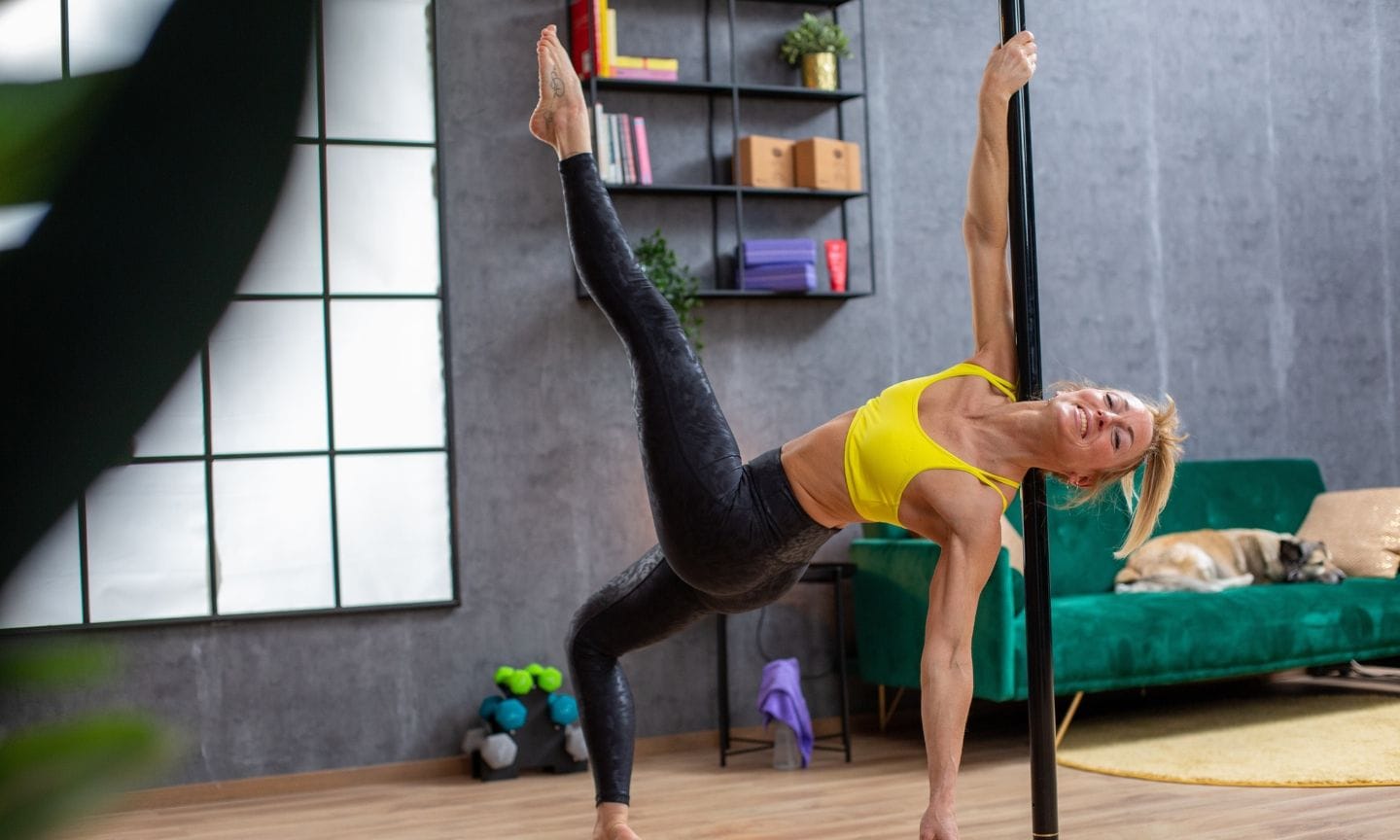
A spotter is a person who stands next to the pole and supports you while you learn a new move, ready to guide your body or catch your weight if something goes wrong. Spotting is especially common when you learn your first invert and other moves upside down.
What does a spotter do?
A spotter does not do the move for you. They stay close, watch your body and step in when you need it: a hand on your hips to help you find the position, a steadying touch on your back, or support while you come down. Good spotting gives you the confidence to try something new without fear of falling.
When do you need a spotter?
- Your first inverts: our guide on how to invert on pole recommends a mat and spotter for the tuck invert stage.
- New tricks in the air: especially with advanced grips like the twisted grip or cup grip.
- Anything that scares you a little: that feeling is useful information.
For spins, walks and floorwork you usually do not need a spotter.
Who should spot you?
Ideally a coach or someone trained in spotting, because they know where to hold and when to let go. A friend who has never spotted before can help with simple things, like standing by and keeping the space clear, but should not try to catch you mid-trick.
Training at home without a spotter
Many dancers train at home alone. That works well when you choose your moves wisely:
- Learn new moves close to the floor first.
- Always use a crash mat for anything inverted.
- Use step-by-step progressions instead of attempting the full move.
- Save brand-new aerial tricks for a session with a coach.
The Floor-Stand-Air Method™ we use at POLEPLACE follows exactly this idea: every move on the floor first, then standing, then in the air.