

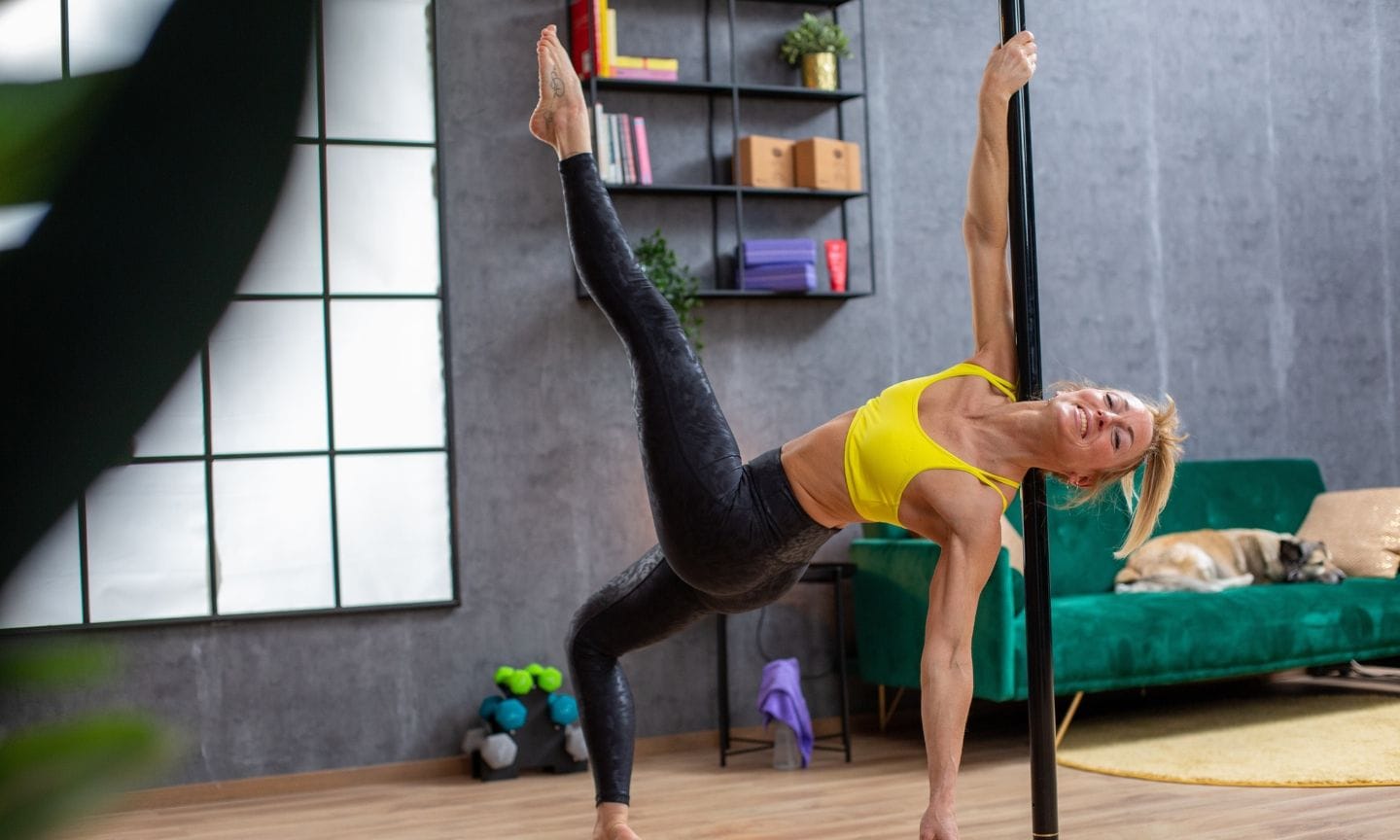
Chinese pole is a circus discipline in which acrobats climb tall, rubber-coated poles, hold their bodies out to the side and drop down in controlled slides. It is one of the pole traditions that came long before the dance pole in your living room.
What does Chinese pole look like?
The poles are taller than a typical dance pole and covered in rubber for grip. Acts are built on raw power and precision: fast climbs, horizontal holds, sudden drops that stop just above the floor. Traditionally the performers were men, and the discipline is still a classic circus act today.
Chinese pole vs pole dance
| Chinese pole | Pole dance | |
|---|---|---|
| Setting | Circus | Studio, home, stage |
| Pole | Tall, rubber-coated | Metal or silicone, usually 40 to 45 mm |
| Focus | Climbs, flags, drops | Spins, flow, tricks, dance |
How did it influence pole dance?
You can see Chinese pole in modern pole tricks: flags, holds that rely on pure strength, and the idea that a pole can be climbed like a vertical stage. When you practise a climb or an inverted shape like the Flatline, you are working with qualities Chinese pole artists have trained for a long time.
Related traditions
Chinese pole is often mentioned together with Mallakhamb, the traditional pole sport from India. Neither is the direct ancestor of the spins you learn at home, but both show how old the idea is: using a pole to test and train the human body. Read the full story in our history of pole dancing.
Can you try it?
Chinese pole is taught at circus schools, with tall rigs and trained spotters. For pole dance at home, start with the 12-Week Starter Course and build your strength with pole dance conditioning.