

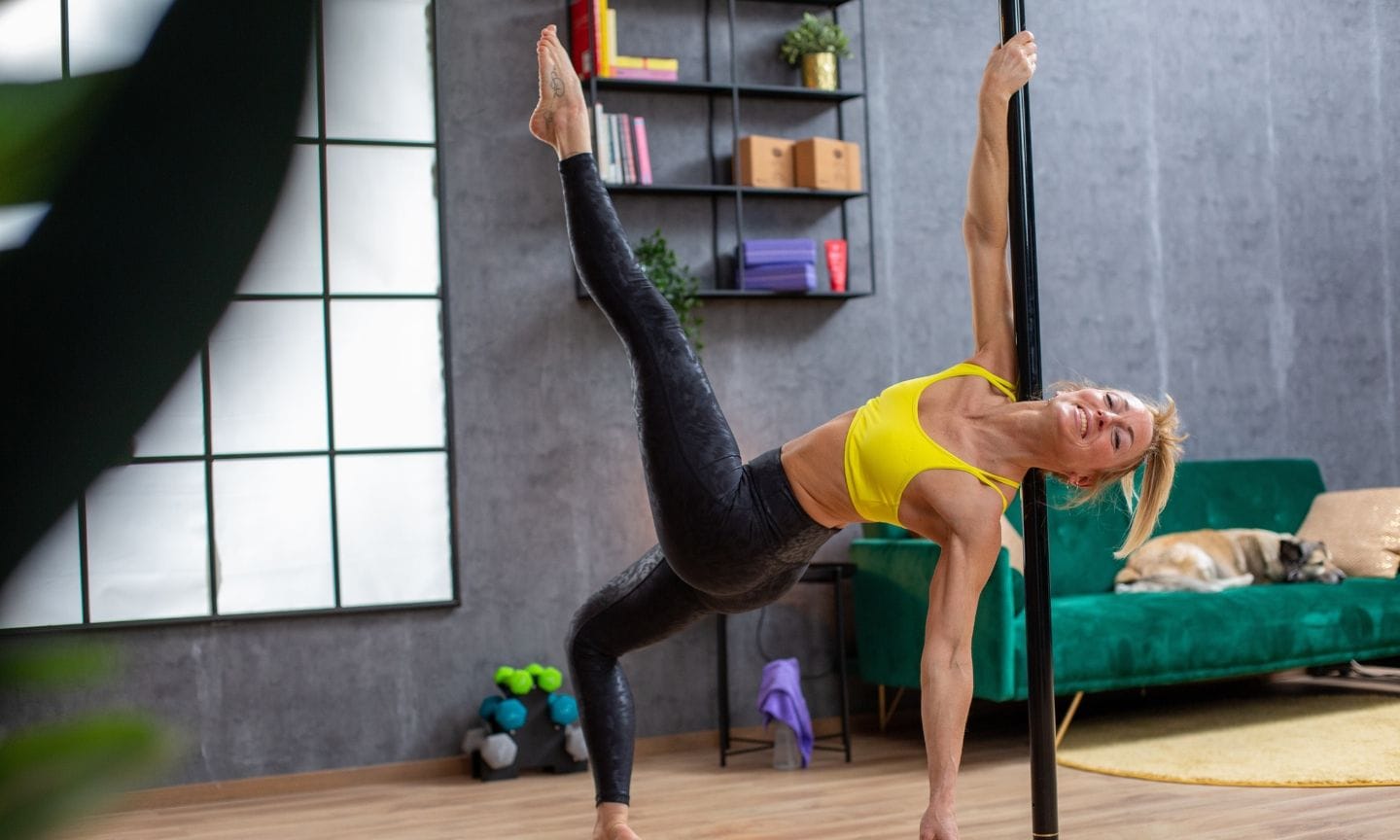
A claw grip, often just called the claw, is a pole dance hand position where your fingers spread and press into the pole while your thumb does not wrap around it. Instead of holding, the hand pushes.
What does the claw do?
Most grips are about closing your hand around the pole. The claw is the opposite: it opens. Your fingertips and the base of your fingers press into the pole and create friction and support, a bit like a claw pressing into a surface. That makes it a pushing hand, not a hanging hand.
Where do you use it?
Dancers use the claw as the bottom hand in pushing positions, for example in a split grip where the lower hand presses into the pole. It also shows up in shapes where a full wrap would get in the way, such as when your body is close to the pole or when the angle of your arm does not allow your thumb to reach around.
Claw vs flat palm
Some dancers push with the flat palm or the heel of the hand, others prefer the claw. The claw lets your fingers grip a little, which can add control. The flat palm spreads the pressure over more skin. Try both, and follow the cues of your tutorial or coach for each move.
Training tips
- Warm up your fingers and wrists: spread your fingers wide, make a fist, repeat. Circle your wrists in both directions.
- Keep nails short: long nails get in the way of the fingertips pressing into the pole.
- Clean, dry hands: sweat and lotion reduce the friction the claw depends on. A grip aid can help.
- Start low: feel the push close to the floor before you rely on it in the air.
The claw is one of eight common holds in our guide to pole dance grips. If you are just starting, the baseball grip is where your grip journey begins.