
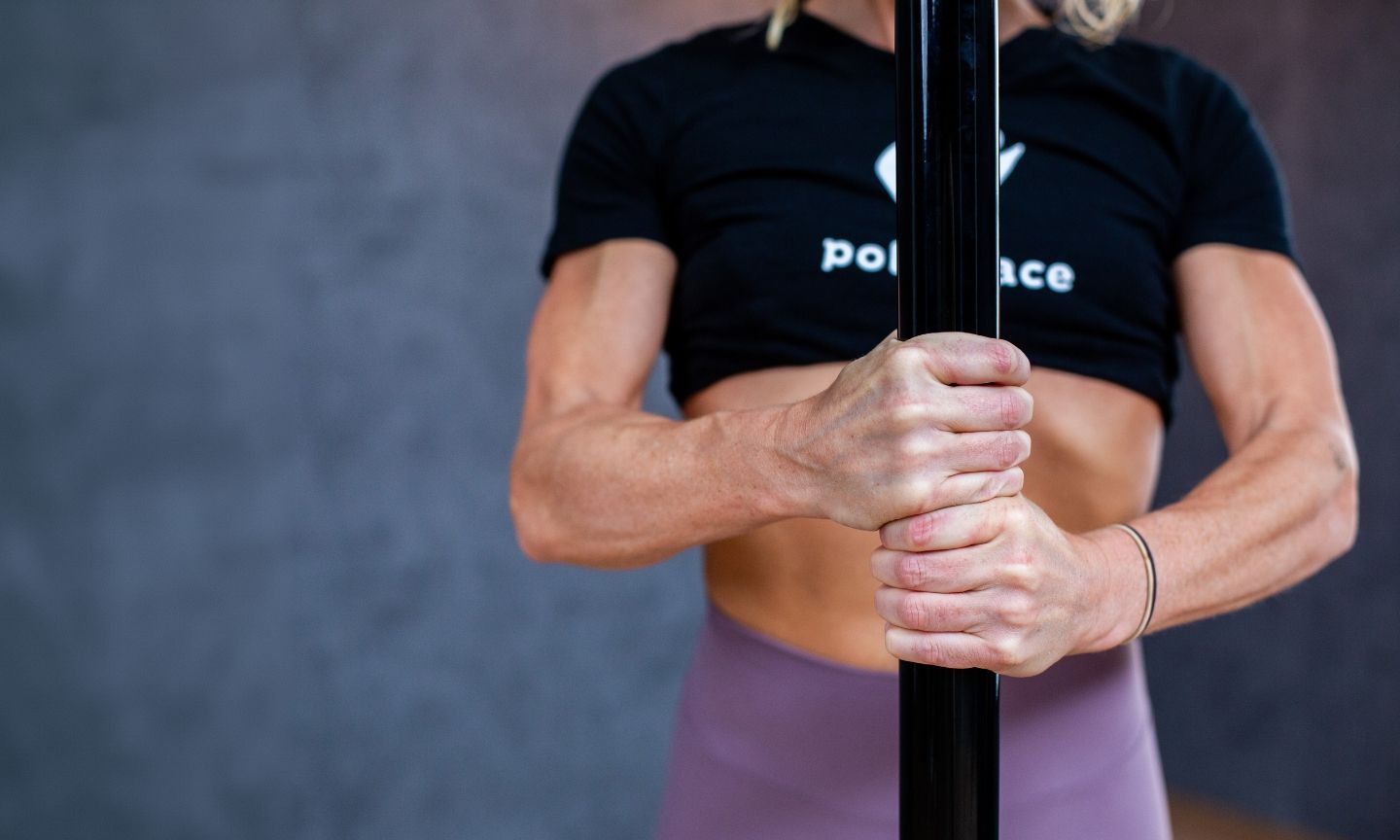
Pole dance grips are the different ways your hands and arms hold the pole, and the grip you choose decides how a move feels, which muscles work hardest and how the line looks. The most common ones are the basic (baseball) grip, the split grip, the twisted grip, the cup grip, the elbow grip, the forearm grip, the football grip and the claw. Below you will find what each one is, where you meet it, and how to look after your wrists and shoulders while you learn them.
Why do grips matter so much in pole dance?
The grip is your main connection to the pole in many moves, especially in advanced tricks where your legs do not touch it at all. Small changes in hand position make the same move feel very different.
A grip does three jobs at once:
- It holds your weight. Some grips let you hang, others let you push, and most combine pulling with one hand and pushing with the other.
- It sets your shoulders. The way your hand turns changes how your shoulder rotates, which is why one grip can feel comfortable and another feels like a lot.
- It shapes the line. The same trick in a different grip can look more open, more compact or more dramatic.
So when you see an Ayesha in twisted grip and an Ayesha in elbow grip, you are looking at the same shape held in two different ways.
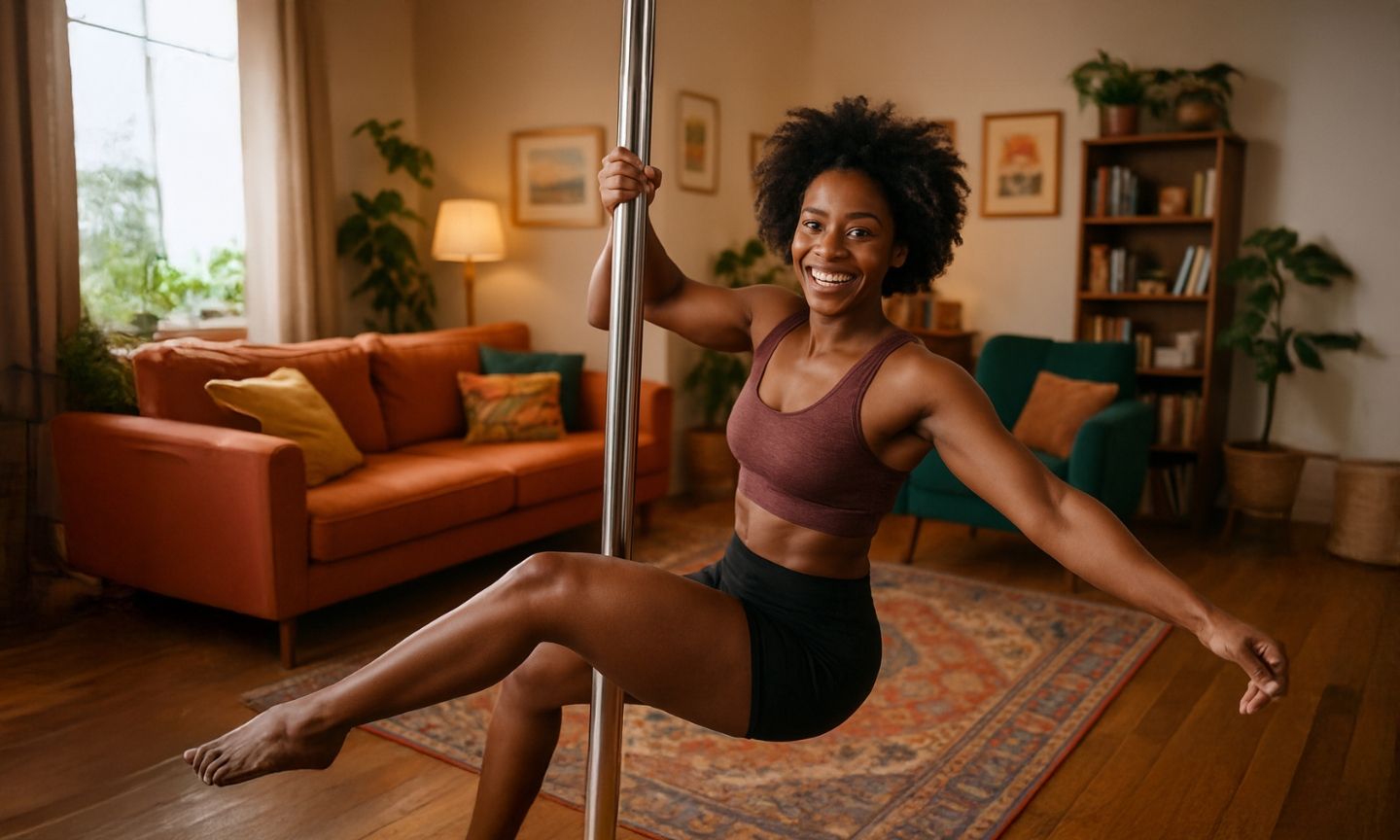
Pole dance grips at a glance
| Grip | What it is in one line | Where you meet it |
|---|---|---|
| Basic / baseball grip | Hands stacked around the pole, thumbs wrapped | Spins, climbs, walking around the pole |
| Split grip | Top hand pulls, bottom hand pushes lower down | Spins, inverts, many tricks |
| Twisted grip | Top hand turned so the thumb points down and the elbow faces up | Ayesha, Handspring, Iron X variations |
| Cup grip | Bottom hand cups the pole from below, palm up | Ayesha, Handspring variations |
| Elbow grip | Pole held in the crook of the elbow | Ayesha, Handspring, holds |
| Forearm grip | Forearm wrapped against the pole | Ayesha, Handspring variations |
| Football grip | A turned bottom-hand position, name taken from carrying a ball | Ayesha, Handspring variations |
| Claw | Fingers spread and pressing, thumb not wrapped | Bottom hand in pushing positions |
Names are not fully standardised. Different studios and coaches sometimes use the same word for slightly different hand positions, so the tutorial you follow is always the reference.
What is the basic or baseball grip?
This is the grip most dancers use first. Both hands wrap around the pole, one above the other, with the thumbs wrapped too, similar to holding a baseball bat. You will use it in your first spins, when you walk around the pole and when you climb. It feels safe because your whole hand is in contact with the pole.
What is a split grip on the pole?
In a split grip, your hands are apart. The top hand holds the pole and pulls, while the bottom hand sits lower and pushes into the pole, often with the heel of the hand. Together they work like a lever: the pull and the push let you hold your body away from the pole or support it in a tilted shape.
You will meet the split grip in many spins and in a lot of inverted and trick positions. Some dancers also call variations of it a bracket grip. Because the bottom hand pushes, your wrist takes some of the load here, so wrist warm-ups (more below) are worth the extra minutes.
What is the twisted grip?
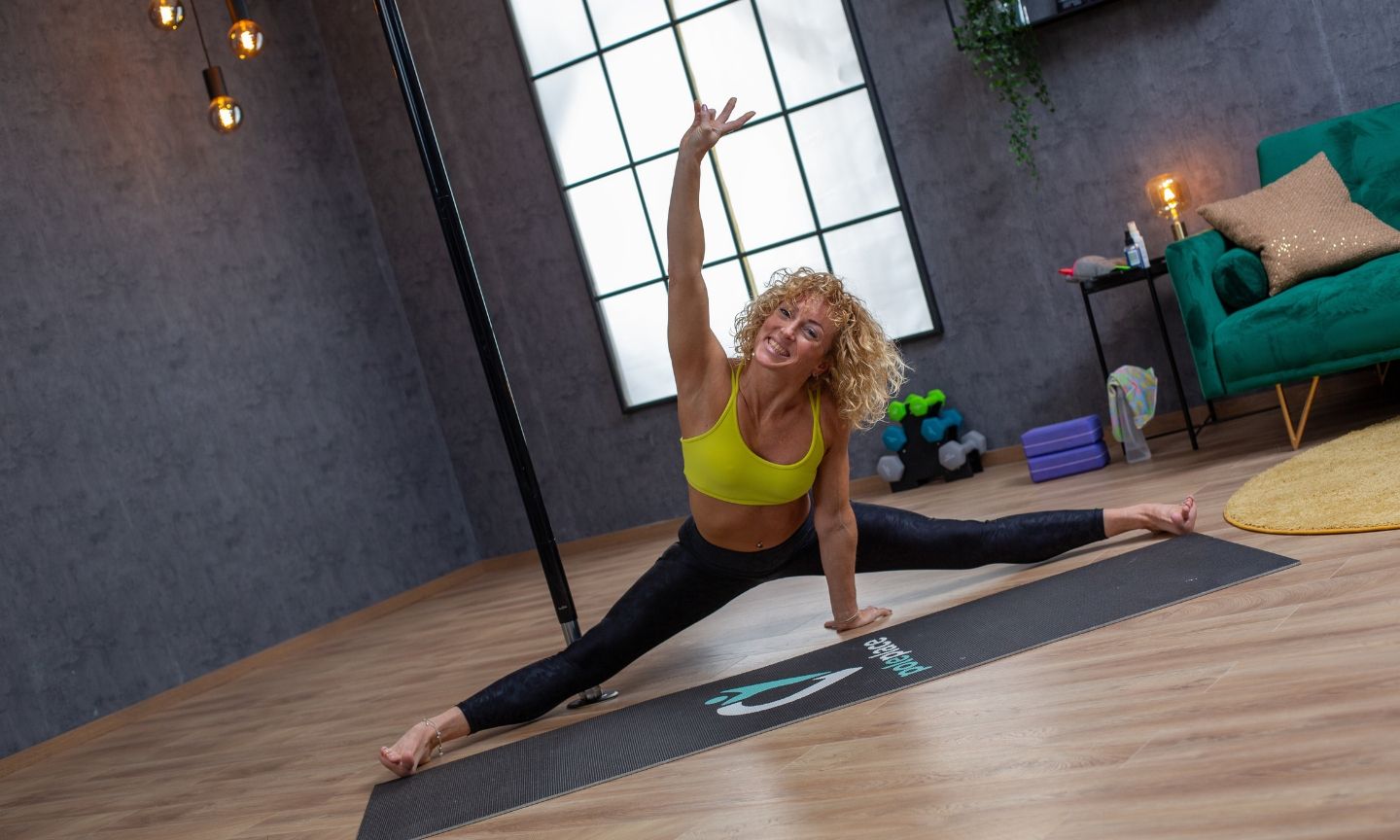
The twisted grip is the one people search for most, and for good reason: it looks unusual and feels unusual. Your top hand holds the pole with the arm rotated so that the thumb points down and the elbow points up and forward. The bottom hand usually pushes lower down. This shoulder position is what lets you hold advanced tricks with your body tilted away from the pole.
Moves that use the twisted grip: On POLEPLACE you will find twisted grip tutorials for the Ayesha and the Handspring, and the grip also appears in tricks that grow out of those, like the Iron X.
What it asks of you: Shoulder mobility, shoulder strength and a calm relationship with being inverted. The twisted grip is not a beginner grip. If your shoulder complains in this position, take that seriously and give it time. Your coach can tell you when you are ready to try it.
What is a cup grip?
In a cup grip, the bottom hand cups the pole from underneath with the palm facing up, a bit like holding a cup by its base. The top hand pulls as usual. The cup position lets your bottom hand push your body up and away, which is why it shows up in advanced inverted tricks.
Moves that use the cup grip: The Ayesha and the Handspring both have cup grip variations in the POLEPLACE library. If you searched for “cup grip Ayesha”, the Ayesha page shows you what the move is and what to learn first.
What it asks of you: Strong, well-prepared wrists. The cup grip loads the wrist in an extended position, so it is the grip where wrist warm-ups matter most.
What are the elbow grip and the forearm grip?
These two use more of your arm and less of your hand.
Elbow grip
In an elbow grip, the pole sits in the crook of your elbow and your arm bends around it. Because the pole rests against more skin, many dancers find this grip gives them a secure feeling. It appears in Ayesha and Handspring variations and in different holds. The inside of the arm can feel tender at first.
Forearm grip
In a forearm grip, your forearm presses along the pole, with your hand often wrapping around it. It spreads the load over a longer contact area. The Ayesha and the Handspring both have forearm grip variations in the POLEPLACE library.
What is the football grip?
The football grip is a variation of how the bottom hand holds the pole, with the hand and arm turned in a way that reminds people of tucking a ball against the body. It is used in advanced tricks, and on POLEPLACE you will find football grip variations for the Ayesha and the Handspring (the Handspring tutorial is currently in German). Because the exact hand position varies between coaches more than with most grips, follow the tutorial cues closely and do not try to reconstruct it from photos.
What is the claw grip?
In a claw, your fingers spread and press into the pole while your thumb does not wrap around it. Instead of holding, the hand pushes. Dancers use it as a bottom hand in pushing positions and in some shapes where a full wrap would get in the way.
How do I build grip strength for pole?
Grip strength grows mostly from training itself: every spin, climb and hold is grip practice. If you want to work on it on purpose, the Grip Strength Challenge is made for exactly that.
A few general habits help too:
- Train regularly rather than rarely and for long. Hands and forearms adapt to repeated use.
- Keep your hands clean and dry and the pole clean. Lotion on hands or arms makes every grip slippery.
- If sweaty or dry hands are an issue, read about grip aids and which type suits your skin.
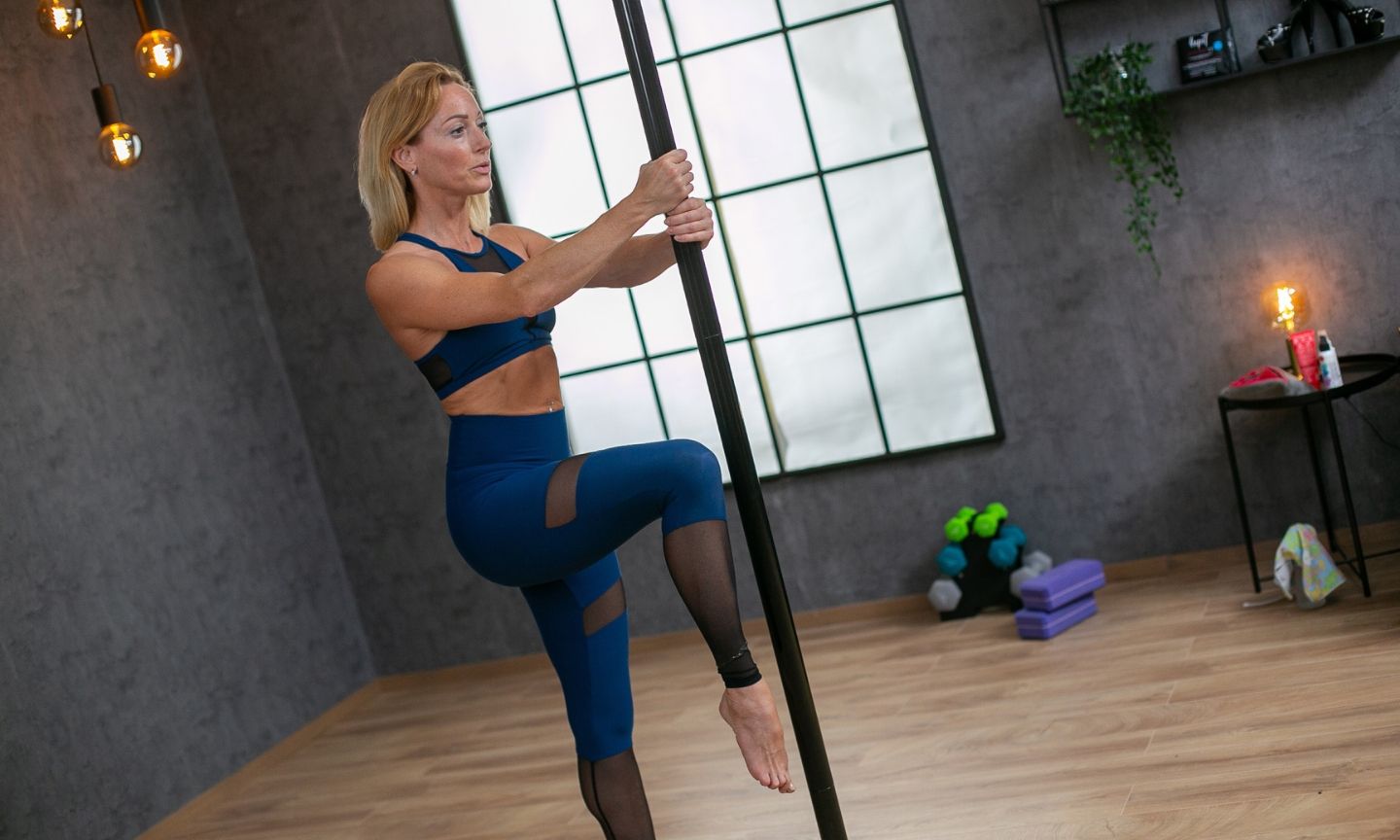
How do I warm up my wrists and shoulders for pole grips?
Grips put load on wrists, elbows and shoulders, so warm them up every time, not only on trick days. A simple routine might include:
- Wrist circles in both directions, slowly.
- Finger openers: spread your fingers wide, make a fist, repeat.
- Gentle wrist stretches with the palm facing down, then up, using the other hand for light pressure.
- On all fours: shift your weight gently over your hands, first with fingers forward, then turned to the sides.
- Shoulder circles and arm swings to get the shoulders moving before twisted or cup grip work.
For a full guided session, the Warm-ups & cool-downs library has you covered.
How do I learn new grips safely?
- One new grip at a time. Each grip loads your body differently. Let it settle before you add the next.
- Learn it close to the ground first. Get to know the hand and arm position low on the pole before you hold weight in it.
- Respect your base moves. Advanced grips build on a controlled Invert and good upper body strength.
- Use a crash mat for inverted grip work, and train new tricks with a coach or spotter.
- Stop when it hurts. Effort and burning muscles are normal, sharp or lingering pain in the wrist, elbow or shoulder is not. If pain stays, talk to your doctor or physio before you continue.
FAQ
Which pole dance grip should I learn first?
The basic grip comes first, because you use it in spins and climbs from day one. The split grip follows naturally. Advanced grips like twisted or cup grip come later, once you invert with control.
Is the twisted grip bad for your shoulders?
It asks a lot of shoulder mobility and strength, so it is not a grip to rush. If your shoulder hurts in it, stop and get it checked.
What is the difference between cup grip and twisted grip?
In the twisted grip, the top arm rotates so the thumb points down and the elbow faces up. In the cup grip, the bottom hand cups the pole from underneath with the palm up. One changes the top arm, the other the bottom hand.
Why do I keep slipping in my grips?
The most common reasons are lotion, sweat, a dirty pole or tired hands. Clean hands and pole, skin-friendly training clothes and, if needed, a grip aid usually help. Sometimes it is also a sign that you need more grip strength before that move.
What next?
If you are still at the start of your pole journey, the 12-Week Starter Course builds the strength and grip you need step by step, from your first spin onwards. You can try it 7 days free, and the Grip Strength Challenge is included in your membership.
What next?
Start with Class 1 of our 12-Week Starter Course. Every move is taught with our Floor-Stand-Air Method™: on the floor first, then standing, then in the air.