The Handspring, explained
The Handspring pole dance move is one of those shapes that makes people stop scrolling. You float upside down beside the pole, held only by your hands, usually with your legs open wide in the air. It is a big milestone, and getting there is a journey worth enjoying.
What is a Handspring in pole dance?
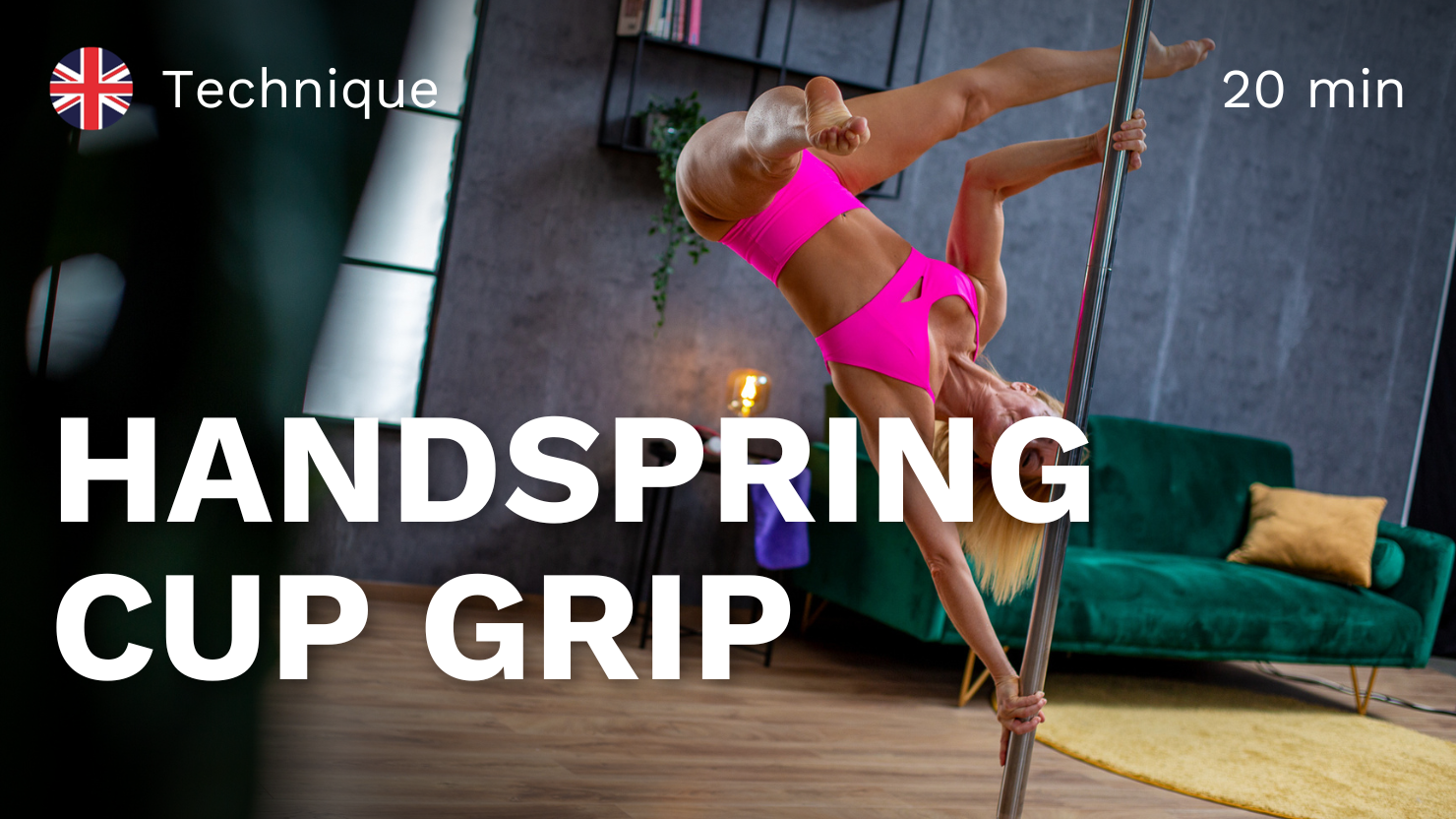
In a Handspring your hands hold the pole while your body goes upside down and away from it, so nothing else touches the pole. The classic picture is a wide straddle in the air, but once the move is yours you can play with all kinds of leg shapes. It looks light and almost effortless, and behind that lightness sits a lot of strength and practice. The exact way you hold the pole and get into the shape is something the tutorial and your coach take you through step by step, because those details are what keep you safe.
Is the Handspring for beginners?
Not yet, and that is completely fine. The Handspring is an advanced move. It builds on inverting with control and on strength you develop over time through climbs, spins and conditioning. If it feels miles away right now, you are in good company. Every dancer you have seen do one started with their first Fireman Spin, too.
What you need before your first Handspring
Most dancers come to the Handspring once their Invert feels calm and controlled. You will want strong shoulders, arms, back and core, and a body that knows what being upside down feels like. Train your first attempts with a coach or experienced spotter and a crash mat. The practical basics matter more than ever here: clean, dry hands, a clean pole, and no body lotion or oil on training days. If something hurts or you feel you are losing control, stop and come back to it fresh.
Handspring grip variants
There is not just one Handspring. The grip changes how the move feels, which muscles work hardest and how it looks. At POLEPLACE you will find tutorials for these grip variants:
- Normal grip, often the starting point for many dancers
- Twisted grip
- Cup grip
- Elbow grip
- Football grip (tutorial currently in German)
- Forearm grip
Each one has its own feel in the hands, wrists and shoulders, and some suit certain bodies better than others. Your coach can help you decide which grip to start with and when to explore the next one.
How you learn it at POLEPLACE
Like every move here, the Handspring follows the Floor-Stand-Air Method™. You start on the floor, building the shape and strength without height. Then you work on the preparation standing at the pole, and only then do you take it into the air. Breaking it down like this lets you feel each piece before you put it all together, at your own pace.
Handspring tips and what comes next
Patience is your best friend with this move. Celebrate the small wins, like holding the preparation a little longer or feeling your hips lift more easily. Once your Handspring is steady, it opens up flowing combos and moves like the Ayesha and the Flying Straddle. Handstand practice on the floor or at the pole can also be a lovely companion along the way.