The Handstand, explained
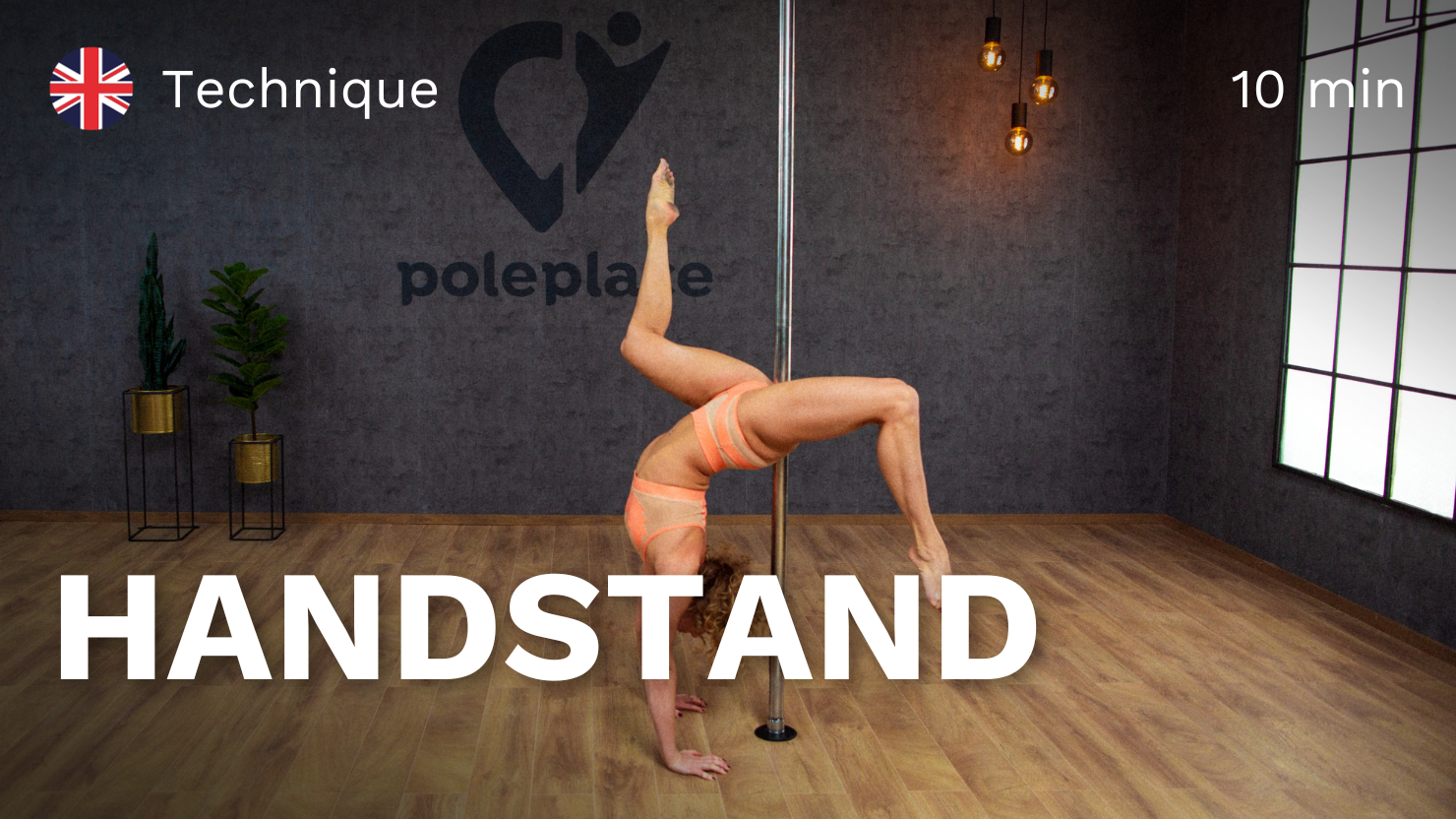
The Handstand pole move is one of the most joyful ways to go upside down: your hands are on the floor, your legs reach up the pole, and suddenly the whole room looks different. It feels playful and strong at the same time, and it brings a beautiful, arched line into your floorwork and your routines.
What is a Handstand in pole dance?
This is not the free-standing handstand you might know from gymnastics. Here the pole is your partner. Your hands rest on the floor close to the base of the pole, your hips lift above your shoulders, and your legs travel up along the pole. In the classic shape one leg reaches long towards the ceiling while the other bends and opens away, and your back curves softly so the whole body draws an elegant arc. Because the pole gives your legs something to lean on, it feels less like balancing and more like resting in a shape you create together.
Handstand pole dance: is it for beginners?
It is not usually a first-week move, but it is often one of the friendlier ways into being upside down. It fits nicely once you feel at home with the basics and have started building strength in your shoulders and arms. Your hands carry weight, and your head is below your hips, so the setup matters. Where you place your hands, how you come up and how you come back down are things the tutorial and your coach guide you through. If your first tries feel wobbly or your legs drift back down sooner than you hoped, that is completely normal.
What the Handstand builds
This pole dance move trains your shoulders, arms, wrists and core, and it builds a calm, trusting feeling upside down. It also opens up your back and the front of your hips, which helps every arched shape you will learn later. Conditioning off the pole, like gentle shoulder and core work, makes the shape feel lighter over time. As with every pole move: shorts or bare legs for skin contact on the pole, no body lotion before training and clean, dry hands.
Static or spinning pole?
A static pole is the natural home for this move, because the pole stays still and you can focus on your shape. Since you start from the floor, the pole is not there to carry you through a turn, so most dancers keep it in static mode for this one.
How you learn it at POLEPLACE
At POLEPLACE you learn it with the Floor-Stand-Air Method™. You explore the shape and the strength on the floor first, prepare the positions standing at the pole, and only then take your legs up. Each stage gives you a small win, in your own space and at your own pace, and the tutorial shows you all the details.
Handstand variations and what comes next
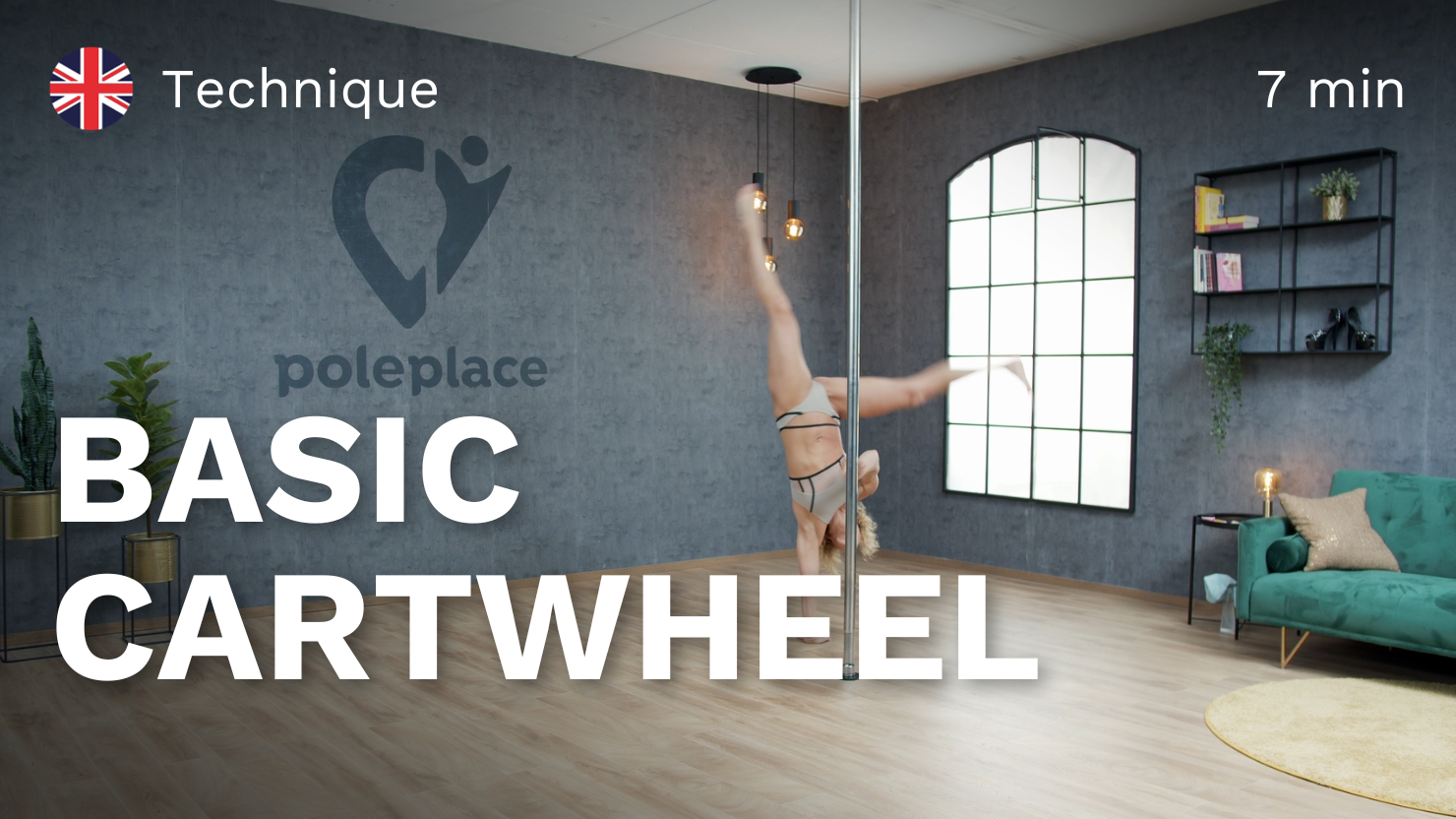
Once your Handstand feels steady, play with the leg shapes and the arch, or flow into it from a Basic Cartwheel. The Baby Handstand Jump is a playful partner move, the Handstand Vertical Split stretches the shape into a long split, and the Press Up Handstand asks for more strength when you are ready. Every version will feel more familiar, because your body already knows how good it is to see the world upside down.