The Flatline, explained
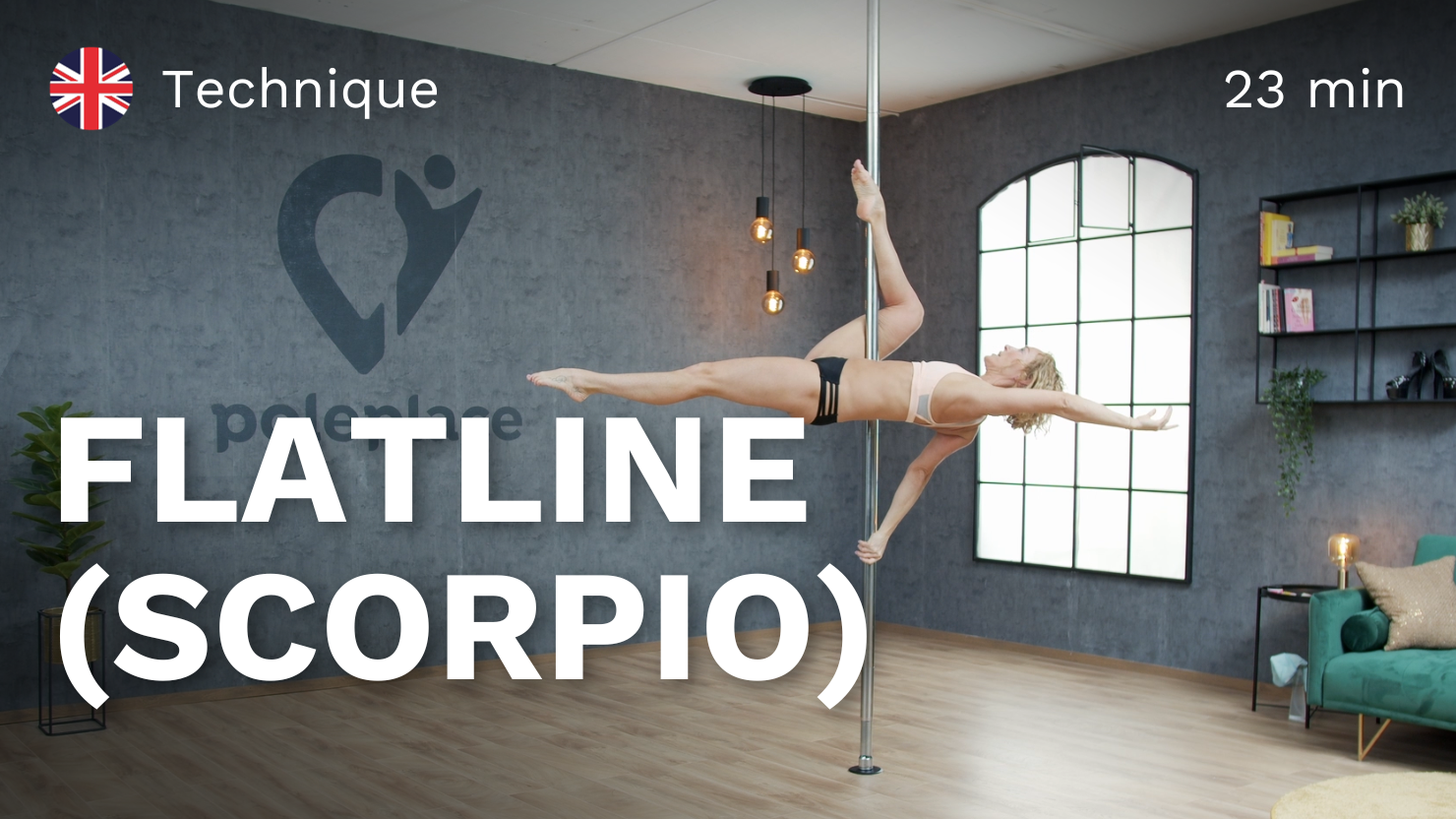
The Flatline pole move is one of those shapes that makes people stop scrolling. You’re upside down beside the pole and your body stretches out long and flat, almost like a line drawn in the air. You’ll often see it called the Scorpio or Flatline Scorpio, and for many of us it’s the move where inverting starts to feel like dancing.
What is a Flatline in pole dance?
In this shape you’re inverted, connected to the pole with one leg and your hands, while your body extends away from it in a long, low line. The free leg reaches out and the whole shape looks surprisingly calm for how much is going on. That’s where the name comes from: everything lines up flat. In the POLEPLACE library the tutorial is called Flatline (Scorpio). Different studios use slightly different names, so if you search for Scorpio pole or Flatline Scorpio, you’re looking for the same family of shapes.
Is the Flatline for beginners?
Not for your first weeks, and that’s completely fine. It’s an intermediate pole dance move that builds on inverting, so it makes sense once going upside down feels familiar. If you’re still working on your Invert, you’re on exactly the right path. This shape will still be there, and it’ll feel so much better when your foundation is solid.
What the Flatline builds: strength, grip and control
This one is a real strength builder. Your shoulders, arms, back and core all work together to keep the line long, and your leg connection to the pole matters a lot. Expect it to feel intense at first. Shaking, wobbling and coming down sooner than you planned are all part of learning it, not a sign you’re doing it wrong. Bare legs help your skin grip, and no body lotion beforehand.
Flatline tips: static or spinning pole?
Most dancers learn it on a static pole, where the pole stays put and you can concentrate on the shape. On a spinning pole the shape sweeps around with you, which looks stunning but adds a whole new feeling while you’re inverted. Save that for when the static version feels steady. One more tip: film yourself. The shape often looks much better from the outside than it feels from the inside.
How you learn it at POLEPLACE
It follows our Floor-Stand-Air Method™. You explore the long, flat line on the floor first, then work on the position standing at the pole, and only then take it into the air. The tutorial and your coach guide the details, so you can focus on feeling the shape.
What to learn before and after
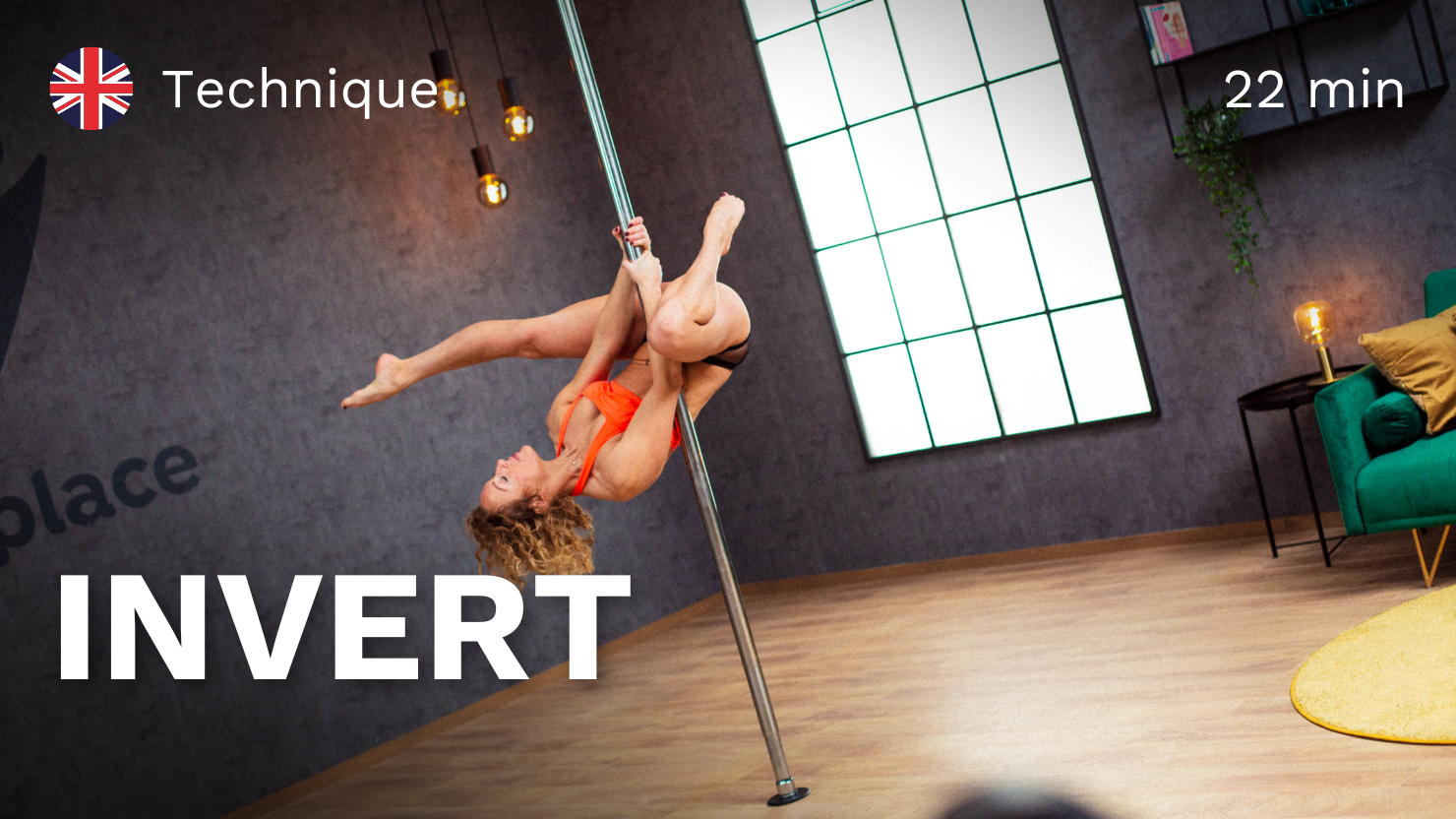
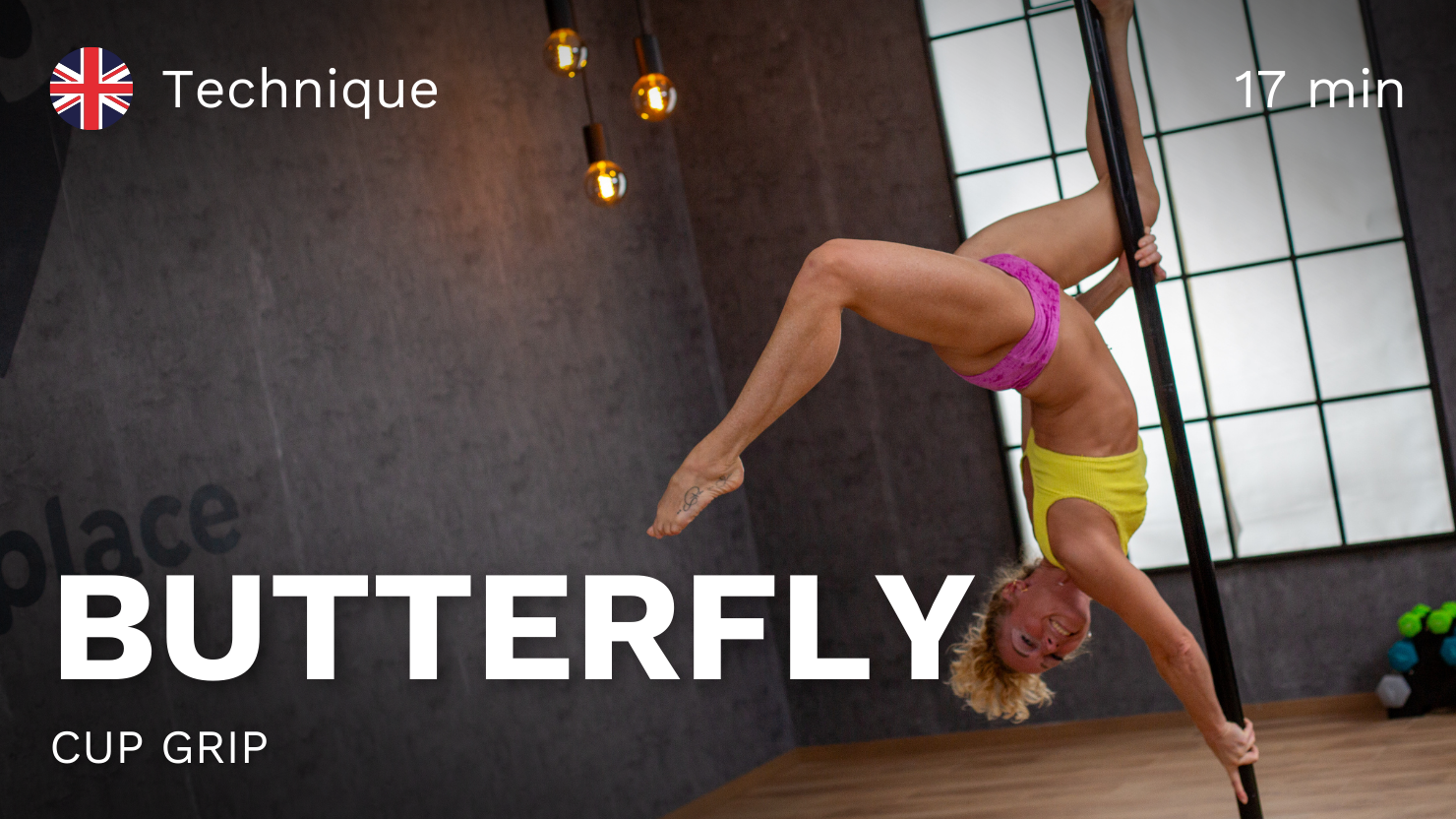
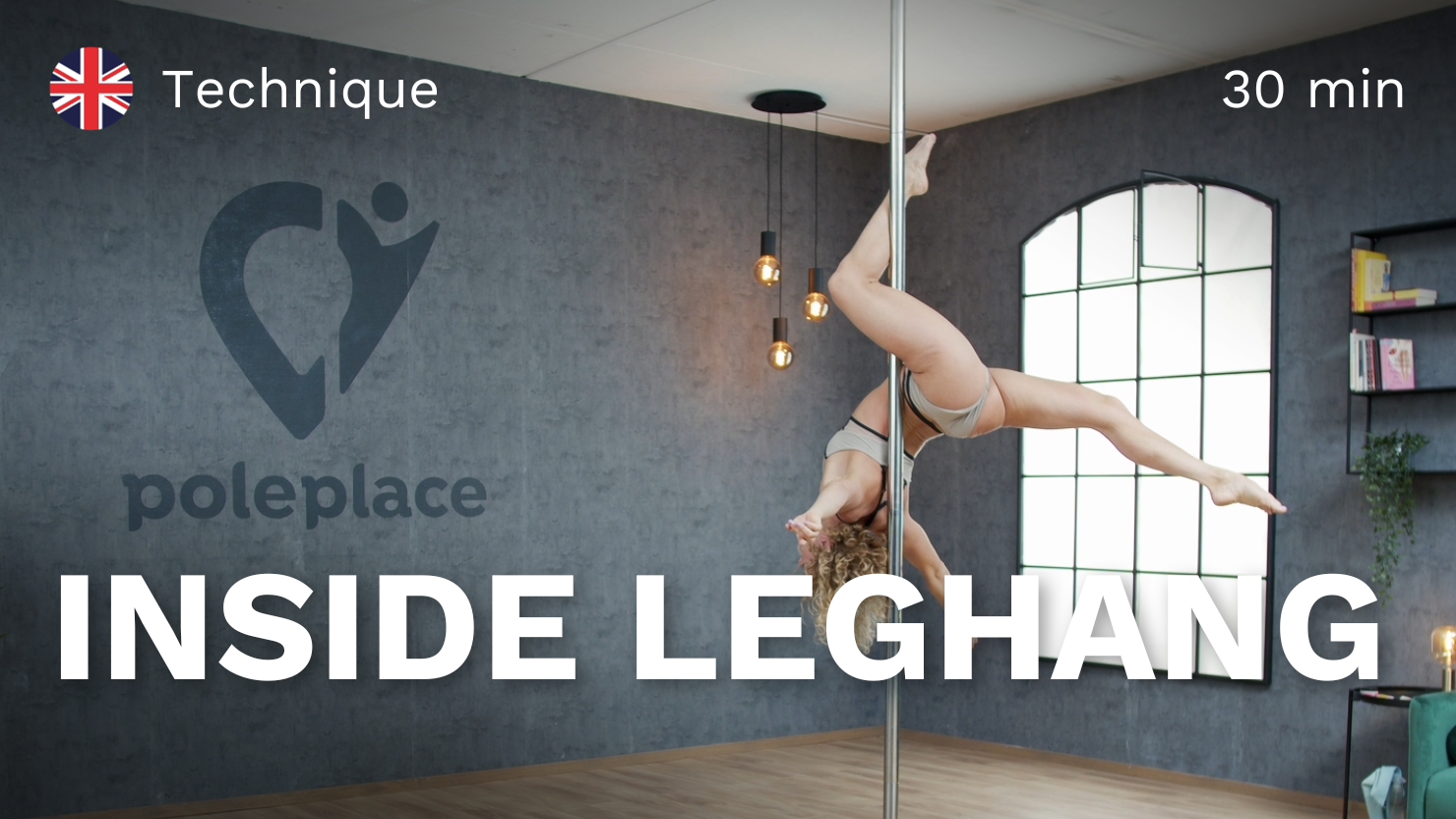
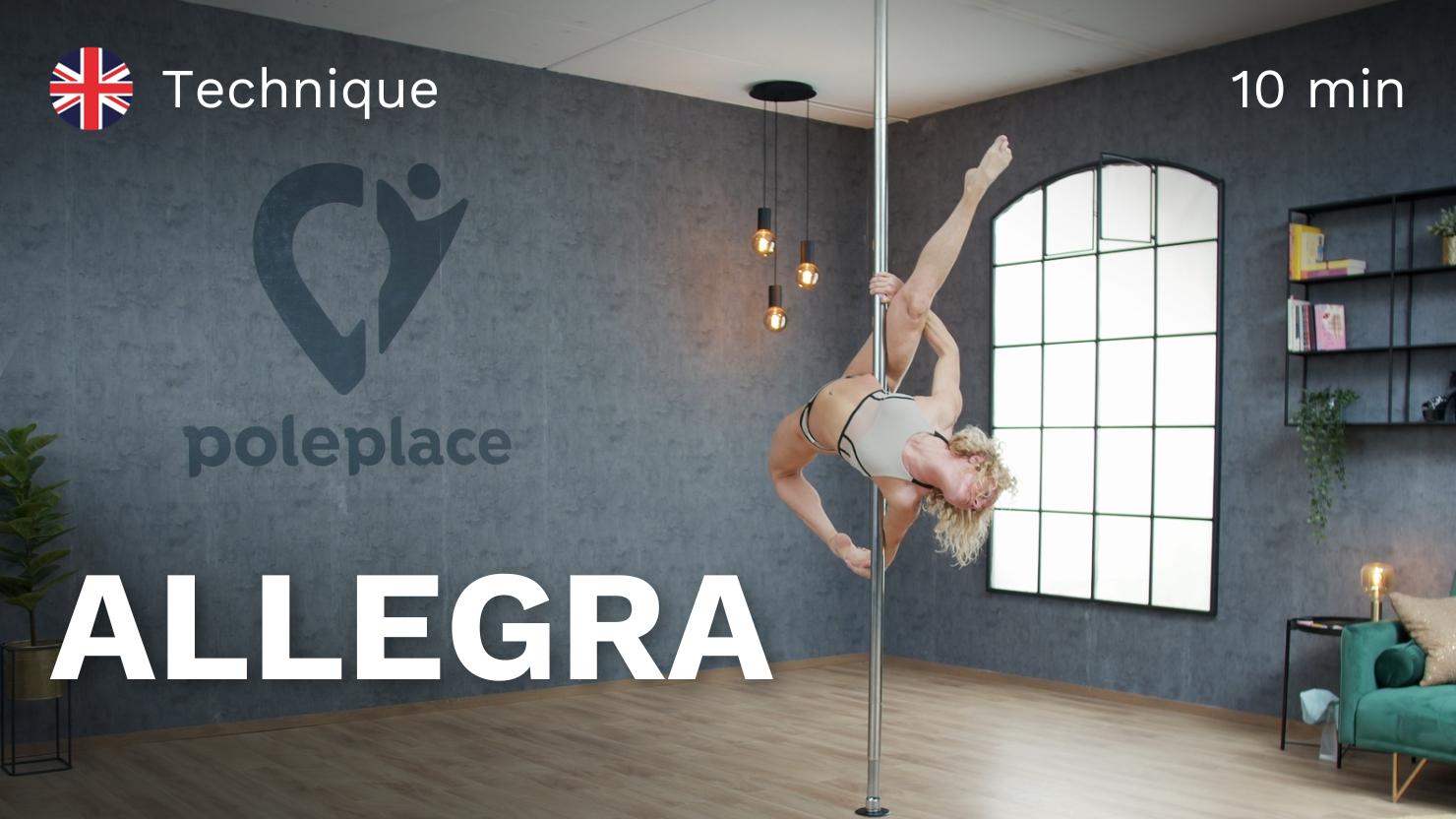
Before: a confident Invert, and ideally the Butterfly, since many dancers find their way into the Flatline from there. An Inside Leghang helps you get familiar with hanging from your leg. After: it opens doors to more expressive inverted shapes like the Allegra, and it’s a beautiful moment to pause in your combos.