

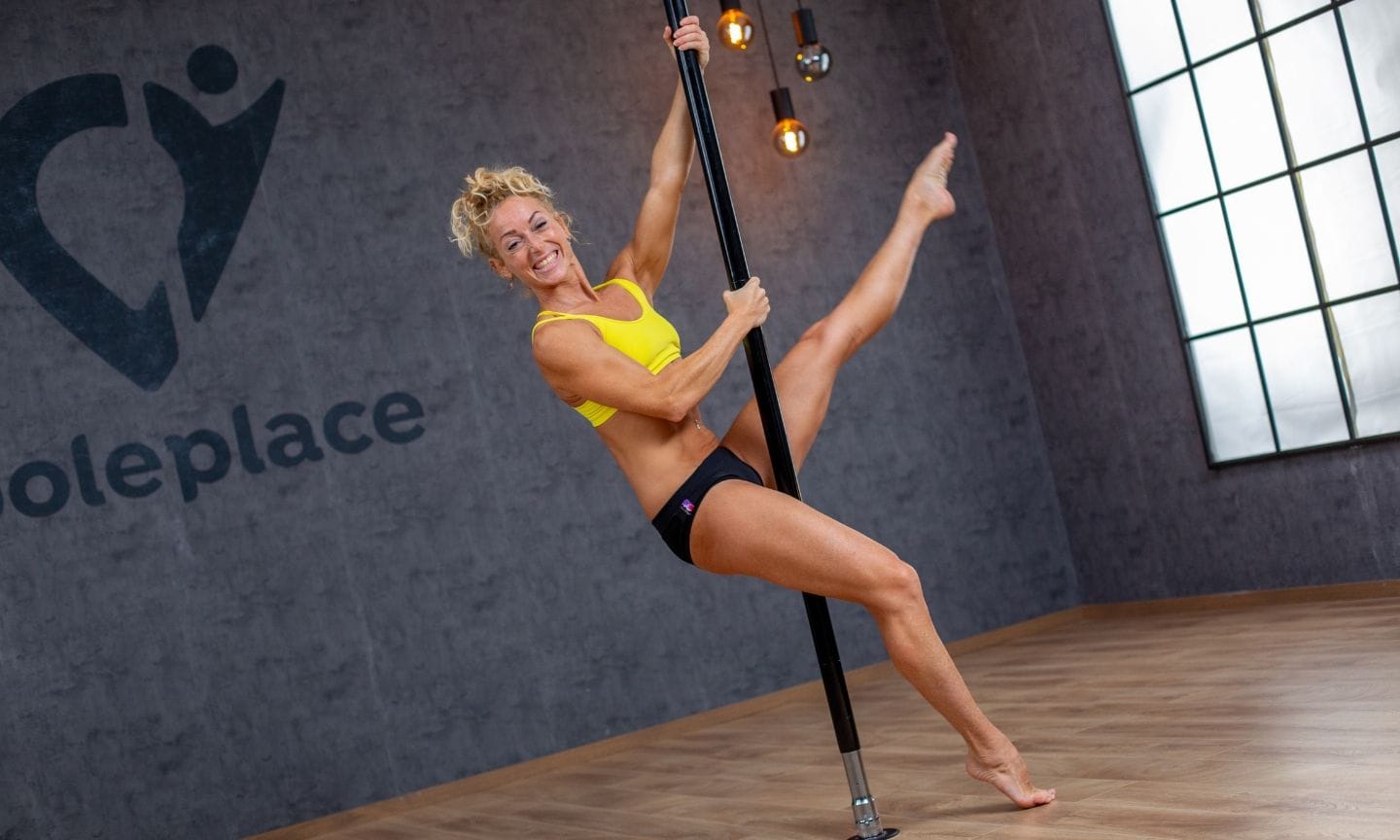
10% off at Lupit Pole
We train on Lupit Pole. With the code POLEPLACE10 you get 10% off in the Lupit shop.
For most beginners, a static pole is the easier place to start, because you control every bit of movement yourself and the pole stays where you expect it to be. The smartest buy, though, is often a pole that does both: you train static now and switch to spinning mode once your grip and body awareness have grown. That way you never have to choose twice.
Short answer: If you want one pole that grows with you, choose a home pole with switchable static and spinning modes, such as the Lupit Classic G2. Start in static mode, and unlock the spin when you feel ready.
What is the difference between a static and a spinning pole?
A static pole does not move. When you spin around it, all the momentum comes from you: your step, your swing, your timing. A spinning pole sits on bearings and turns with you as soon as you put your weight on it. You still start the movement, but the pole keeps it going, and spins become longer and floatier.
Most home poles today are not one or the other. Many models can be locked in static mode and released into spinning mode. X-Pole, for example, sells the SPORT as a static-only pole and the XPERT with both modes as standard. Lupit’s portable Classic G2 and Diamond G2 poles come with spinning and static mode as well.
| Static mode | Spinning mode | |
|---|---|---|
| Who creates the movement | You | You start it, the pole carries it |
| How it feels | Grounded, predictable | Flowing, a bit like floating |
| Good for | Learning grip, first spins, climbs, sits | Longer spins, flowing combos, dynamic transitions |
| What it asks of you | Momentum and timing | Control, a steady centre, calm in motion |
| Typical beginner experience | Feels safe quickly | Can feel dizzy or unpredictable at first |
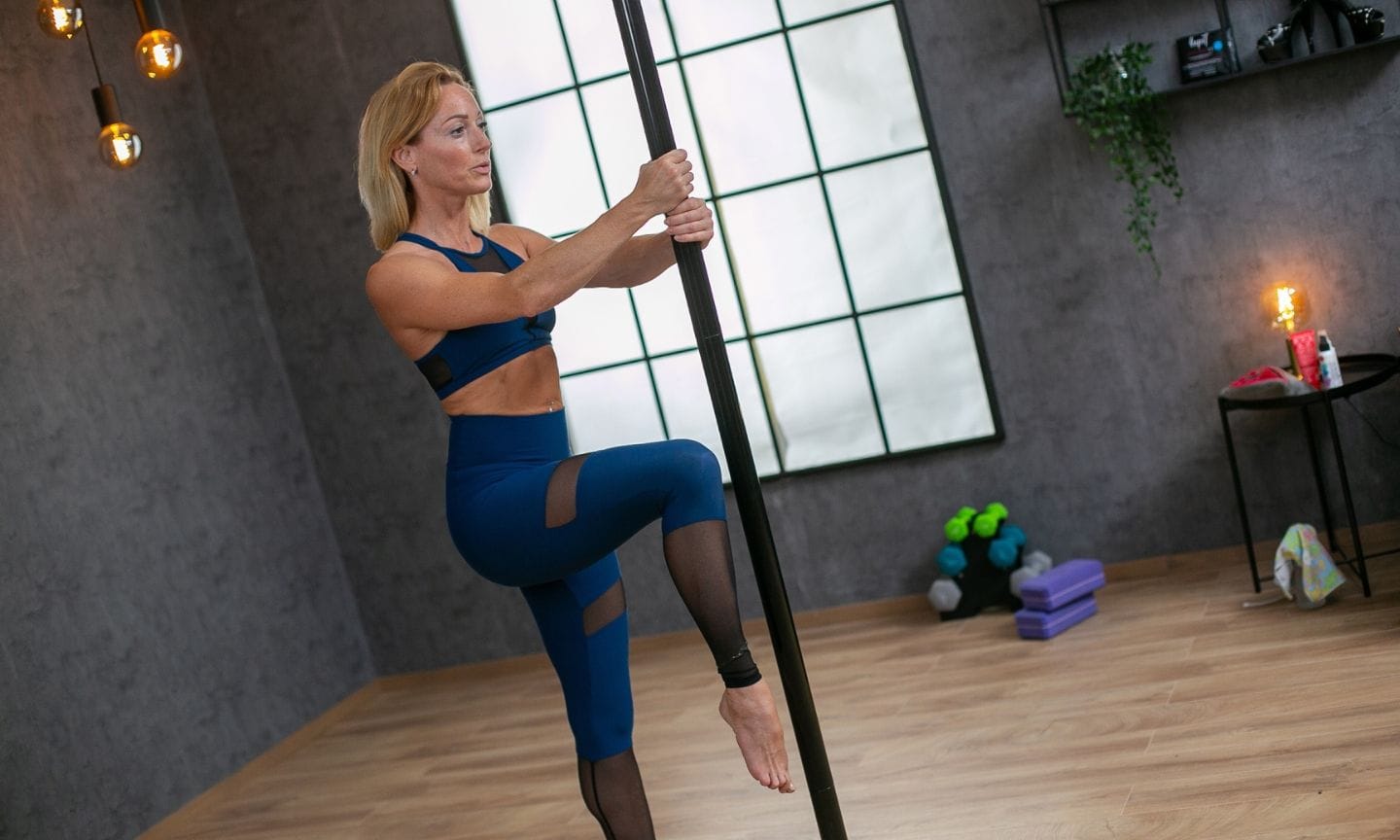
Which pole is better for beginners?
Static mode is where most people feel at home first. X-Pole writes that most people start on a static-only pole, and that matches what you will see in many beginner classes. The reason is simple: when the pole stays still, you can feel cause and effect. You step, you swing, you lift, and you notice what each part does. That builds the grip and body awareness you need for almost everything that comes later.
None of this means spinning is off limits as a beginner. Some people love the feeling of a spinning pole from day one. It just tends to feel more unpredictable while your grip and core are still finding their way, and that is completely normal. There is no right order that fits everyone, only the order that feels good for your body.
What does learning on a static pole feel like?
On a static pole you are the engine. Each spin is a small lesson in momentum: too little and you slide down early, too much and you swing past the shape you wanted. That sounds like a challenge, but it is exactly what teaches you control.
Static mode is also where many of the first holds, climbs and sits feel most stable, because the pole gives you a fixed point to push and pull against. Beginner spins like the Fireman Spin and the Chair Spin are lovely on static, and the feeling of getting them round and smooth by yourself is a big confidence boost.
What changes on a spinning pole?
When you release the spin, the pole becomes part of the dance. A small push is enough to send you around several times, and the speed depends on how close you keep your body to the pole. Hold your shape compact and you turn faster, open up and you slow down.
That brings a few new things to learn:
- Staying calm in motion. The first spins can feel fast and a little dizzy. Short sessions help your body get used to it.
- Keeping your weight close. On a spinning pole, leaning away from the pole changes the speed and can make a move feel heavier.
- Starting softly. You often need less momentum than on static, not more.
- Getting off gracefully. Learning to slow down and land softly is part of every spinning move.
Many dancers find that spinning mode makes their pole dancing feel more fluid and musical. It is a beautiful next step, not a test you need to pass early.
Why is a pole with both modes worth it?
A switchable pole means you do not have to predict your future pole journey before you buy. You start on static, and the day you want to try spinning, you unlock it. No second pole, no new installation.
How you switch depends on the model:
- Hex screw at the base. On poles like the X-Pole XPERT, the modes are switched with a few turns of hex screws at the bottom of the pole. Lupit’s standard-lock G2 poles also use a hex key.
- Quick lock by hand. The X-Pole XPERT Pro uses an X-LOCK system that you lift and twist. Lupit’s Quick Lock lets you turn a lock ring on the lower bearing system to change modes, and a diamond marker shows which mode the pole is in.
A quick lock costs more. On Lupit’s own shop the Classic G2 quick-lock versions are listed at a higher price than the standard-lock versions (chrome and powder-coated finishes, as listed on 8 November 2026). Whether that is worth it depends on how often you plan to switch. If you think you will change modes within one session, a quick lock is convenient. If you will mostly stay on static for a while, the standard lock does the same job with a few extra seconds.
Which moves work on which pole?
Most beginner moves work in both modes, they just feel different. As a rough orientation:
| Move type | Static | Spinning |
|---|---|---|
| Walks, floor work, body waves | Works the same | Works the same (pole locked or not, you barely touch it) |
| First spins (Fireman, Chair) | Great place to learn them | Longer, softer ride once the shape is familiar |
| Climbs and sits | Stable, feels secure | Possible, but the pole may turn while you climb |
| Spinning combos | You create all the flow | The pole helps the flow along |
| Inverts | Usually learned static first | Later, with a coach’s guidance |
You can browse the moves library to see which moves are tagged for beginners. At POLEPLACE every move is built up with the Floor-Stand-Air Method™: you learn the shape on the floor, then standing at the pole, and only then in the air. That works on either pole mode and gives you a calm way to find out what your body likes.
Does a spinning pole need extra care?
Yes, a little. A spinning pole runs on bearings, and they like to stay clean. Lupit’s FAQ says the lower and upper bearings should be lubricated every three months with daily use, and that a spin that feels stiff is usually caused by overtightening or a pole that is not quite vertical. Always follow your manufacturer’s manual for installation and maintenance. Our guide to pole care and cleaning covers the routine, and how to set up a pole explains what to check before you start.
Does the pole diameter or finish matter for spinning?
They matter for grip in both modes. A smaller diameter is easier to wrap your hand around, and grippier finishes like powder coating are more forgiving if your hands slip. On a spinning pole, grip matters a little more, because you need to hold your shape while the pole turns. We compare the options in pole diameter and finish.
So which one should you get?
- You want to start calm and keep the option open: a pole with both modes, used in static mode first.
- You know you will only train static for a long time and want to save money: a static-only pole can be enough.
- You already train spinning in a studio: a switchable pole with a quick lock saves you time.
Whatever you choose, make sure the pole fits your room first. Ceiling height, ceiling type and floor space decide more than the spin function. Our best pole for home guide walks you through the whole decision, and how much ceiling height you need helps with the measuring.
FAQ
Is a spinning pole harder than a static pole?
It is different rather than harder. On a spinning pole the pole carries part of the movement, so you need more control and a steadier body position, while on a static pole you create all the momentum yourself.
Should a beginner buy a static-only pole?
You can, and many people start on static. A pole that switches between both modes costs a little more but lets you start static and try spinning whenever you feel ready, without buying a second pole.
How do you switch a pole from spin to static?
It depends on the model. Some poles lock with a small hex screw at the base, others have a quick-lock ring you turn by hand. Always follow the manufacturer’s manual for your pole.
Can I learn spins on a static pole?
Yes. Classic beginner spins like the Fireman Spin and the Chair Spin are usually learned on a static pole first, because you feel exactly how much momentum you create yourself.
Does a spinning pole need maintenance?
Spinning poles have bearings, and manufacturers recommend cleaning and lubricating them now and then. Lupit, for example, advises lubricating the bearings every three months with daily use.
What next?
Once your pole is up, the best thing you can do is give your body a good start. The 12-Week Starter Course takes you from your first walks and spins to your first sits, step by step, in static mode first and with spinning added when you are ready. You can try it 7 days for free as part of the POLEPLACE membership.
Still choosing your pole? The Lupit Classic G2 lets you start static and switch to spinning later, and our code gives you 10% off.
What next?
Start with Class 1 of our 12-Week Starter Course. Every move is taught with our Floor-Stand-Air Method™: on the floor first, then standing, then in the air.