


Pole dancing builds real strength in your grip, arms, shoulders and core, improves flexibility and coordination, and gives a lot of dancers a new kind of confidence in their bodies. It works as a full-body workout and as dance at the same time, which is why so many people stay with it long after they planned to “just try it”. Here is what pole trains, step by step, and how to get those benefits safely at home.
What are the physical benefits of pole dancing?
Strength without weights
On the pole, your own body is the weight. Climbs, holds and spins ask your arms, shoulders, back and core to lift, hold and lower you. That is why many dancers notice they get stronger long before they see a single trick land: the training happens with every walk, spin and sit. You do not need to be strong to start, the strength grows with the moves. Our pole strength exercises show how to support it off the pole.
Grip strength
Few sports train your hands like pole. Every spin and climb depends on your grip, and it gets stronger with every session. If you want to know more about the different ways to hold the pole, read our guide to pole dance grips.
A strong core
Almost every move on the pole starts in your center. Lifting your legs in a spin, keeping your body steady in a sit, tucking into your first invert: it all comes from your core. That is one reason pole training feels so different from isolated ab exercises: your core works the way it does in real movement.
Flexibility and mobility
Pole includes a lot of stretching: hips, hamstrings, shoulders and back. Splits and backbends are not required to start, but regular pole training with warm-ups and cool-downs gradually improves your range of motion. Flexibility grows best when you train it on purpose, a little and often.
Coordination and body awareness
Pole asks you to know where your hands, legs and hips are at every moment, often while you turn or are upside down later on. That trains coordination, balance and body awareness in a way few workouts do.
Endurance
Linking moves into a flow to music keeps your heart working. A pole session can feel like strength training and cardio in one, depending on how you build it.
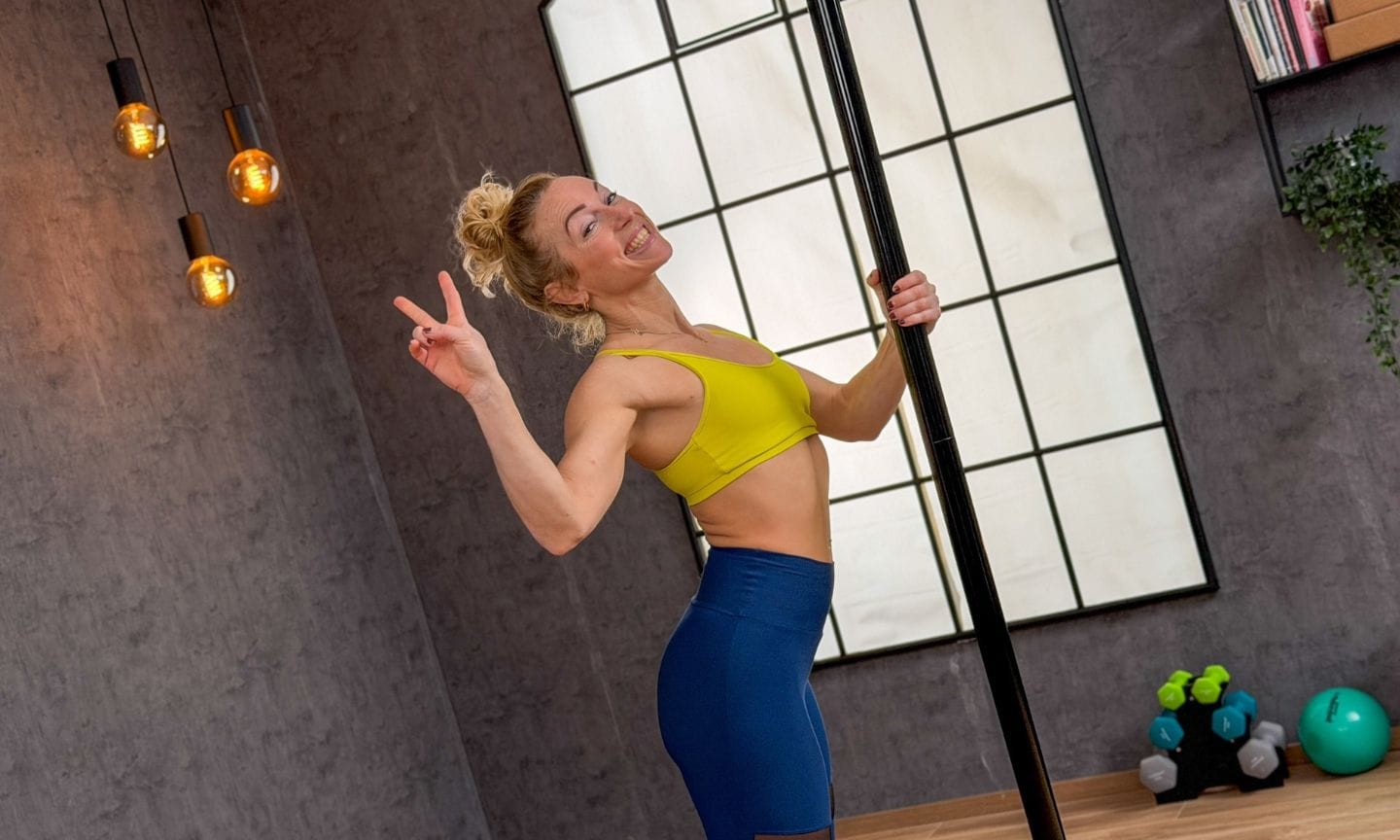
What are the mental benefits of pole dancing?
Confidence you can feel
The first time a spin works, or you hold a sit without hands, you feel it. Pole is full of small, visible wins, and those wins add up. Many dancers say this is what changed their relationship with their bodies: they start to see what their body can do, not only how it looks.
Focus and a break from everything else
When you are on the pole, your attention is on your hands, your feet and the next move. There is not much room for anything else. For many people, that is exactly what makes pole a good way to switch off after a long day.
Creativity and self-expression
Pole is a dance. Once you know a few moves, you start linking them your way, to music you love. Styles range from athletic pole fitness to flowing, sensual exotic pole, and you choose what feels like you. Our guide to pole fitness vs pole dance explains the styles.
Community
Pole has a famously supportive community. Whether you train in a studio or online with others in live classes, you are surrounded by people who celebrate every small win, including yours.
Who is pole dancing good for?
Pole is for every body and every fitness level. You do not need strength, flexibility or dance experience to begin: beginner classes start on the floor and close to the pole and build from there. If you are worried that you are not fit enough, read am I too unfit for pole dancing? If you have an injury, a health condition or are pregnant, talk to your doctor before you start a new sport.
How to get the benefits safely
- Learn in the right order. Floor first, then standing, then in the air. At POLEPLACE that is the Floor-Stand-Air Method™.
- Warm up every time. Wrists, shoulders, hips and core need it.
- Train regularly, not endlessly. Two to three sessions a week with rest days in between work well for most beginners. More in how often should you pole dance?
- Stop when it hurts. Muscle effort is normal, sharp pain is not.
- Use a safe pole and space. See how to learn pole dancing at home for the setup.
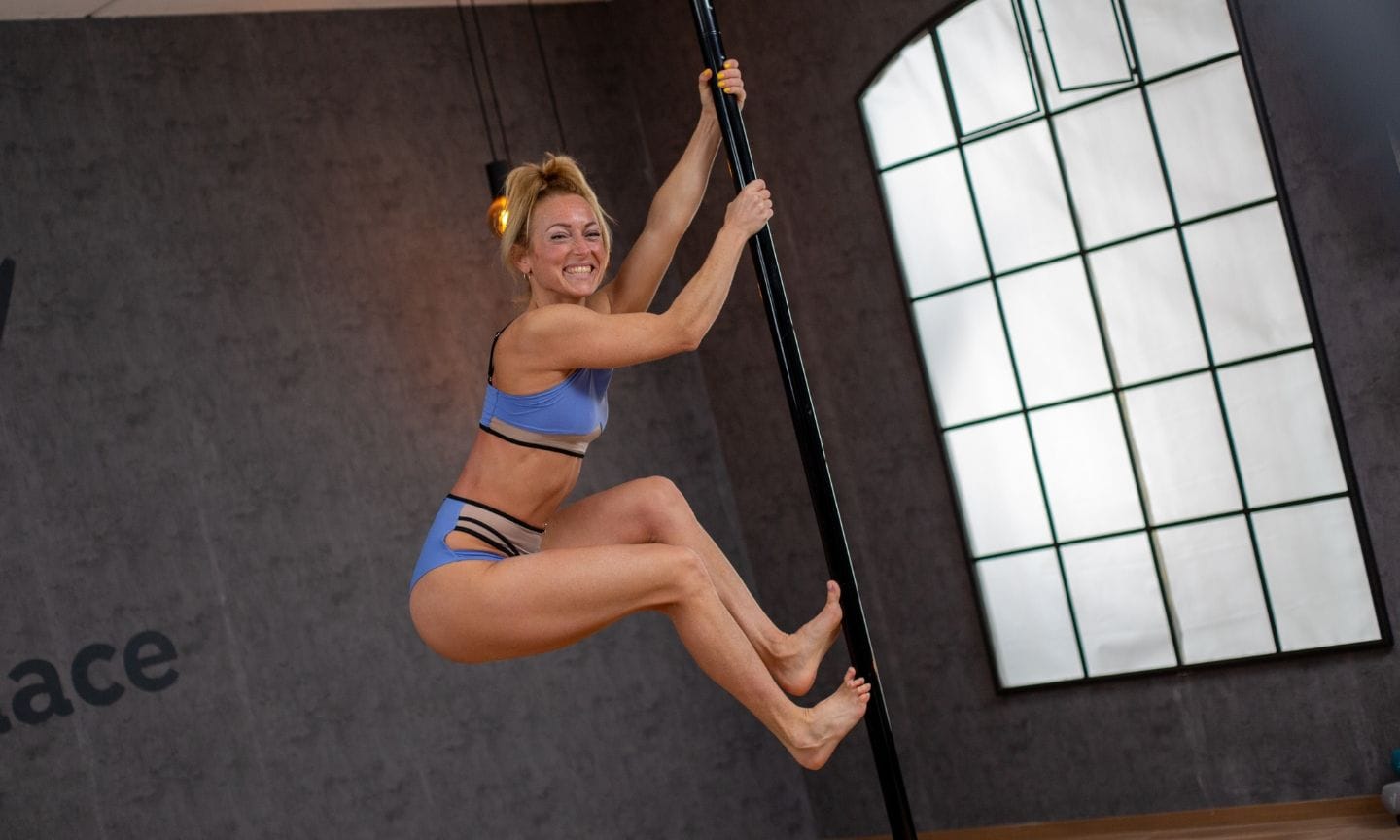
FAQ
Is pole dancing a good workout?
Yes. Pole trains strength, grip, core, flexibility, coordination and endurance in one session, using your own body weight.
Does pole dancing build muscle?
Pole builds strength in your arms, shoulders, back, core and grip, because you lift and hold your own body weight. How your body changes depends on how often you train and on everything else you do.
Can pole dancing improve flexibility?
Yes, especially when warm-ups, cool-downs and regular stretching are part of your training. You do not need to be flexible to start.
Is pole dancing good for confidence?
Many dancers say so. Pole gives you lots of small, visible wins, and it shifts the focus from how your body looks to what it can do.
How often should I pole dance to see benefits?
Two to three sessions a week are a good start for most beginners. Regular, shorter sessions help more than one long one.
Start feeling it yourself
The best way to find out what pole does for you is to try it. Our online pole classes start with the 12-Week Starter Course, made for complete beginners, and your first 7 days are free. Prefer to start without a trial? Here are all our free pole dance classes.
What next?
Start with Class 1 of our 12-Week Starter Course. Every move is taught with our Floor-Stand-Air Method™: on the floor first, then standing, then in the air.