
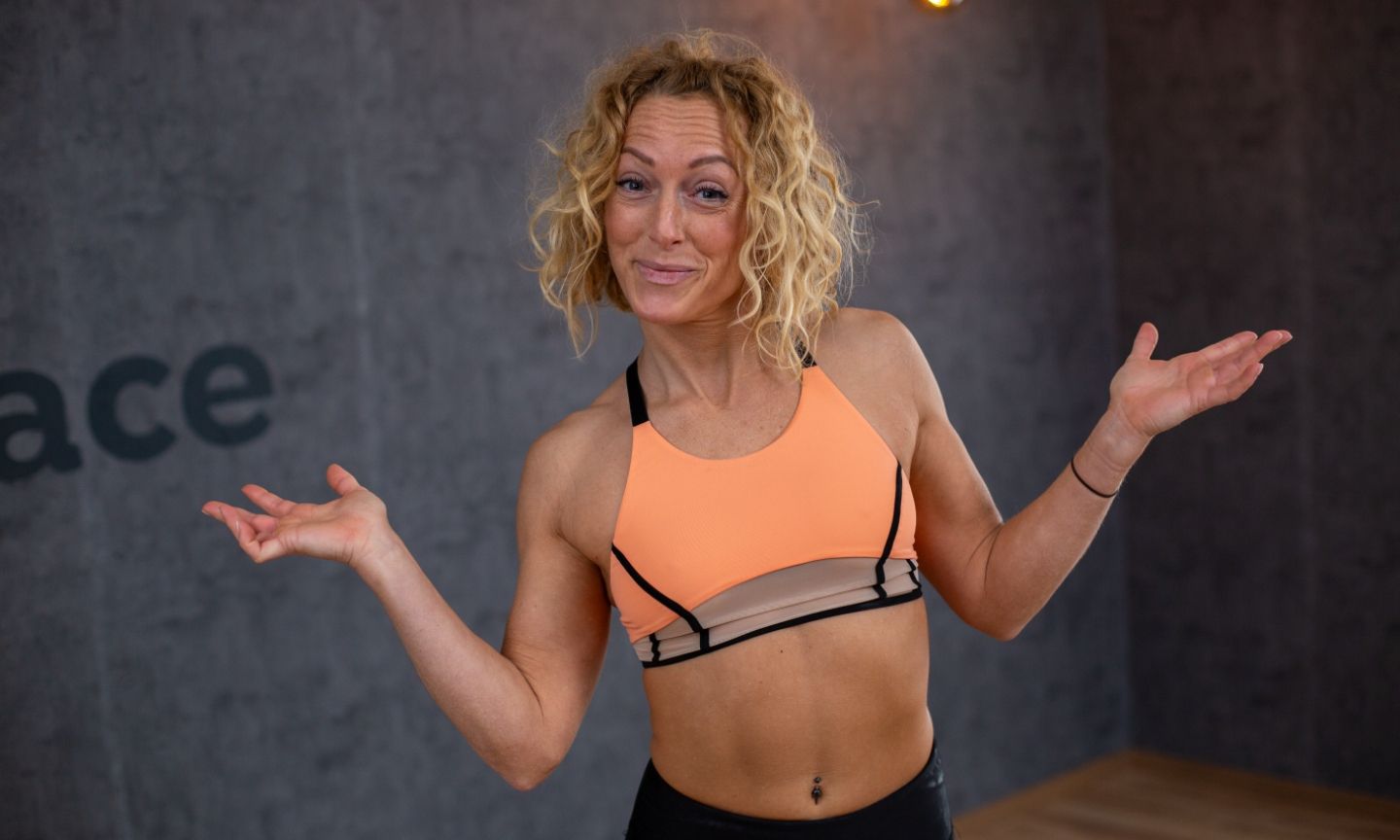
No, you are not too unfit, too heavy or too old to start pole dancing. Fitness is something pole builds over time, not something you need on day one. What matters is where you start: on the floor and standing at the pole, long before anything lifts you into the air.
Almost every beginner asks some version of this question before her first class. Maybe you have no upper body strength, maybe you have never danced, maybe you are worried about your weight or your age. This guide goes through each fear one by one, explains how pole progression works, and shows you how to start at home at your own pace.
Do I need to be strong before I start pole dancing?
You do not. Pole dancing is a strength sport, but the strength comes from pole itself. Your first classes ask very little of your arms. You walk around the pole, hold it with one hand, move your hips, roll down to the floor and get up again. That is already training: your grip, your shoulders, your core and your legs all start working in small doses.
Strength in pole grows from repetition, not from a fitness level you bring with you. Every time you hold the pole a little longer or spin one more time, your body adapts. Many beginners are surprised how quickly simple moves start to feel easier once they practise regularly.
If you want extra support, short conditioning sessions help. The strength workouts give you exercises you can do next to the pole or without it. Even short, calm conditioning sessions on non-pole days add up over the weeks.
Am I too heavy for pole dancing?
This is one of the most searched beginner questions, and the answer is no. Pole dancing is for every body. Bodies of all shapes and sizes dance, spin and climb.
A few common myths about body weight:
- “You have to be light to hold yourself up.” Pole uses your own body weight as resistance, at whatever weight you are. Your strength grows in relation to your body, so the moves become possible for you as you train.
- “Curves make it harder.” Skin contact is what keeps you on the pole. Thighs, knees and the backs of your legs are grip points, and more contact area can feel more secure in seats and holds.
- “I need to lose weight first.” You do not. Pole is not a weight-loss program, and you can start exactly as you are today.
For plus size pole dancing for beginners, the same rules apply to everyone: start on the floor and standing, build grip slowly, and only lift your feet when you feel ready. If you train at home, check that your pole is rated for your body weight and installed exactly as the manufacturer describes. A secure setup is what lets you relax and focus on learning.
Am I too old to start pole dancing? Pole dancing over 40
There is no age limit on pole. Women start in their 30s, 40s, 50s and beyond. Pole dancing over 40 often means you know your body better, you are less in a hurry and you train with more patience, which are all useful in pole.
What changes with age is mostly recovery. You may need a little more warm-up time and a rest day between sessions. Mobility and joint comfort deserve attention, so gentle warm-ups and cool-downs are part of every session, not an extra. Floorwork and flow are a lovely way in, because they build strength and body awareness without big impact.
I am not flexible. Can I still do pole?
Yes. Flexibility is not a requirement for beginner moves. A first spin like the Fireman Spin works with whatever range of motion you have right now.
Flexibility improves when you train it regularly, and pole gives you a reason to. You can add short stretching sessions to your week, but you do not have to touch your toes before your first class. Pointed feet and long lines come with time.
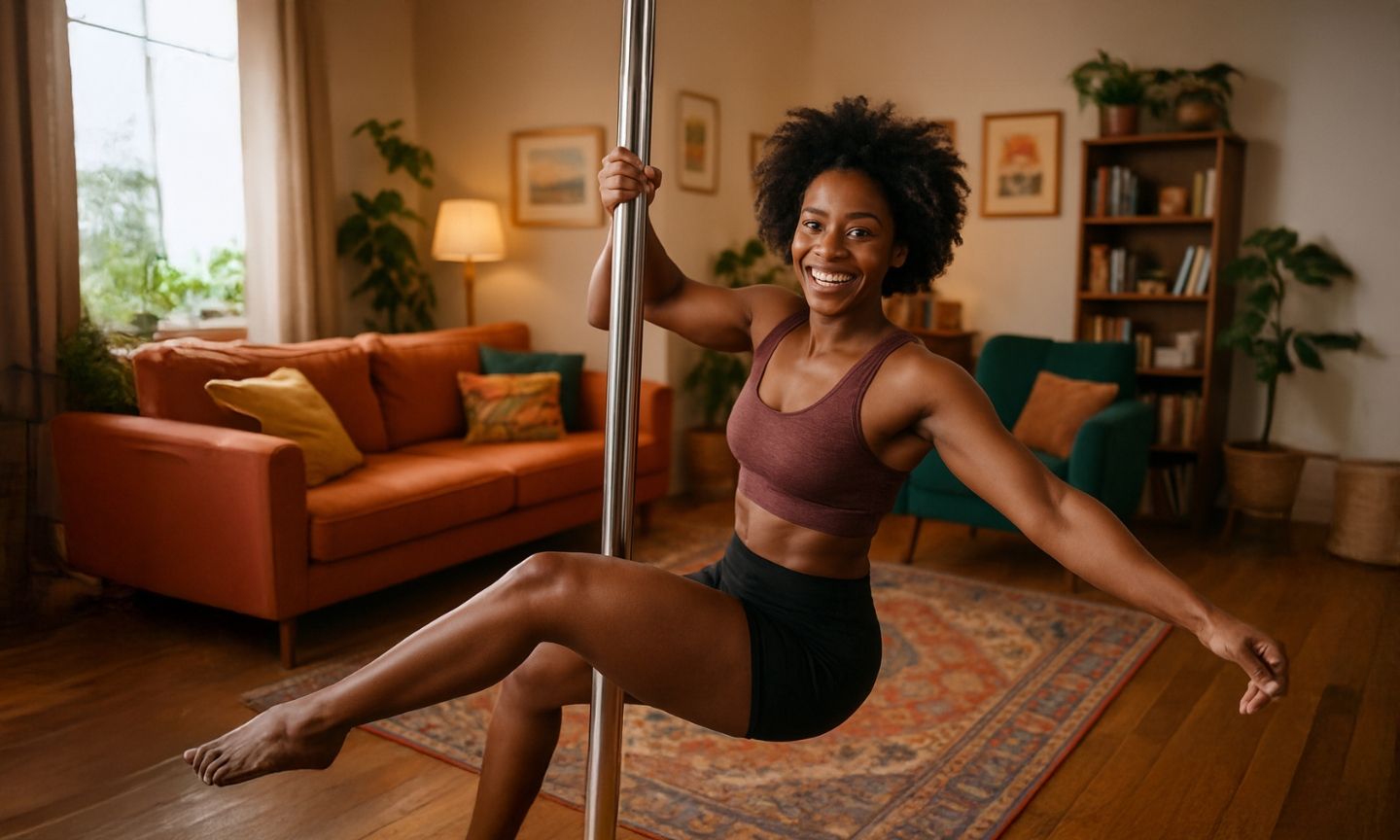
I have never danced. Is pole dancing for beginners like me?
Absolutely. Most people who start pole have no dance background. Pole classes for beginners teach you movement step by step: how to walk around the pole, how to shift your weight, how to connect one move to the next.
A move like the Body Wave is made for exactly this. It travels through your upper body down to your hips and works with or without a pole. They feel stiff at first, and that is normal. Over time they become your own, and your style grows from there.
I am shy. What if I feel awkward?
Feeling awkward is part of starting anything new. Pole can feel very exposed at first: shorts, a mirror, moves you have never done before. That is one of the reasons many women prefer to begin at home.
At home nobody watches. You can repeat a move as often as you like, pause the video, laugh at yourself and try again. You choose the music, the light and the outfit. Confidence often grows quietly, session by session, until one day you notice you are dancing instead of just doing the steps.
How does pole progression work: floor first, then standing, then air
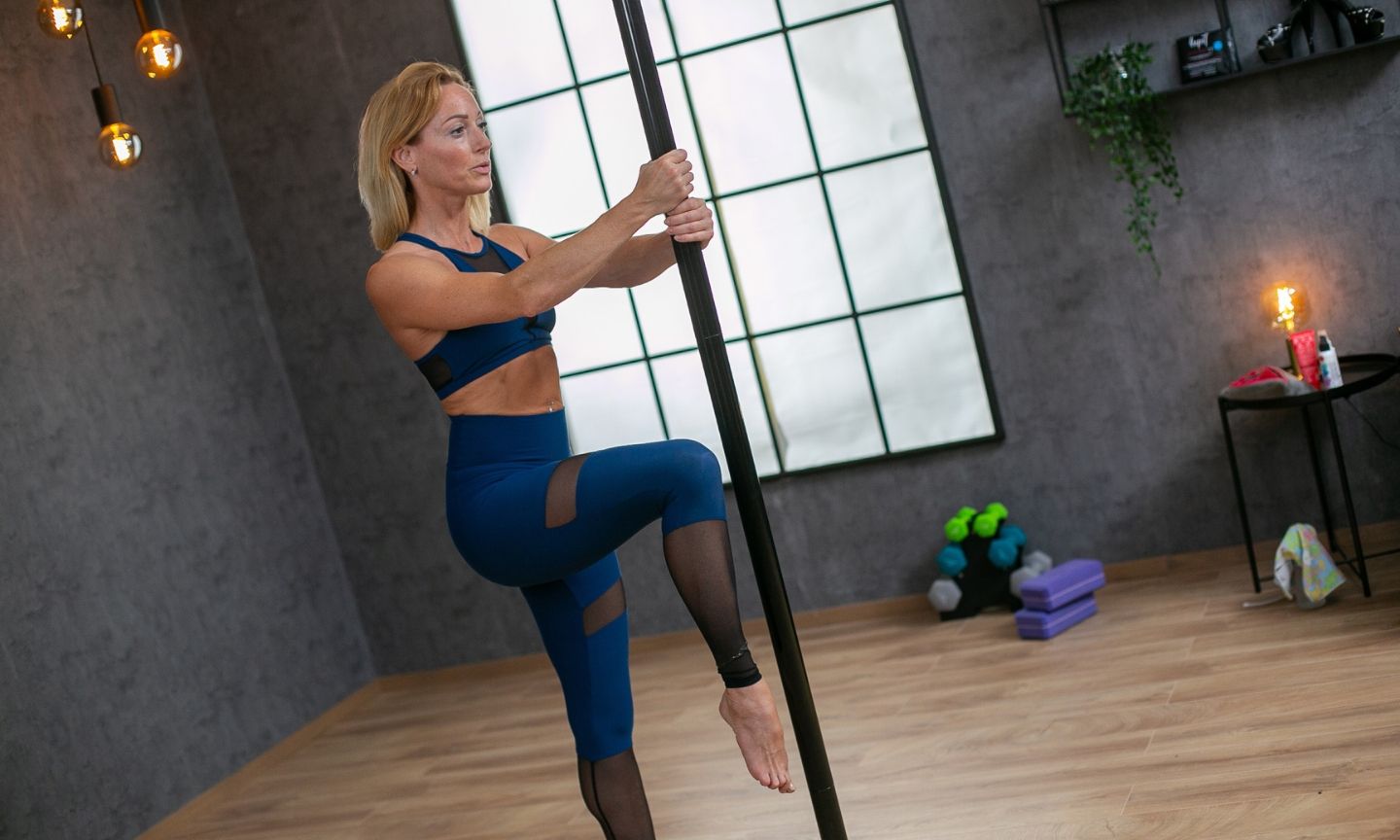
Good pole training follows a clear order. At POLEPLACE we call it the Floor-Stand-Air Method™: you build each level on the one before.
| Level | What you do | What it builds |
|---|---|---|
| Floor | Floorwork, rolls, slides, body waves on the floor | Body awareness, core, flow, confidence |
| Stand | Walks, spins, poses with at least one foot on the ground | Grip, shoulder stability, coordination |
| Air | Climbs, seats, holds and later inverts | Full-body strength, control, trust in your grip |
This order is the reason you do not need to be fit before you start. The floor asks the least of your body and teaches you the most about how you move. Standing moves bring in grip and shoulders while your feet still carry part of your weight. Air moves only come once your body is ready for them.
If you want to see what this looks like in practice, the top 10 pole dancing moves for beginners gives you a feel for the first standing moves.
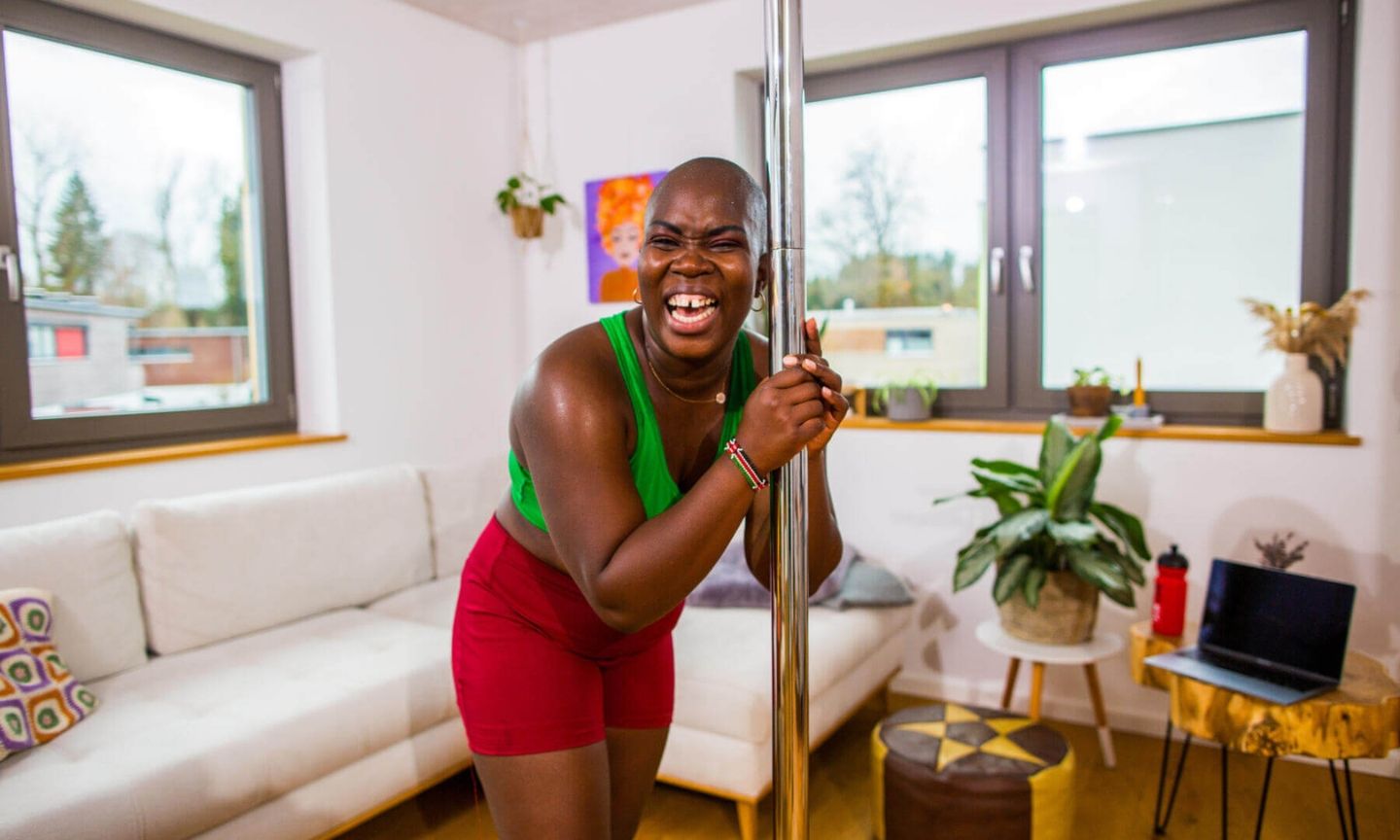
How do I start pole dancing at home without pressure?
You can start small. A few ideas that help:
- Start on the floor. The Floorwork: The Basics program is a gentle entry, and you do not even need a pole for much of it.
- Follow a structure. Random videos can overwhelm you. A guided plan tells you what to practise next and when you are ready for more.
- Keep sessions short. A shorter session you enjoy is better than a long one you dread.
- Warm up and cool down every time. This protects your joints and helps you recover.
- Build a foundation. The Essentials series takes you through the basics level by level.
- Try a live class. If you want to feel the energy of a group from home, join our free pole dancing live class.
There is no deadline. Pole is not a competition with anyone else, and progress looks different for every body.
When should I talk to my doctor before pole dancing?
Pole is physical, so listen to your body. Talk to your doctor or physio before you start if you:
- have a heart condition, high blood pressure or a condition that affects your circulation
- have current injuries or chronic pain, especially in your shoulders, wrists, back or knees
- are pregnant or recently gave birth
- have had surgery recently
- are unsure whether intense exercise is right for you at the moment
They can tell you what is safe for you and what to adapt. During training, stop if something feels sharp or wrong, and rest when your body asks for it.
FAQ
Am I too unfit for pole dancing if I cannot do a single push-up?
No. Beginner pole does not need push-up strength. Your first moves keep your feet on the floor, and your strength grows as you practise.
Is there a weight limit for pole dancing?
Pole dancing itself has no weight limit. The only limit is your equipment: check the maximum load of your pole and make sure it is installed correctly.
Can I start pole dancing over 40 or over 50?
Yes. Start with floorwork and standing moves, give yourself extra warm-up time and plan rest days. Talk to your doctor first if you have health concerns.
How long until I can climb the pole?
There is no fixed timeline. It depends on how often you train and how your body adapts. Following a structured plan from floor to standing to air helps you get there safely.
Do I need a pole at home to start?
Not right away. Floorwork, conditioning and flexibility training work without a pole, so you can start today and add a pole later.
What next?
If you want a calm, structured way in, start with the 12-Week Starter Course. It takes you from your first steps on the floor to your first moves at the pole, week by week. Your membership starts with 7 days free, so you can try it in your own time and see how it feels.
What next?
Start with Class 1 of our 12-Week Starter Course. Every move is taught with our Floor-Stand-Air Method™: on the floor first, then standing, then in the air.