

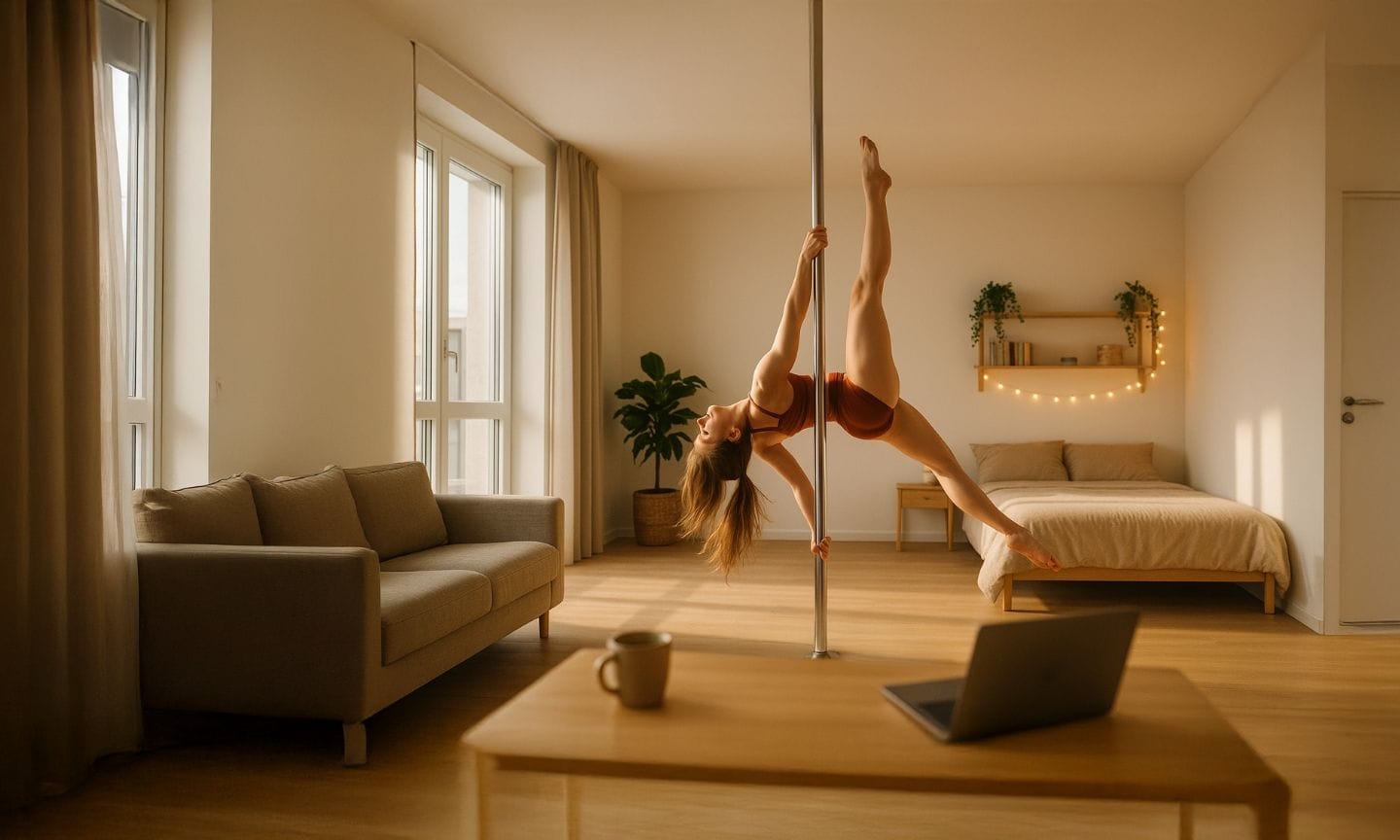
10% off at Lupit Pole
We train on Lupit Pole. With the code POLEPLACE10 you get 10% off in the Lupit shop.
Most pressure-mounted home poles fit ceilings between about 2.3 and 2.8 m with their standard parts, and extensions or shorter sets cover rooms outside that range. What matters just as much as the height is what the ceiling is made of and how much free space you have around the pole. Measure first, then pick the pole that fits your room, not the other way round.
Short answer: For a typical living room with a solid, flat ceiling, a pressure-mounted pole like the Lupit Classic G2 is a good place to start. Lower, higher or sloped ceilings need a quick look at the manufacturer’s height chart first, and if there is no workable ceiling at all, a stage pole is the way to go.
What ceiling height does a dance pole need?
There is no single number, because every manufacturer builds its poles from different section lengths and adjusters. As a rough guide, here are two common home poles and what their makers say:
| Pole | Ceiling range with standard parts | Higher ceilings | Lower ceilings |
|---|---|---|---|
| Lupit Classic G2 | 2,300–2,800 mm | up to 3,300 mm with one 500 mm extension | extensions listed in Lupit’s height table |
| X-Pole XPERT | 2,309–2,809 mm | optional extensions above 2,809 mm | see X-Pole’s height chart |
So if your ceiling sits somewhere around 2.4 to 2.7 m, which covers a lot of flats and houses, you are in the comfortable middle of both ranges. Outside that window you can still have a pole, you just need to order the right extension or set with it. For the bigger buying picture, from brands to budgets, see our guide to the best pole for home.
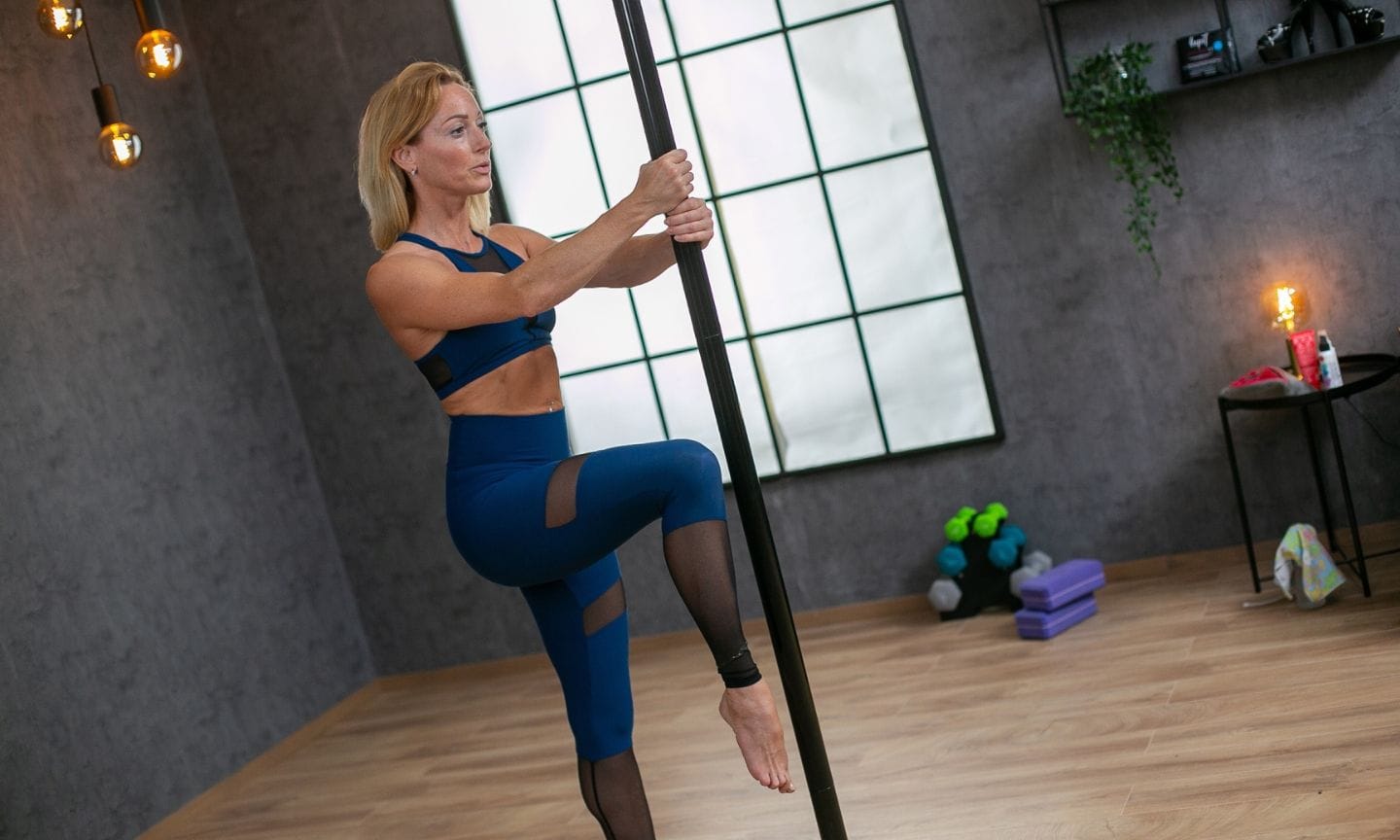
How do you measure your ceiling height correctly?
A few millimetres decide whether a pressure pole sits tight or not, so measure with care:
- Measure at the exact spot where the pole will stand. Floors and ceilings are rarely perfectly level, and old buildings especially can vary across one room.
- Measure from the surface the base will sit on. If you plan to put the pole on a thin protective pad or remove a rug first, measure in that final situation.
- Measure two or three times, ideally with a laser measure or a helper holding the tape straight.
- Write the number down in millimetres and compare it with the height chart or height calculator of the pole you are looking at.
One manufacturer’s manual is very clear on one point: never use the adjuster beyond its stated limit to make up a missing bit of height. If your measurement lands between two configurations, ask the shop or manufacturer which extension to use instead of improvising.
What can you do with a low ceiling?
If your ceiling is below the standard range, look for poles that offer short extensions or a reduced set. Lupit, for example, notes that ceilings under 2,300 mm need extensions from its height table.
What changes with less height is mostly how far up you can go. Climbs and inverts need room above your head, and your feet should never come close to the ceiling. But a huge part of what you learn in your first months happens close to the floor anyway: walks, spins like the Fireman Spin, floor work, body waves and transitions. Many of those feel just as good under a modest ceiling. Browse the moves library and you will see how much of beginner pole stays low.
What if your ceiling is very high?
High ceilings, as in many old buildings, are lovely to dance under but need a plan:
- Standard sets of most home poles end around 2.8 m, so above that you add extensions. Lupit’s Classic G2, for example, reaches 3,300 mm with one 500 mm extension.
- At some point pressure alone is no longer the right solution. X-Pole states that pressure-mounted poles need a permanent mount above 12 feet (about 3.66 m), and its XPERT manual recommends a dual-lined pole with a suitable mount for poles above 3.43 m.
A taller pole has more length to flex, so if your room is high, talk to the manufacturer about your exact height before you order. That conversation costs nothing and saves you a pole that never feels steady.

Can you install a pole under a sloped ceiling?
Yes, with the right mount. A sloped ceiling does not give the top dome a flat surface to press against, so manufacturers offer special mounts for it:
- Lupit sells a slope ceiling mount for the Classic and Diamond G2. It is screwed permanently into the ceiling using all four holes, ideally into concrete, and Lupit advises having other ceiling materials checked by an expert.
- X-Pole offers a vaulted ceiling mount for the XPERT and XPERT Pro and says its SPORT model is not suitable for slanted ceilings.
Both options mean drilling. If you live in a rented attic flat or simply do not want holes in your ceiling, read our guide to a pole in a rental flat or look at a freestanding stage pole, which needs no ceiling at all, just enough height above it.
Which ceiling types work for a pressure-mounted pole?
Height is only half the question. A pressure pole pushes against your ceiling with real force: Lupit puts the load at around 80 to 120 kg. That is why the ceiling material matters so much.
| Ceiling | What manufacturers say | What to do |
|---|---|---|
| Concrete | preferred by Lupit | usually the easiest case |
| Solid wood / timber beams | hard wood preferred (Lupit); dome centred under a joist or beam (X-Pole) | find the joist and place the pole under it |
| Plasterboard on joists | may flex (X-Pole); not recommended without reinforcement (Lupit) | locate the joist or reinforce, ask a professional |
| Suspended or false ceiling | not suitable (X-Pole); not recommended (Lupit) | do not install without structural work |
If you do not know what is above your ceiling paint, find out before you buy. Tapping and a stud finder can help you locate joists, as X-Pole suggests, but they are not a structural check. When you are unsure about the ceiling type or whether it can take the load, ask a professional such as a builder or structural engineer. And whatever pole you choose, follow the manufacturer’s installation guide step by step. Our article on how to set up a pole explains what to prepare, but it does not replace the manual.
Do not forget the floor: the base stands on it with the same force. Carpet or springy floors can make a pole less stable, which X-Pole’s manual mentions too.
How much space do you need around the pole?
This is the question people forget, and it matters for every single spin. X-Pole’s XPERT manual recommends a clear circle of roughly 3,000 to 3,500 mm in diameter with the pole in the centre, so you can fully extend your arms and legs and turn without touching anything. More experienced dancers often manage with less, but when you start out, give yourself the full circle.
A simple test before you decide on the spot:
- Stand where the pole would be.
- Stretch one arm out to the side and hold an imaginary pole with the other.
- Walk a full circle, then swing a straight leg out in front of you.
- Anything you touch, including sofa corners, shelves, lamps, radiators and doors, is in the way.
Also think about the area under you. A crash mat around the base is a good idea once you start lifting off the floor, and our home pole equipment guide explains what else is worth having.
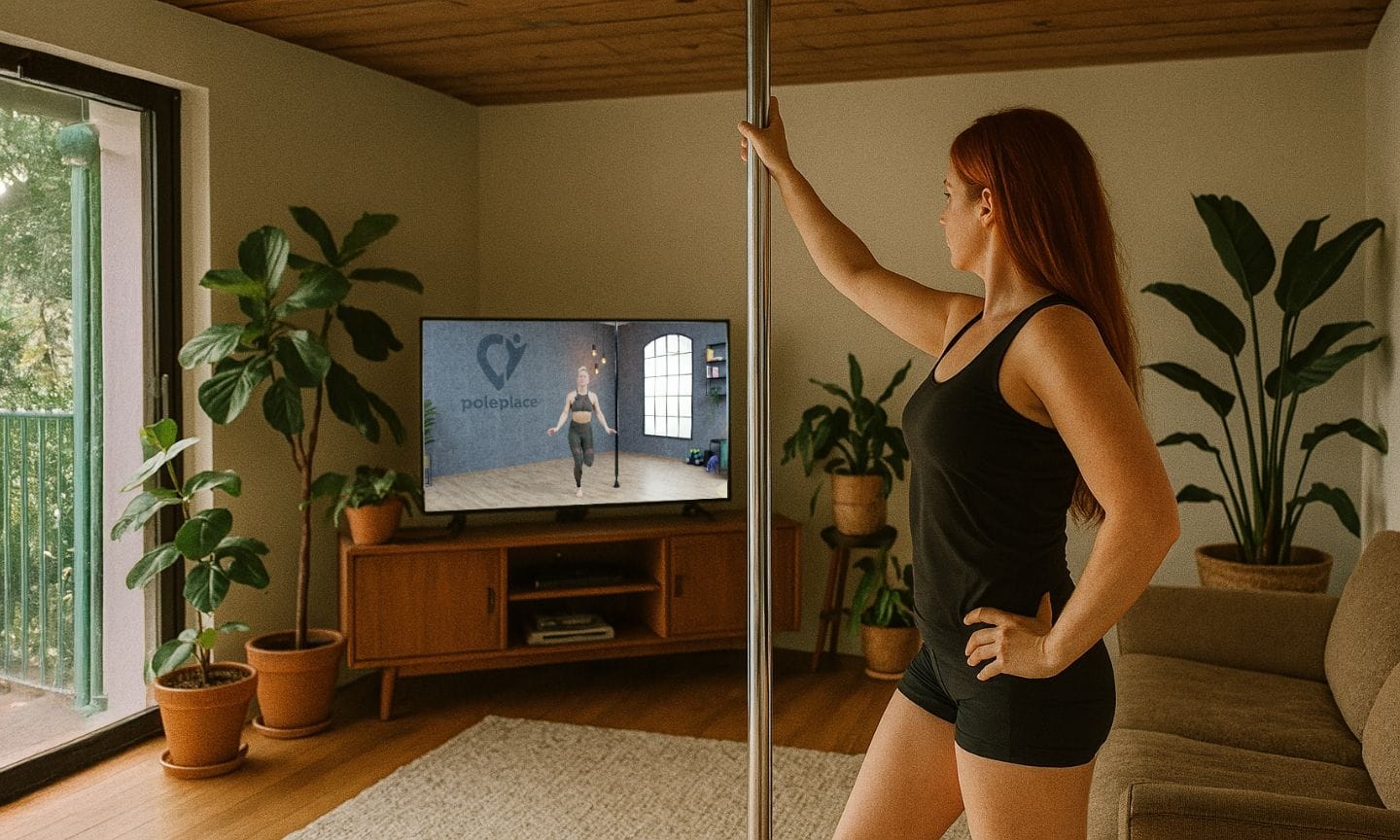
Ceiling pole or stage pole: which fits your room?
If your ceiling height, material or slope makes a ceiling pole tricky, a stage pole can solve it. It stands on its own podium and needs no contact with the ceiling, but it does need clearance above it, a fair bit of floor and more budget.
For most beginners with a normal, solid ceiling, a ceiling pole with a switch between static and spinning mode remains the most practical choice. Not sure which mode you need? Our article on static vs spinning poles helps you decide.
Quick checklist before you order
- Floor-to-ceiling height measured at the exact spot, in millimetres
- Height compared with the pole’s official height chart or calculator
- Ceiling material known (concrete, wood, plasterboard, suspended)
- Joist located, or professional advice taken if unsure
- Free circle around the pole tested with arms and legs stretched out
- For rentals: rental agreement checked and landlord asked
- Manufacturer’s manual downloaded and read before installation
FAQ
What is the minimum ceiling height for a home dance pole?
It depends on the model. The standard sets of popular pressure-mounted poles start at roughly 2.3 m, and several brands sell shorter configurations or extensions for lower rooms. Check the height chart of the exact pole you want before you order.
Can I put a dance pole under a sloped ceiling?
Often yes, but you usually need a special slope or vaulted ceiling mount that is fixed to the ceiling. If you cannot or do not want to drill, a freestanding stage pole is the alternative.
How much floor space do I need around the pole?
Plan for a clear circle around the pole that lets you stretch your arms and legs out and spin without touching furniture or walls. One manufacturer recommends a circle of about 3 to 3.5 m in diameter for beginners.
Does a low ceiling mean I cannot learn pole?
No. A low ceiling limits how high you can climb, but spins, floor work, transitions and many beginner moves happen close to the floor anyway.
My ceiling is very high. What now?
Most home poles need extensions above about 2.8 m, and very tall poles may need a fixed mount instead of pressure mounting. Ask the manufacturer which setup fits your exact height.
What next?
Once you know your pole fits your room, the fun part starts. If you are still choosing, our best pole for home guide walks you through every option, and you can get 10% off at Lupit with the code POLEPLACE10.
When your pole is up, start the 12-Week Starter Course with 7 days free. It begins on the floor and builds up at your pace, so it works under any ceiling.
What next?
Start with Class 1 of our 12-Week Starter Course. Every move is taught with our Floor-Stand-Air Method™: on the floor first, then standing, then in the air.