

10% off at Lupit Pole
We train on Lupit Pole. With the code POLEPLACE10 you get 10% off in the Lupit shop.
For most beginners at home, a 45 mm pole in chrome or a grippy powder coat is a safe choice, and 40 or 42 mm is worth a look if you have smaller hands or a weaker grip. The finish matters at least as much as the diameter: it decides how much your skin sticks, how the pole behaves in a warm room and whether it suits sensitive skin. Below you find what each option feels like and who it suits.
Short answer: If you are unsure, pick a 45 mm pole in chrome, or a powder-coated finish if your hands tend to slip. The Lupit Classic G2 comes in 45 and 42 mm and in chrome, stainless steel and powder-coated finishes, so you can match both to your hands.
Which pole diameters are there?
Home poles today mostly come in three sizes. Not every brand makes all of them, and some use slightly different numbers.
| Diameter | What it feels like | Often chosen by | Where you find it |
|---|---|---|---|
| 40 mm (Lupit: 42 mm) | Slim, easy to close your hand around | Smaller hands, weaker grip, beginners who want an easier start | Home poles, some studios |
| 45 mm | Medium, more contact for legs | Most dancers, anyone who also trains in a studio | Most studios and competitions |
| 50 mm | Wide, lots of surface for legs | Dancers who like a chunky pole | Older or club-style poles, less common at home |
X-Pole makes its poles in 40 and 45 mm and calls 45 mm the industry standard that you find in nearly all studios and at most competitions. Lupit offers its portable home poles in 45 and 42 mm. Platinum Stages still sells 50 mm poles and describes them as the classic thickness that is more common in clubs.
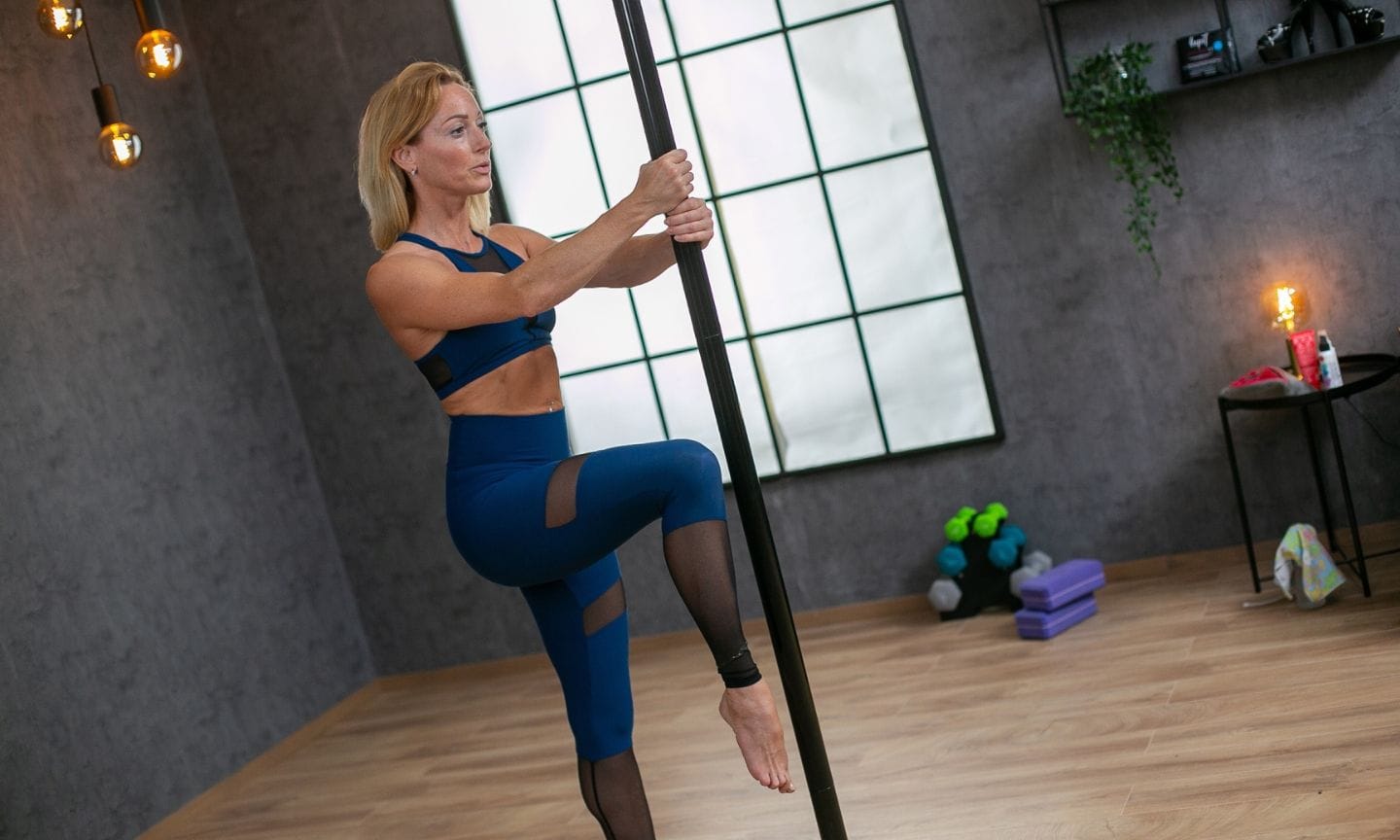
Is 40 mm or 45 mm better for beginners?
There is no wrong answer here, and pole people love to debate it. X-Pole puts it nicely: some say you should start on 45 mm and get used to it, others prefer the easier start on 40 mm, and in the end it comes down to what works for you.
A few questions help you decide:
- Do you have small hands? Wrap your hand around something about 4 cm wide and then about 4.5 cm wide. If your fingers barely meet on the wider one, a slimmer pole will probably feel more secure.
- Do you also go to a studio? Then a home pole in the same diameter as your studio pole makes switching easier. Ask your studio which size they use.
- What do you want to train most? A slimmer pole can feel easier for hand grips. A wider pole gives your legs a bit more surface for sits and holds. Platinum Stages notes that on a 40 mm pole some leg hangs and sits can feel harder because there is less surface.
The difference between 42 and 45 mm sounds tiny, but your hands notice it. It is just not a decision you can get badly wrong. Your grip adapts over time, whatever you choose.
Which pole finishes are there?
The finish is the surface your skin touches, so it shapes how the pole feels more than anything else. Here is an overview of the common ones, based on how manufacturers describe them:
| Finish | Grip | Good to know | Often suits |
|---|---|---|---|
| Chrome | Medium, the classic “metal” feel | Most common finish; Lupit states its chrome is nickel-free | All levels, a good all-rounder |
| Stainless steel | Smooth, polished | Hard-wearing; X-Pole names it as suitable for nickel allergies | People with sensitive skin, studios with many users |
| Powder-coated | High | Coated and baked surface, often black, white or colours | Slippery hands, beginners who want a forgiving surface |
| Brass | Increases in warm temperatures | Can tarnish without care | Warm climates, people with nickel allergy |
| Silicone | Very high | Silicone sleeve over a steel pole; less skin contact needed | People who struggle to grip metal at all |
| Titanium gold | Higher than chrome | Coated chrome pole, usually more expensive | Dancers who like chrome but want a bit more grip |
Chrome
Chrome is the finish most people picture. X-Pole describes it as the industry standard and a good all-rounder for every level. Lupit describes its chrome as more grippy and forgiving of weaker grips, and states that its chrome surface is nickel-free and does not chip or flake. See the glossary entry on the chrome pole for a short definition.
Stainless steel
A stainless steel pole is polished to a mirror finish and is known for being hard-wearing. X-Pole recommends it for people with nickel allergies and for studios with lots of users. How grippy it feels is something people disagree on. Some retailers describe stainless as less grippy than other metals and therefore less ideal for beginners, while others call its grip regular. Skin chemistry plays a big role here, so if you can, try one before you buy.
Powder-coated
A powder-coated pole has a sealed coating that is baked onto the steel. X-Pole describes it as having a very high grip factor and being useful for people who struggle to grip standard metal poles. That makes it popular with beginners and anyone with sweaty hands. The flip side of a grippy surface is that moves where you slide along the pole can feel a little slower, and the coating needs a gentle cleaning routine (more in pole care and cleaning).
Brass
Brass is the warm-weather specialist. According to X-Pole its grip increases with the room temperature, and it is a good choice for people with a nickel allergy. Platinum Stages adds that brass can tarnish without the right care. Brass poles are not offered by every home-pole brand, so check the finish list of the model you have in mind.
Silicone
Silicone poles have a silicone sleeve over a steel pole and are the easiest finish to grip. X-Pole calls it the ultimate easy-grip pole and offers it in 45 mm only. Silicone is popular for people who find metal hard to hold and in hot rooms. Because you stick so well, spins on silicone feel very different from metal, so it is worth knowing what you like before you commit.
How does climate change your grip?
Your grip is never just about the pole. Heat, humidity and your own skin all play along:
- Warm, humid rooms: Sweat makes smooth metal slippery. Grippy finishes like powder coat or silicone are more forgiving, and brass gets grippier as it warms up.
- Cold, dry rooms: Dry skin can feel slippery on metal too. A warmer room and a short warm-up help.
- Your skin: Some people have naturally drier or sweatier hands. That is normal and nothing you need to fix, it just influences which finish feels best.
Whatever your finish, a few basics always apply: skip body lotion or oil on training days, train with clean dry hands, and wear shorts so your skin can make contact. A grip aid can help on sweaty days. Polemotion suggests not relying on one all the time, so your natural grip can grow. Our guide to pole equipment at home covers grip aids and other useful extras.
What if you have a nickel allergy?
If you know you react to nickel, the finish deserves a closer look. X-Pole names stainless steel and brass as suitable for nickel allergies. Lupit states that its chrome poles are 100% nickel-free, thanks to a chrome technology on a nickel-free steel alloy. Not every chrome pole is made this way, so check the material information for the exact model, and ask the manufacturer if anything is unclear.
So which diameter and finish should you choose?
- Complete beginner, home only: 45 mm or 42 mm, chrome or powder-coated.
- Small hands or weaker grip: 40 or 42 mm, ideally with a grippy finish.
- You also train in a studio: the same diameter and a similar finish as your studio pole.
- Sweaty hands or a warm room: powder-coated, silicone or brass.
- Nickel allergy: stainless steel, brass or a chrome that the manufacturer states is nickel-free.
Diameter and finish also affect price. Stainless steel and special finishes usually cost more than chrome or powder coat. At Lupit, for example, the stainless steel Classic G2 is listed at a higher price than the chrome and powder-coated versions (as of 8 November 2026). Our home pole review compares the brands.
FAQ
Is 40 mm or 45 mm better for beginners?
Both work. A smaller diameter is easier to close your hand around, which many people with smaller hands like. 45 mm is the size you will find in most studios, so it is a good choice if you also train there.
Which pole finish has the most grip?
Powder-coated and silicone poles are generally described as the grippiest, because the surface holds on to your skin. Metal finishes such as chrome and stainless steel are smoother, and brass gets grippier as it gets warmer.
What pole finish is best for a nickel allergy?
X-Pole names stainless steel and brass as suitable for nickel allergies, and Lupit states that its own chrome finish is nickel-free. If you have an allergy, check the material details with the manufacturer before you buy.
Are 50 mm poles still used?
Yes, but less often at home. Some retailers describe 50 mm as the classic thickness that is more common in clubs, while most home and studio poles today are 45 mm or smaller.
Can I do every move on a powder-coated or silicone pole?
Grippy finishes hold your skin well, which helps with sits and holds but can make some sliding moves feel slower. Many dancers like them at home; if you also train in a studio, it can help to know how a metal pole feels too.
What next?
Diameter and finish are two pieces of the puzzle. Ceiling height, ceiling type and whether you want a static or spinning pole are the others, and our best pole for home guide brings them together. If you are weighing Lupit against X-Pole, read our home pole review, which compares Lupit, X-Pole and others.
Once your pole is up, the 12-Week Starter Course helps you build grip and confidence from your very first session, and you can try it 7 days for free with the POLEPLACE membership. Want a pole with a choice of 42 or 45 mm and three finishes? Have a look at Lupit and use our code for 10% off.
What next?
Start with Class 1 of our 12-Week Starter Course. Every move is taught with our Floor-Stand-Air Method™: on the floor first, then standing, then in the air.