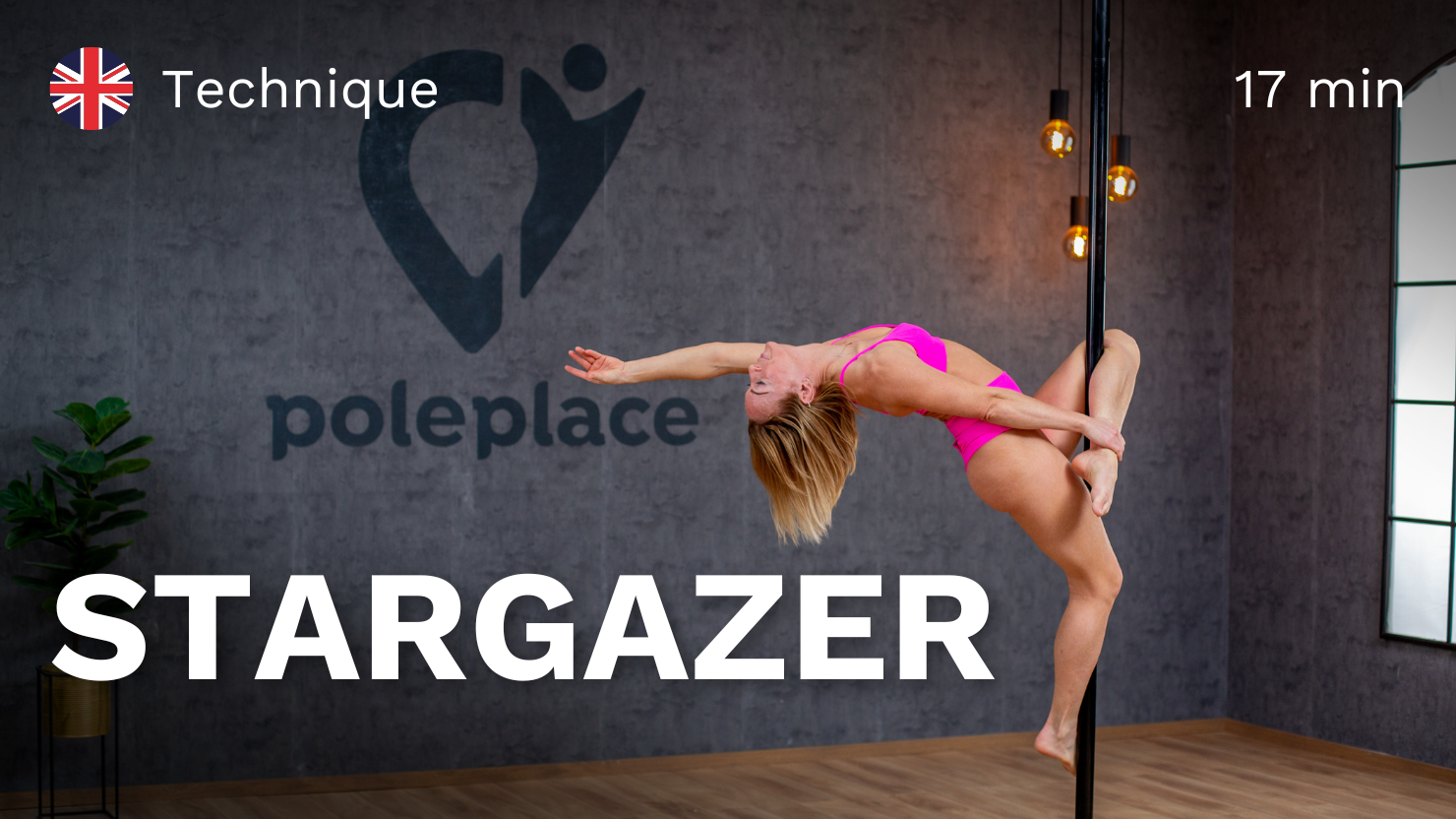
The Stargazer, explained
The Stargazer is one of those shapes that makes you smile when you see a photo of yourself in it. You are upside down, your legs hold you on the pole, and your upper body opens away from it, as if you were looking out into the night sky. It feels free and a little dreamy once it clicks.
What is the Stargazer on the pole?
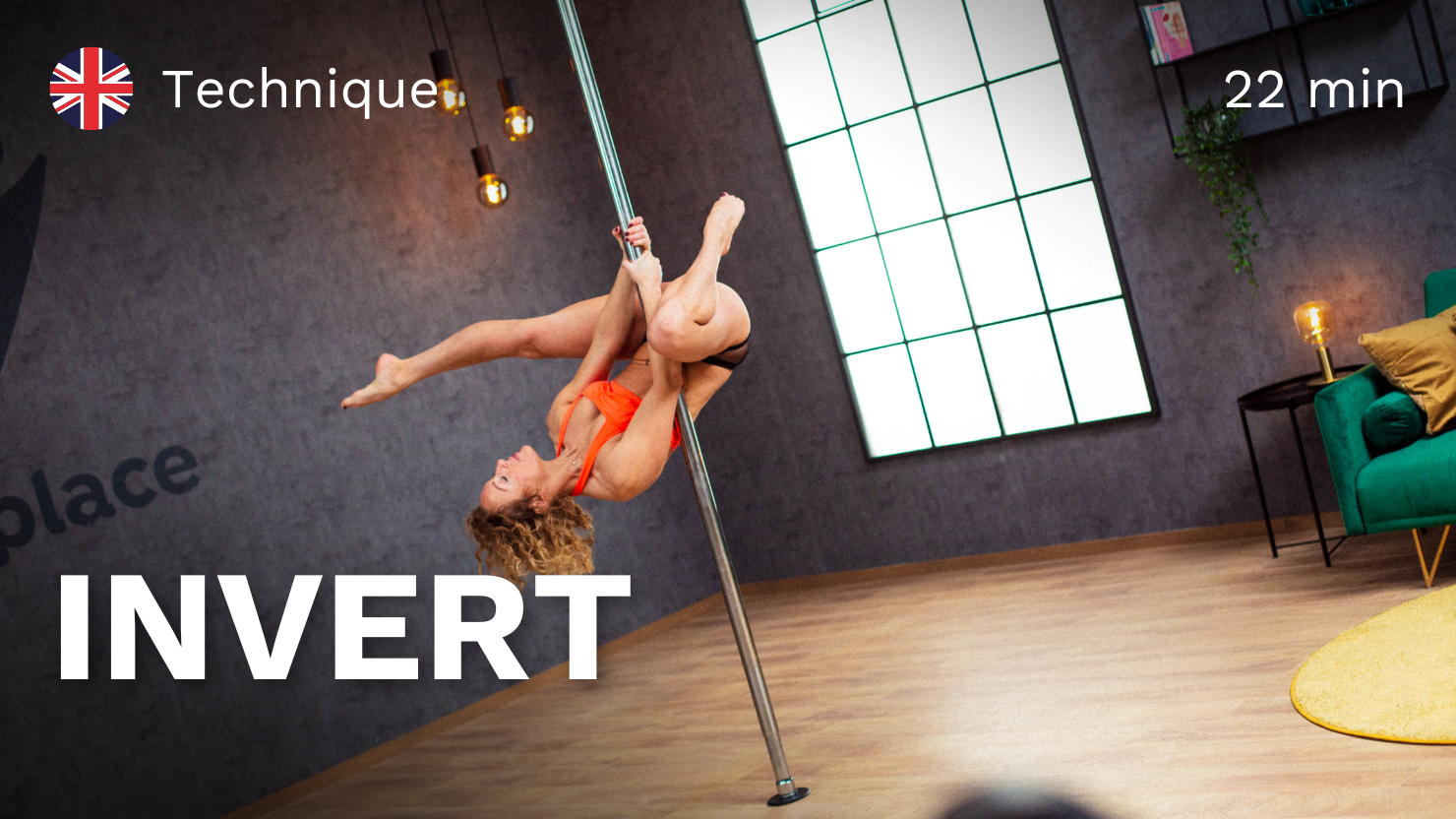
The Stargazer is an inverted hold. Your legs keep you connected to the pole while your chest and arms open out and away from it, so the whole front of your body becomes part of the picture. The name paints that image: an open body, a gaze that travels outwards. How your legs are placed, how you get in and how you come out safely is explained step by step in the tutorial, in English and German.
Is the Stargazer good for beginners?
It is an intermediate move. You should be comfortable going upside down with your Invert and holding simple shapes there first. If the first tries feel shaky, that is normal: your body is learning to trust your legs while your hands let go of control.
Static or spinning pole?
Start on a static pole, where the shape stays still and you can feel every detail. On a spinning pole the Stargazer floats around with you, which is a beautiful next step once the static version feels calm.
What it builds: leg grip, core and trust
The Stargazer trains the grip of your legs on the pole, your core and your shoulders as you move in and out. Above all it builds trust upside down. Bare legs or shorts give you the skin contact you need, and skipping body lotion on training days helps a lot. A crash mat under the pole gives you peace of mind while you learn.
How you learn it at POLEPLACE
With the Floor-Stand-Air Method™ you explore the open body line on the floor first, prepare the leg position standing at the pole and only then take it upside down. Each stage feels familiar before you combine them, in your own space and at your own pace.
Combos and what comes next
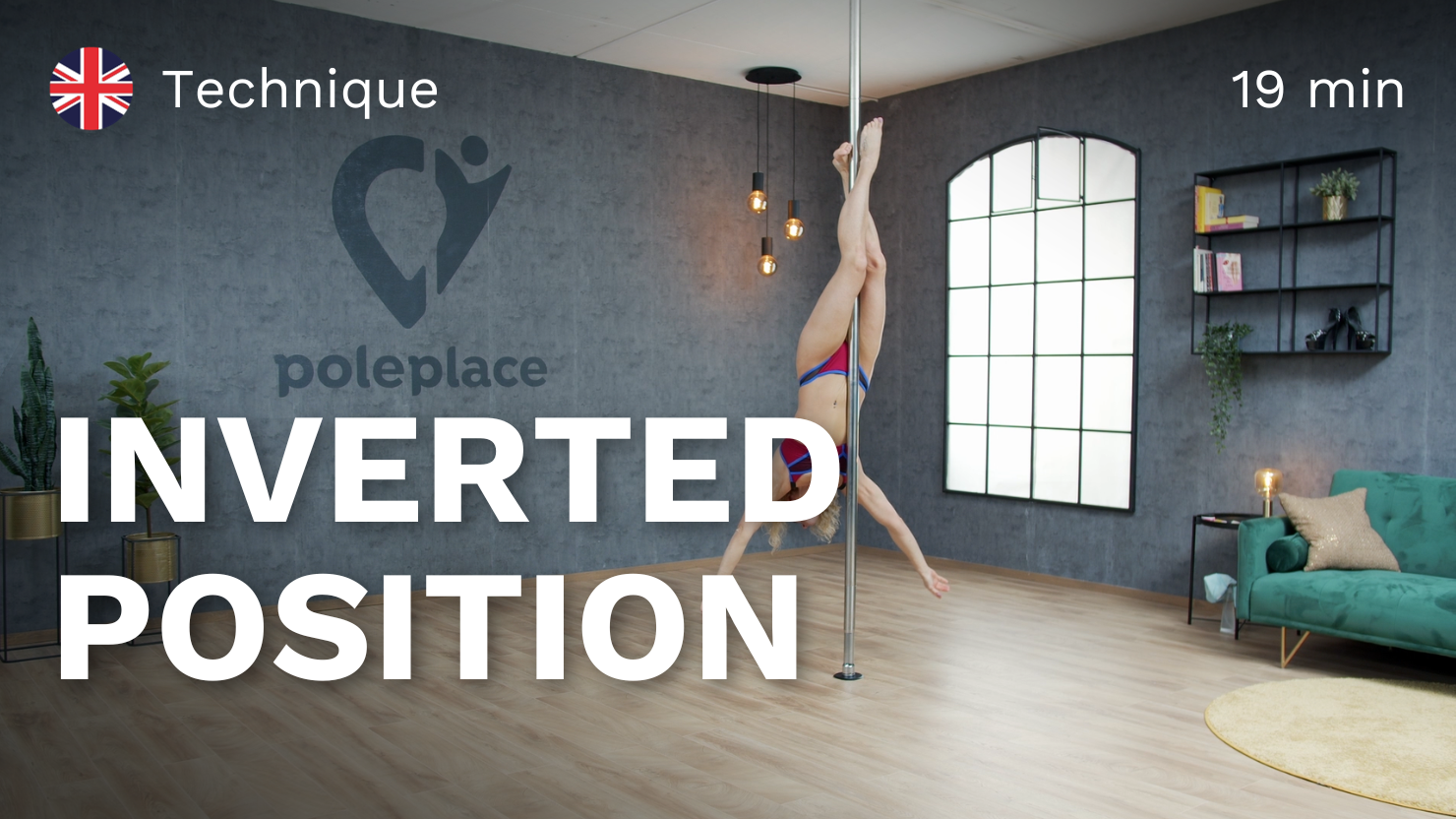
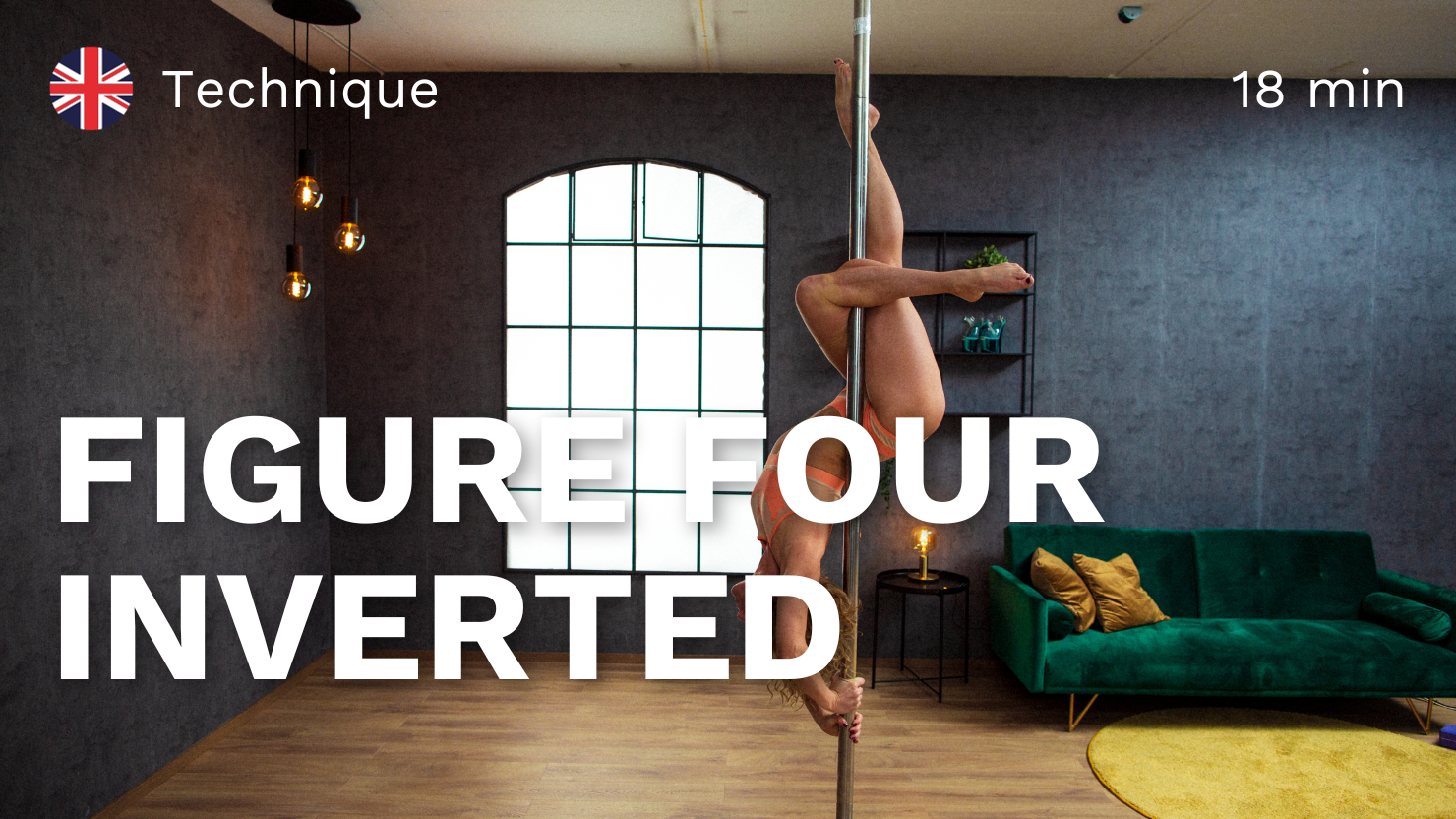
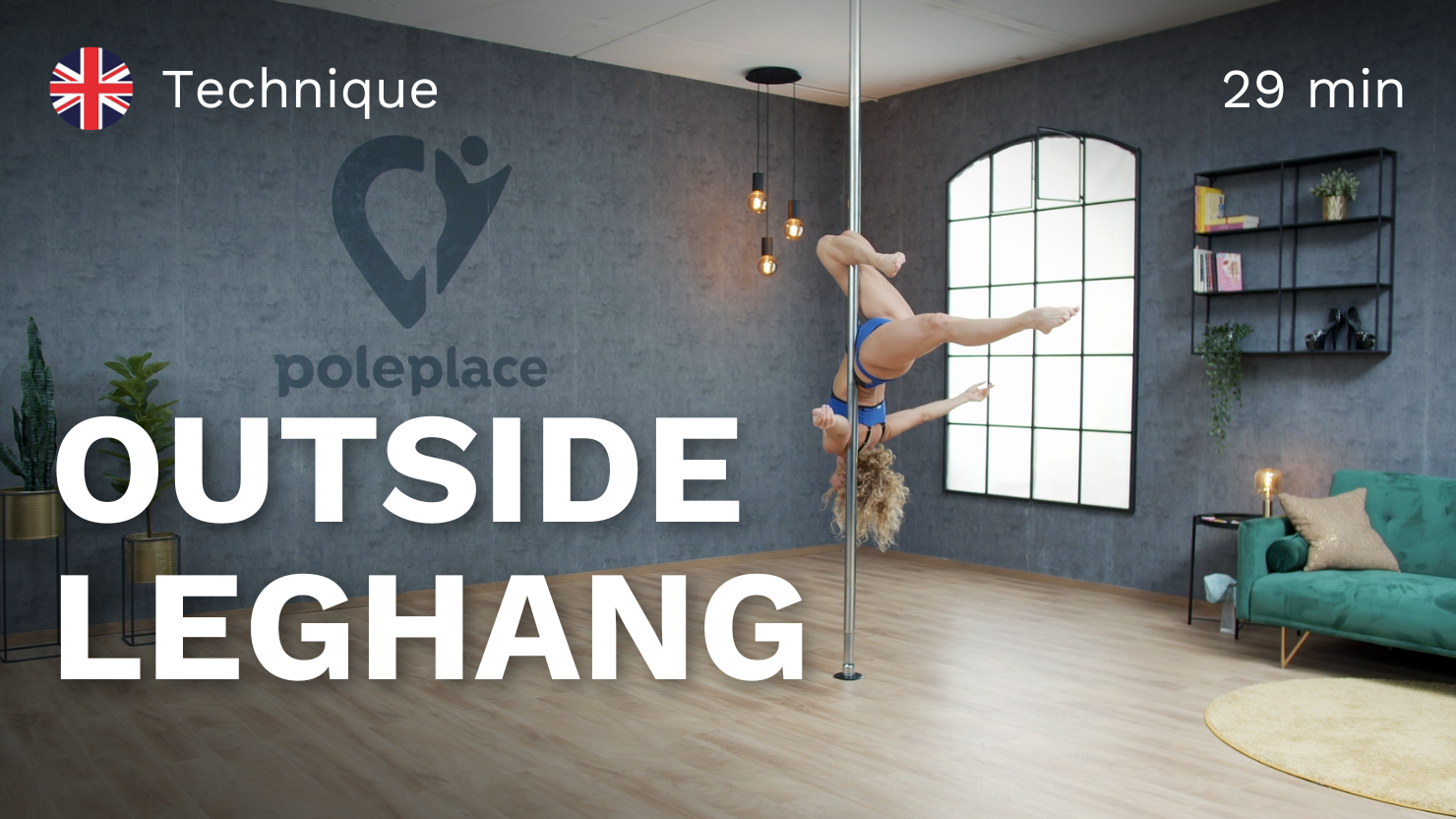
The Stargazer flows nicely with the Figure Four Inverted and the Outside Leghang. If you want a calmer upside-down shape to practise first, the Inverted Position is a great place to start.