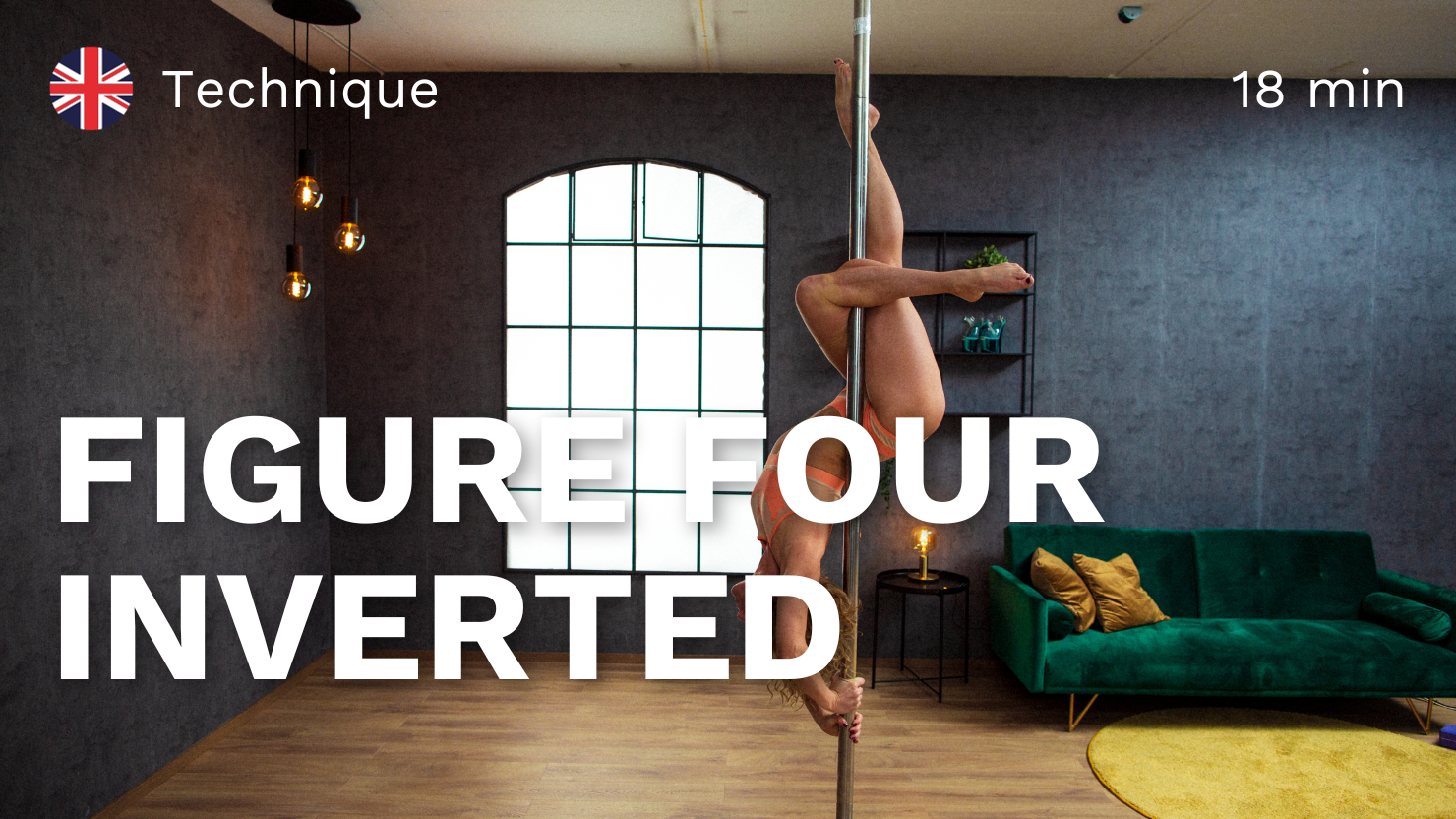
The Figure Four Inverted, explained
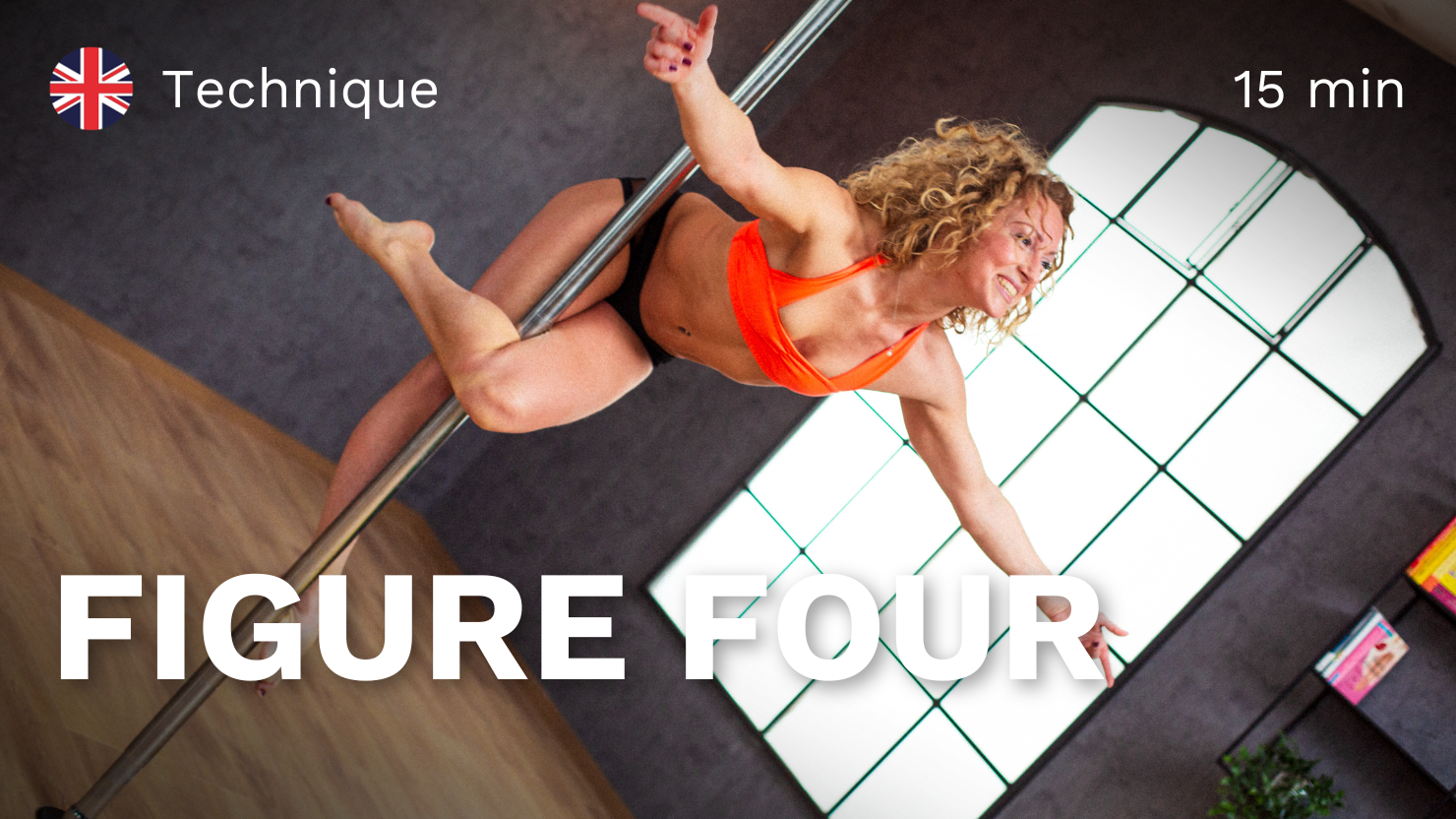
The Figure Four Inverted pole move takes a leg hold you may already love and turns it upside down. Your legs wrap the pole in that familiar number-four shape while your body hangs long beneath them, head towards the floor. It feels like a quiet little victory the first time it settles, and it opens the door to many inverted combos.
What is the Figure Four Inverted?
Up at the top, one leg crosses over the other around the pole, and the bent leg and the pole draw something like a “4”. Below that, your hips, back and head hang down along the pole, so the whole line is long and calm. Depending on the version, your hands can stay close to the pole or start to explore the space around you. How exactly your legs lock and how you get into the shape is what the tutorial and your coach walk you through, because those details matter.
How it differs from the upright Figure Four
The leg shape is related, but the feeling is completely new. In the upright Figure Four you sit with your head up and lean away from the pole. In the Figure Four Inverted, you are upside down and your legs do the holding above you. That changes how you sense your body, where your weight goes and how much you trust your leg grip. If you know the upright version, you will recognise the shape, and it will still surprise you.
Is the Figure Four Inverted pole move good for beginners?
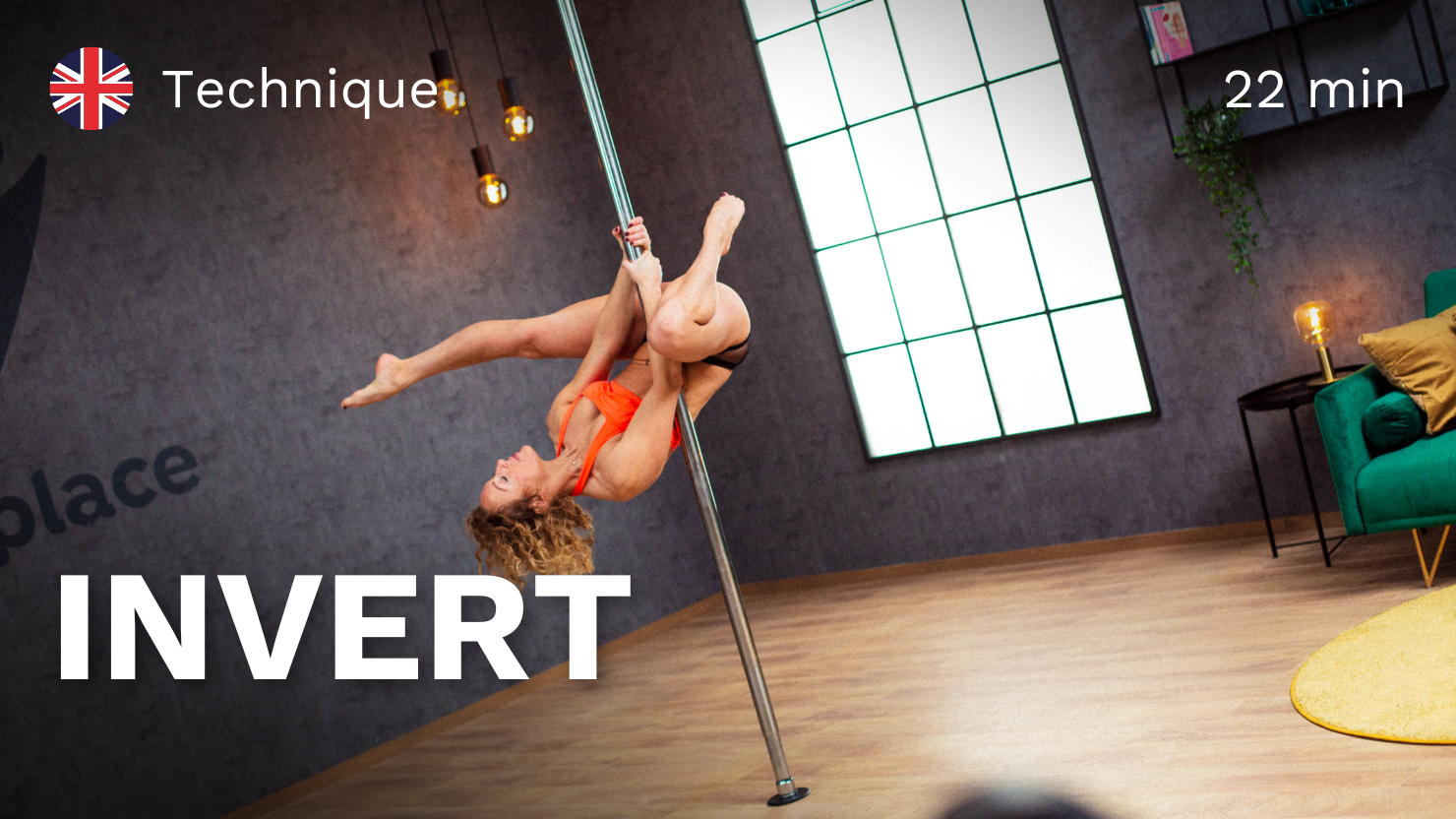
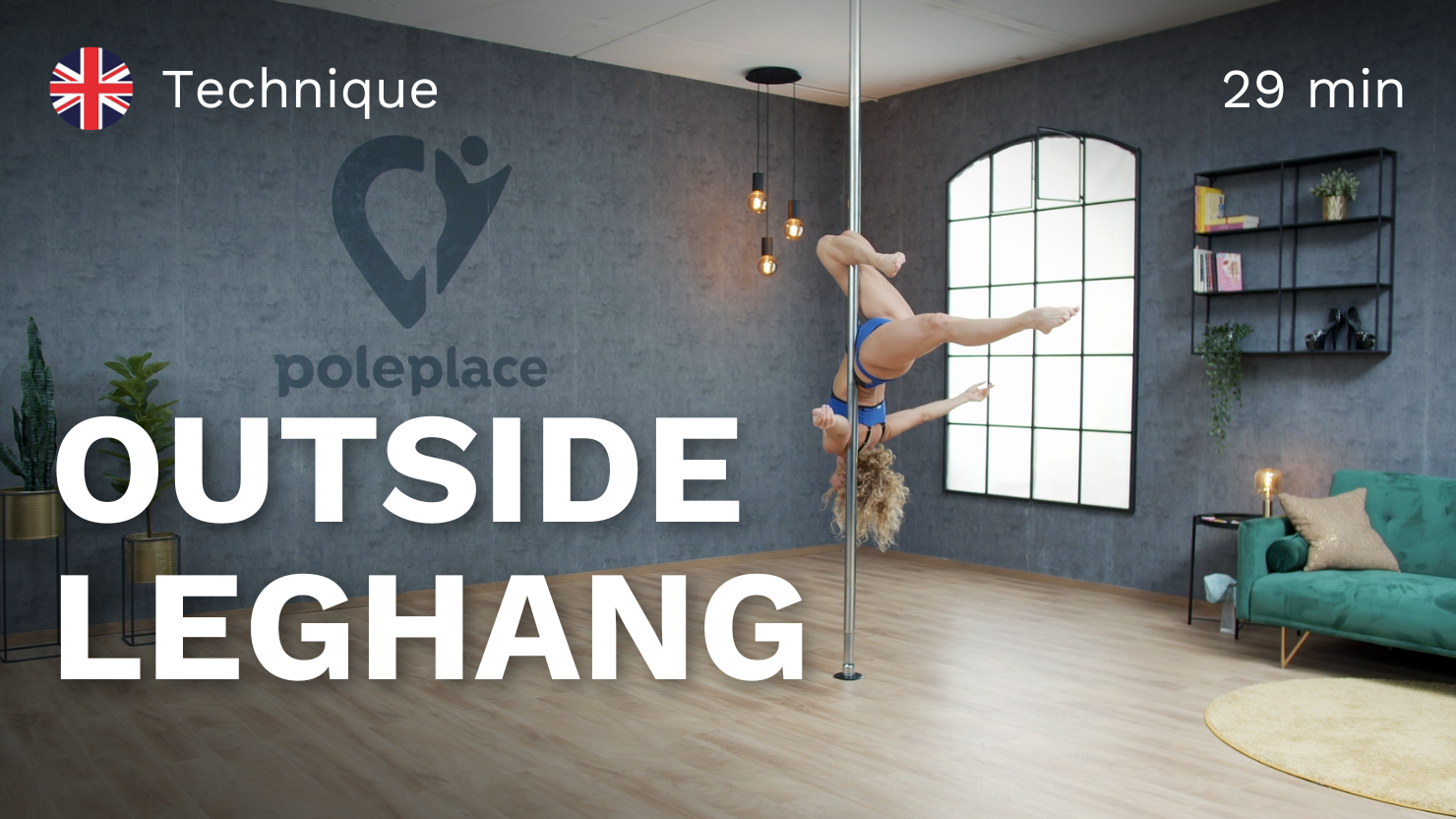
It is a lovely intermediate goal rather than a first-week move. It makes sense once you can go upside down calmly with a controlled Invert and feel at home in leg holds like the Figure Four and the Outside Leghang. If your first tries feel pinchy, wobbly or a little disorienting, you are in good company. Being upside down takes some getting used to for everyone.
What it builds: leg grip, core and calm
This shape trains leg grip and skin grip in your inner thighs and the backs of your knees, plus your core, which keeps your line long and steady. It also builds a kind of calm upside down: breathing, looking around and staying relaxed while your legs hold you. Shorts or bare legs are a must, because skin contact helps the shape hold, and skipping body lotion on training days keeps you from slipping.
How you learn it at POLEPLACE
At POLEPLACE you learn every move with the Floor-Stand-Air Method™. You get to know the leg shape on the floor first, then prepare it standing at the pole, and only after that do you take it upside down into the air. Each stage feels doable, so trust in your legs can grow at home and at your own pace. Most dancers start on a static pole and try spinning mode later.
Variations and what comes next
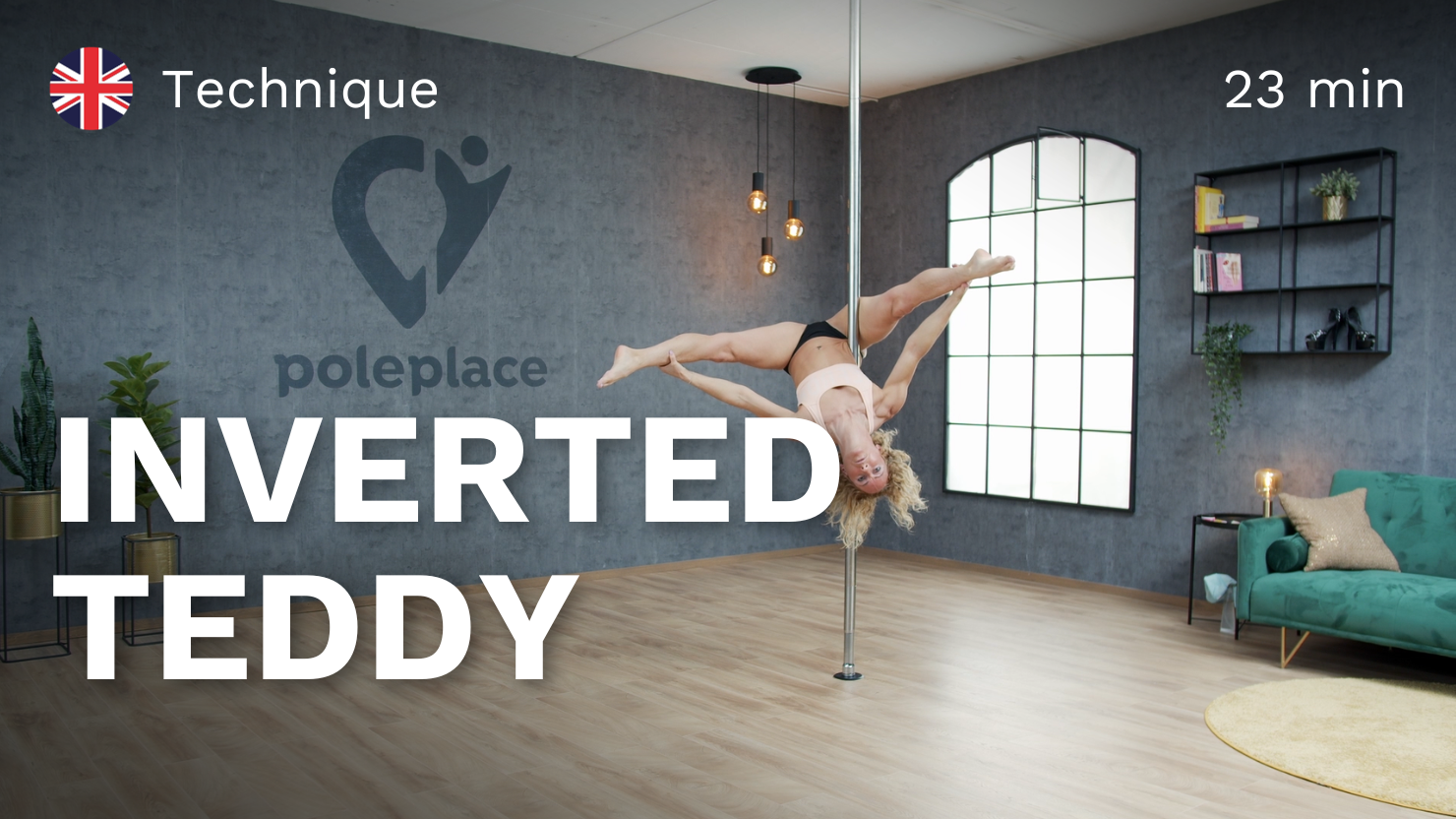
Once it feels settled, play with your arms and your line: reach long towards the floor, open your chest, or link it with other inverted holds in a short combo. If you would like a contrast, the Inverted Teddy keeps you upside down too, but lets your legs float free while your upper body does the holding.