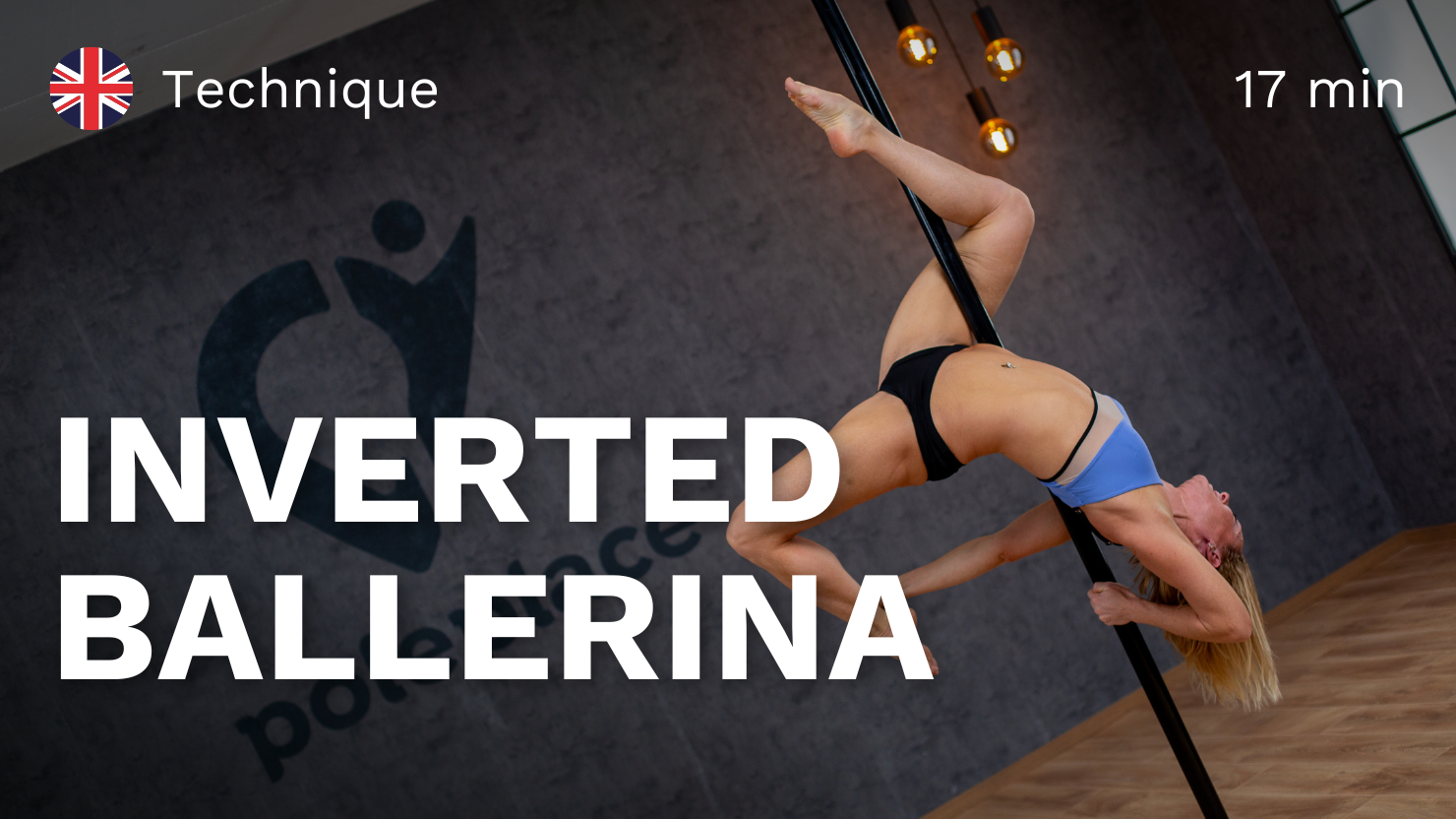
The Inverted Ballerina, explained
The Inverted Ballerina pole move is one of those shapes that makes people stop scrolling. You hang upside down with your legs high on the pole and your body curving away from it in a long, open arch, and the whole line looks both strong and soft. It is a beautiful goal once inverting feels familiar.
What is the Inverted Ballerina?
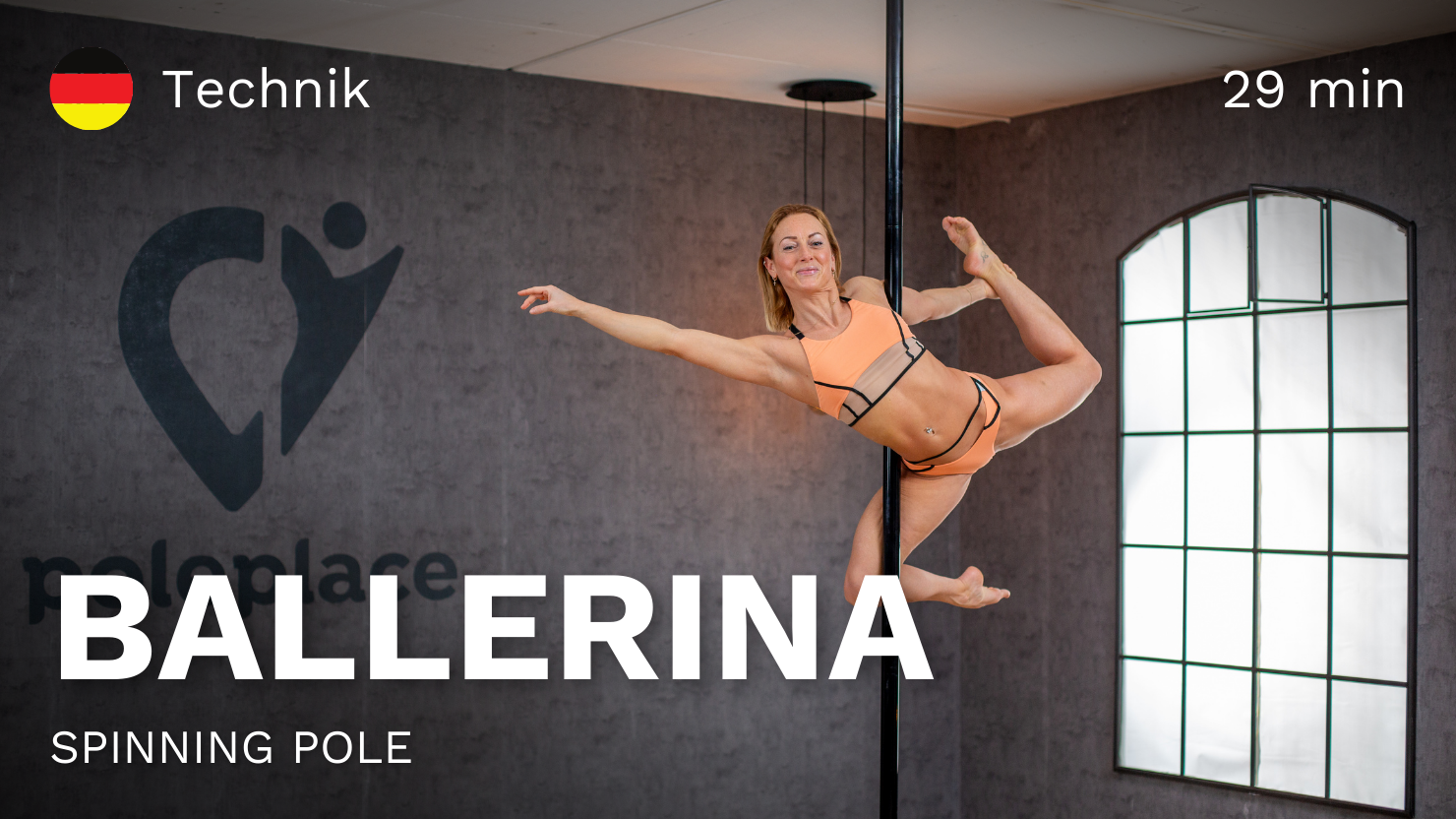
Picture yourself upside down, legs up near the pole with one knee bent around it, while your chest opens and your back arches away from the pole towards the floor. Your head reaches down, your body forms a curve, and your free leg can bend or extend to shape the line. Where the upright Ballerina wraps around the pole standing tall, this is a different move: an invert built around a backbend. It looks dramatic, and it is a real “I did it” moment when it settles.
Is the Inverted Ballerina good for beginners?
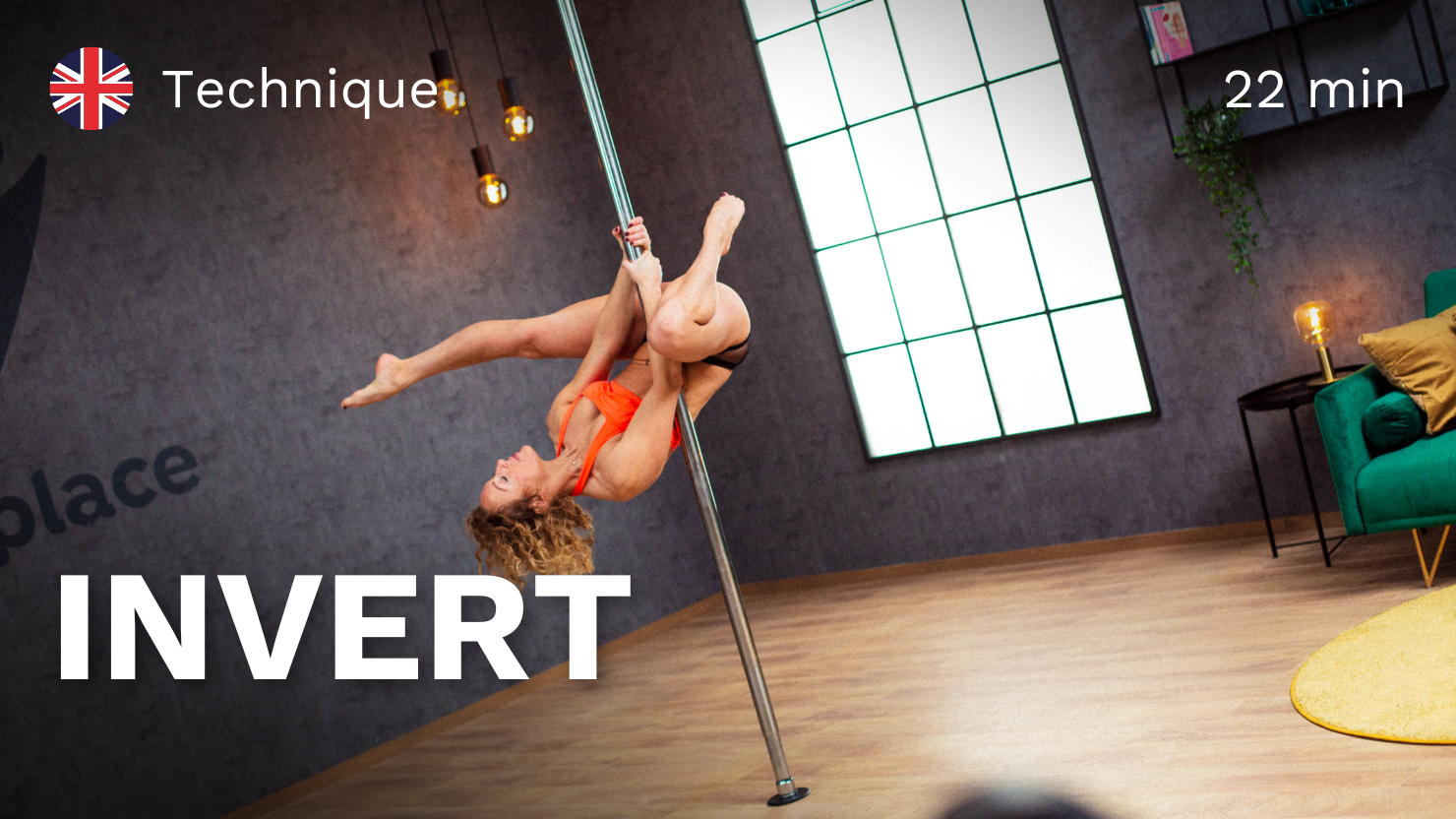
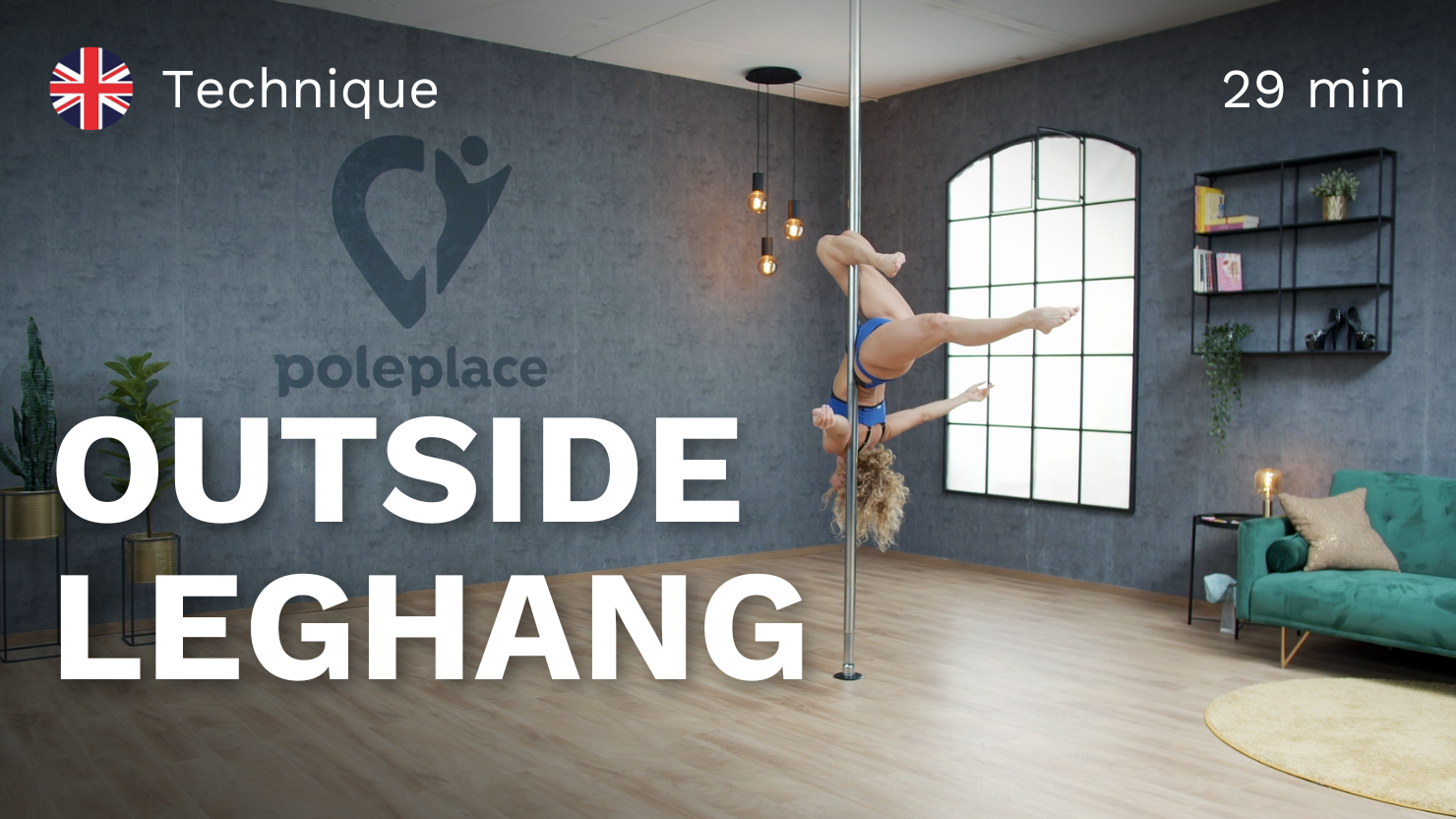
It is not a beginner move, and it does not need to be. It comes after you can go upside down calmly and with control, so it fits nicely after your Invert and once leg hangs like the Outside Leg Hang feel trustworthy. If your first attempts feel heavy, or your back does not want to open as far as you had pictured, that is completely normal. This shape grows with your body, one session at a time.
What it builds: back mobility, strength and trust
This pole dance move asks for a mix of things. Your back and shoulders learn to open while you are inverted, your legs learn to hold you steadily, and your core keeps the shape calm. Your knee pit has a job here too, so bare legs or shorts give you the skin contact you need, and no body lotion before training keeps you from slipping. Regular conditioning for core and shoulders plus a little back mobility work make the Inverted Ballerina feel lighter over time.
Static or spinning pole?
Most dancers explore it on a static pole first, so the pole stays still and you can focus on the arch and the feeling of being upside down. On a spinning pole, the shape turns slowly with you, which looks stunning but adds movement while you are inverted. Once the static version feels calm, spinning is a fun next step.
Learning the Inverted Ballerina pole move at POLEPLACE
With the Floor-Stand-Air Method™, you explore the arch and the leg position on the floor first, then prepare the shape standing at the pole, and only then take it into the air. Each stage gives you a small win, in your own space and at your own pace. The tutorial gives you the exact cues, so you can focus on how the shape feels.
Inverted Ballerina tips and what comes next
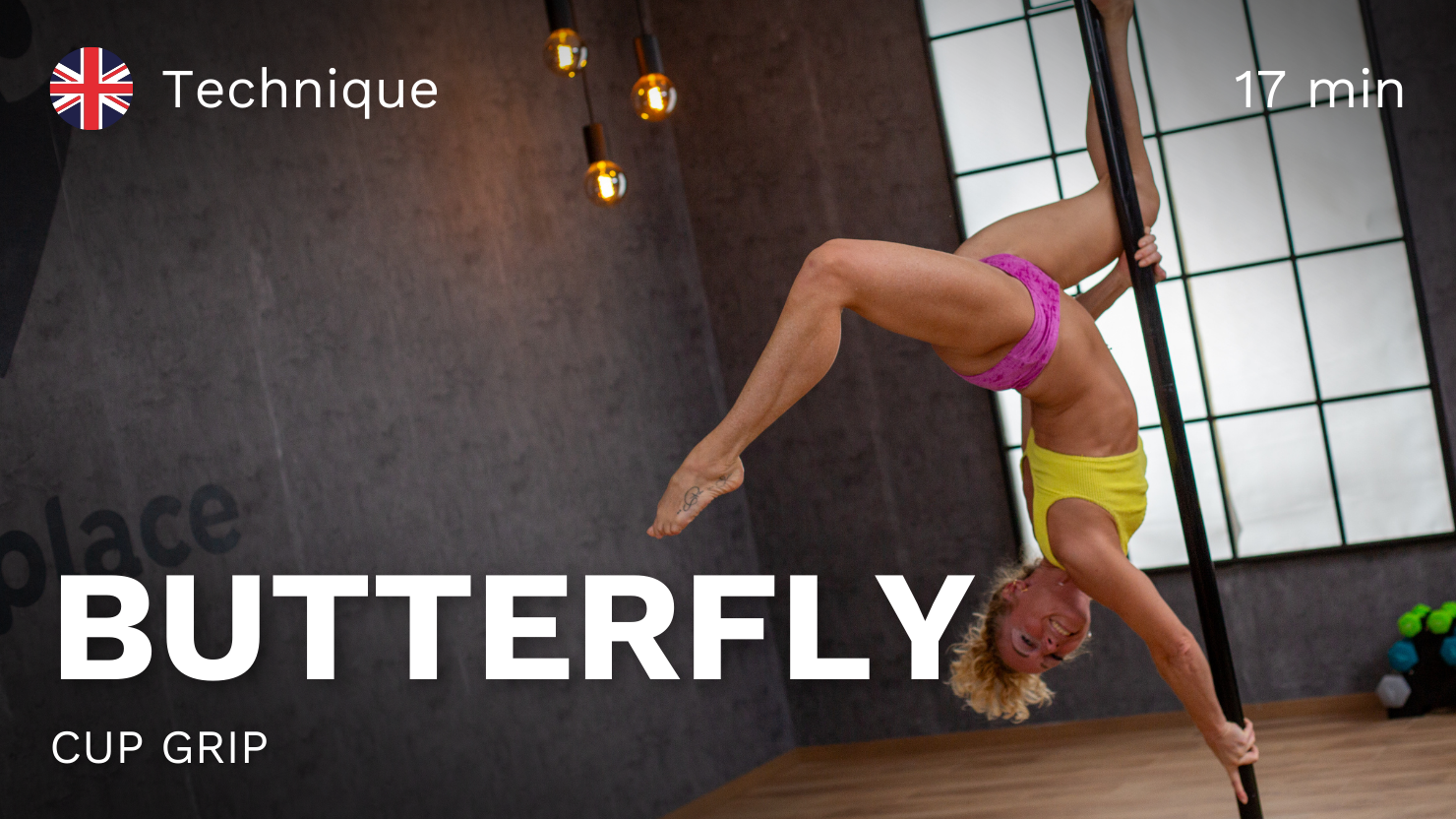
Film yourself if you like, because the arch often looks bigger than it feels. Play with your free leg and your arms once you are comfortable, and link the Inverted Ballerina with other inverted shapes such as the Butterfly. If you have not tried the upright Ballerina yet, it is a lovely companion move with the same graceful mood. Both will keep teaching you something new about your body.