The Ballerina, explained
The Ballerina pole move is one of those shapes that makes you feel like a dancer the very first time it clicks. You stay upright, wrap yourself around the pole and open your arms and legs into a line that looks soft and elegant, especially when it turns slowly on a spinning pole.
What is the Ballerina pole move?
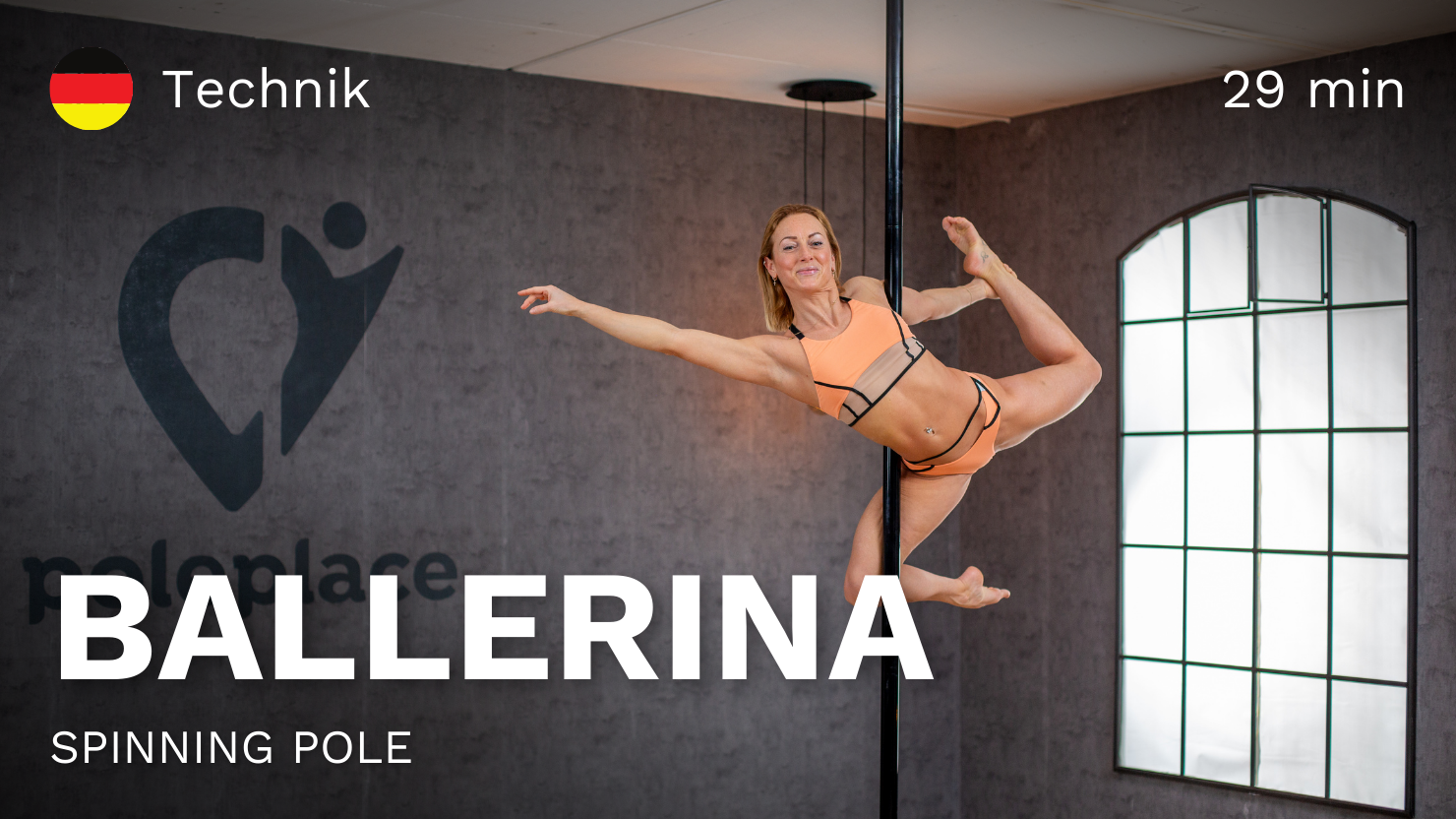
In this shape, the pole crosses your body instead of sitting beside it. One leg stays in front of the pole, the other bends back behind you, and your free hand reaches back towards that lifted foot while your other arm can open out into the room. The result is a curved, upright shape with a slight twist through the upper body, a little like a music box dancer frozen mid-turn. In photos it looks light, and while you are in it, it feels both cosy and wide open at the same time.
Is the Ballerina good for beginners?
It usually is not a first-week move, and that is completely fine. It asks for some mobility in your shoulders, chest and upper back, plus a body that already feels at home on the pole. If you have a few spins and holds under your belt, it is a lovely next goal. If your first tries feel twisted in all the wrong places, you are not doing anything wrong. That is simply how this shape feels at the start, and it changes as your body gets used to it.
Ballerina on a spinning pole
The POLEPLACE Ballerina tutorial is taught on a spinning pole, and that is where this move really shines. Once you settle into the shape, the pole carries you around in slow, floating turns, which looks beautiful and feels a bit like being on a carousel. You can also explore the shape on a static pole, where you hold it in place and have more time to feel each part of it. Both are good practice, and many dancers enjoy switching between them.
What the Ballerina builds: mobility, grip and body awareness
This pole dance move trains more than it shows. Your shoulders and upper back learn to open, your hips get a gentle stretch, and your whole body learns to hold a twisted shape calmly. Skin grip matters here, so bare legs or shorts help, and skipping body lotion before training keeps you from slipping. Regular conditioning for shoulders and back makes every attempt feel a little easier.
How you learn it at POLEPLACE
With the Floor-Stand-Air Method™, you first explore the shape on the floor, then prepare it standing at the pole, and only then let it take off. That way each part feels familiar before you combine them. The tutorial gives you the exact cues, so you can focus on how the shape feels in your body, in your own space and at your own pace.
Ballerina variations and what comes next
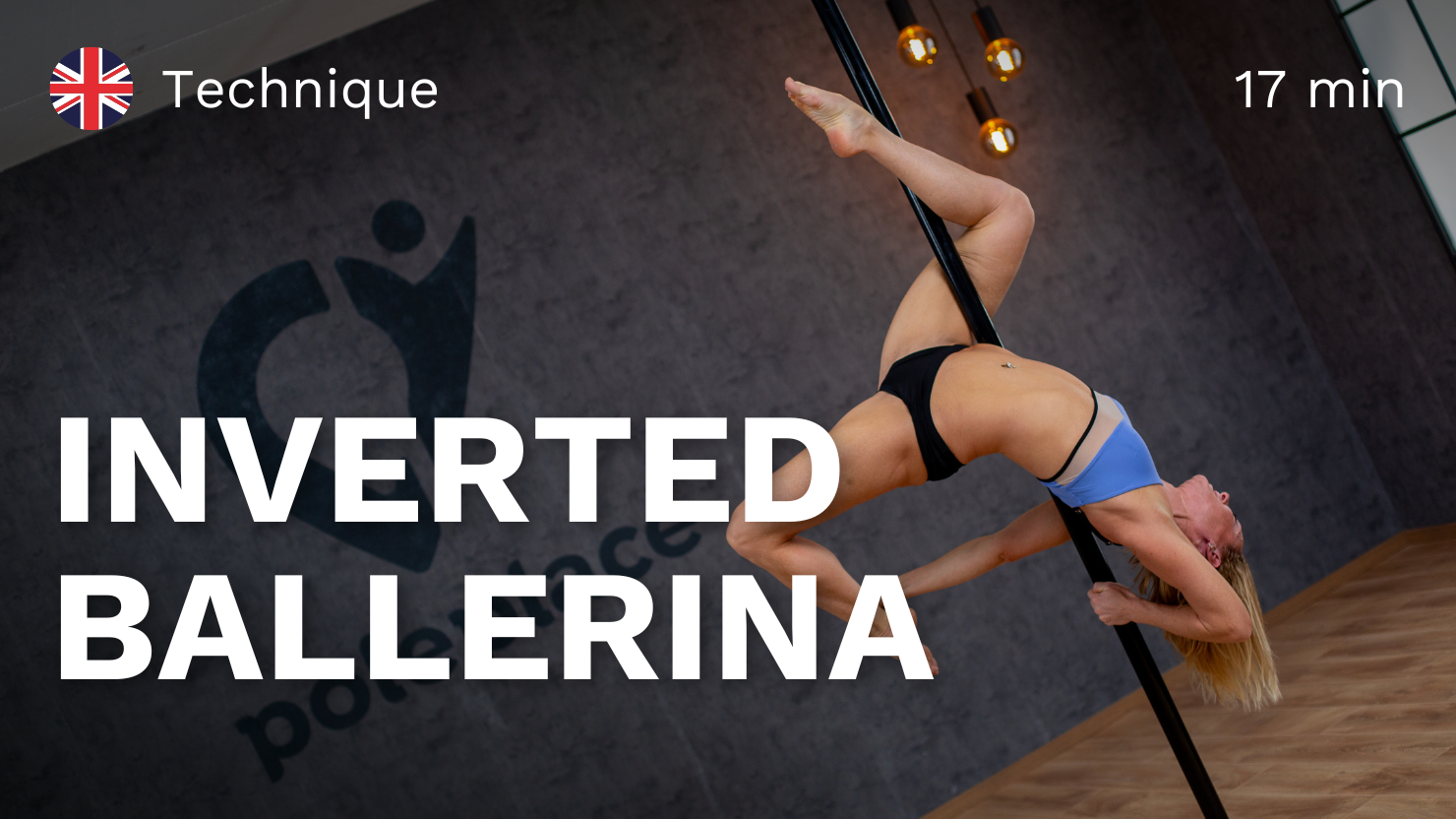
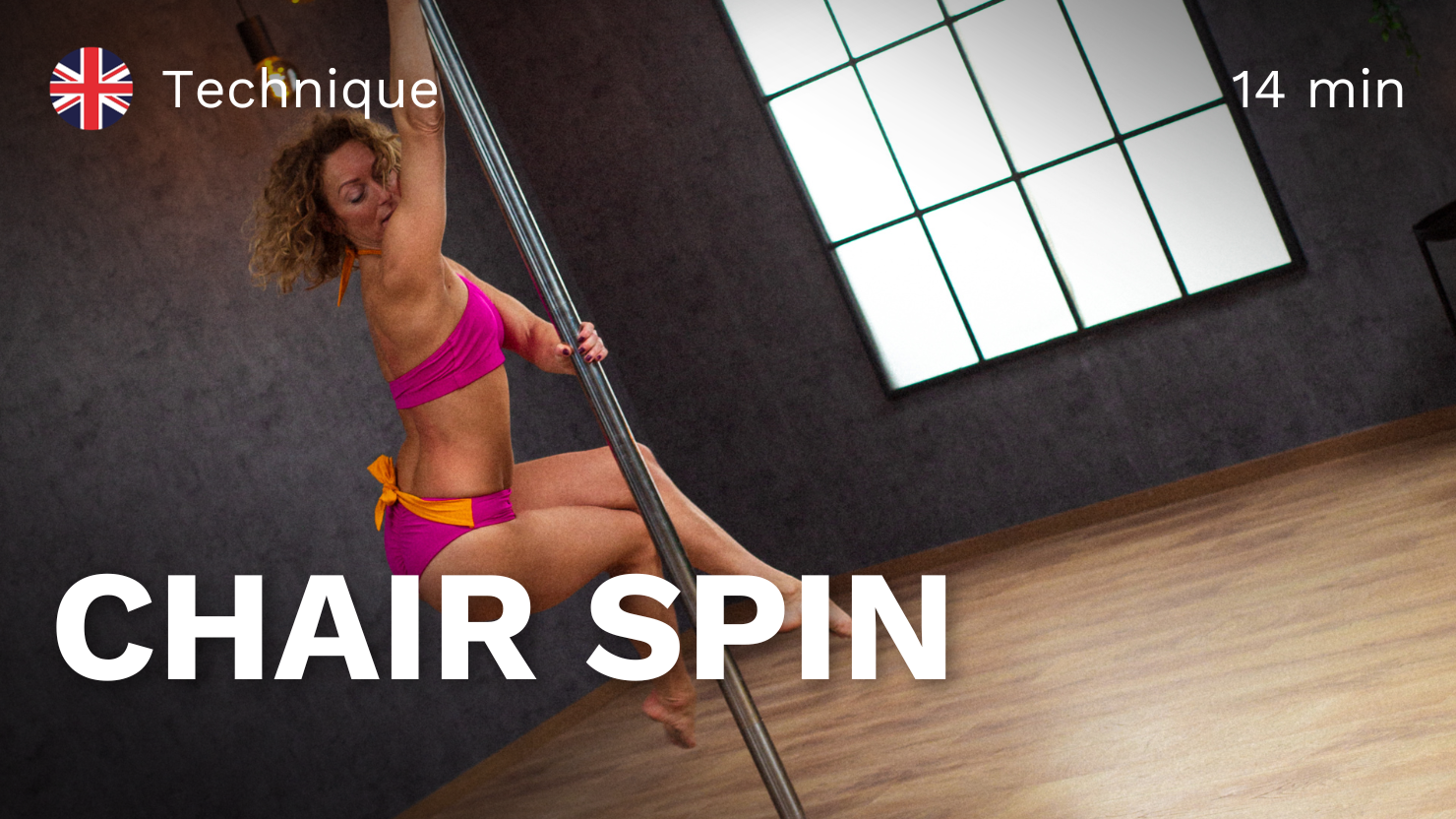
Once the shape feels settled, play with your arms, slow the spin down or flow out of it into a soft landing. The Figure Skater shares that lovely reaching-back feeling, and the Chair Spin is a nice contrast to link it with. When you feel ready for an upside-down challenge, the Inverted Ballerina takes the same elegant idea into an invert. It is a separate move with its own path, and your upright Ballerina is a beautiful step towards it.