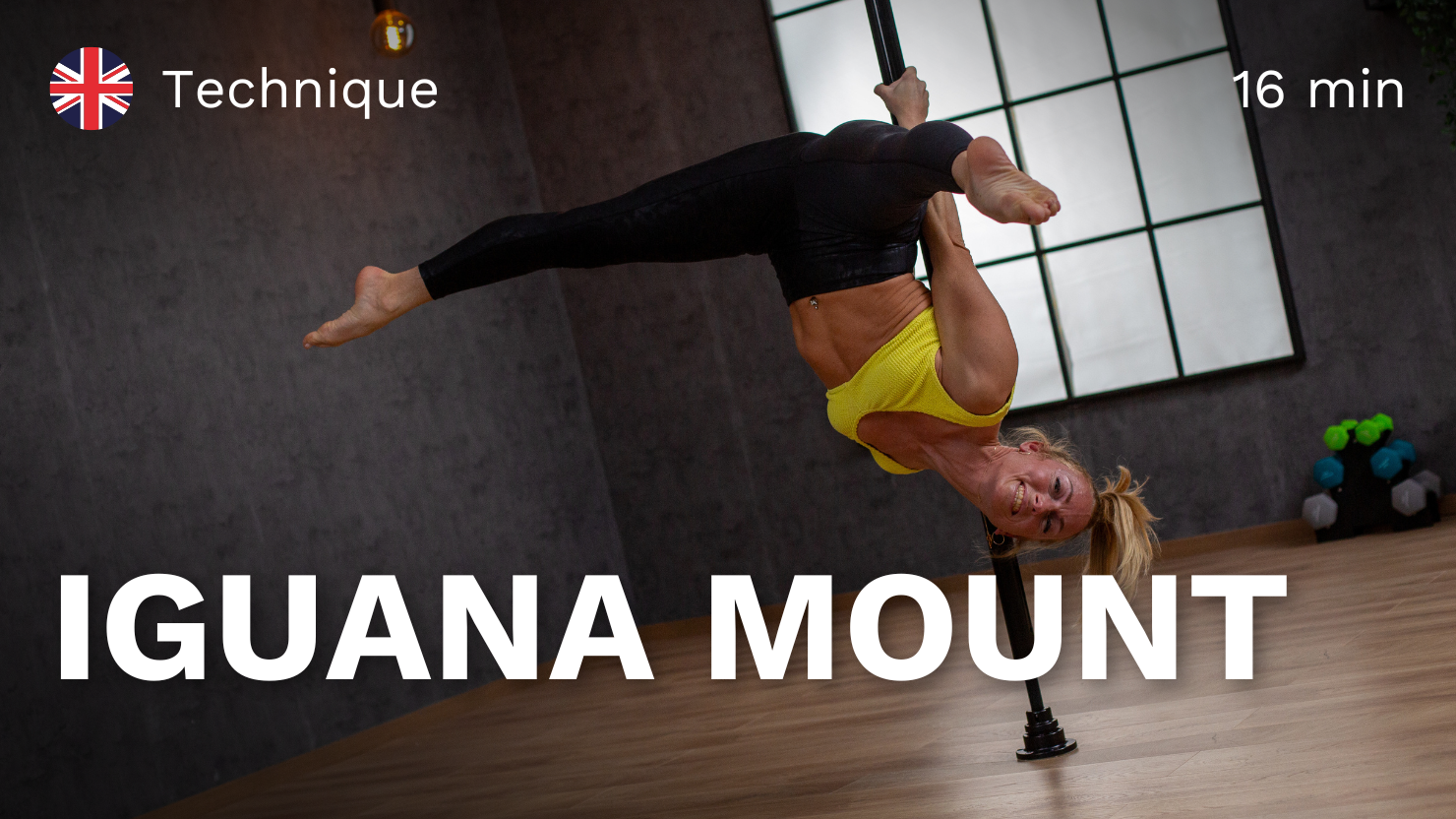
The Iguana, explained
The Iguana pole dance move is a mount: a way to get from standing on the floor to upside down on the pole. You will also see it called the Iguana Mount. It is a very popular mount and, for many dancers, one that feels a little scary at first, which makes the moment it finally clicks feel even better.
What is the Iguana in pole dance?
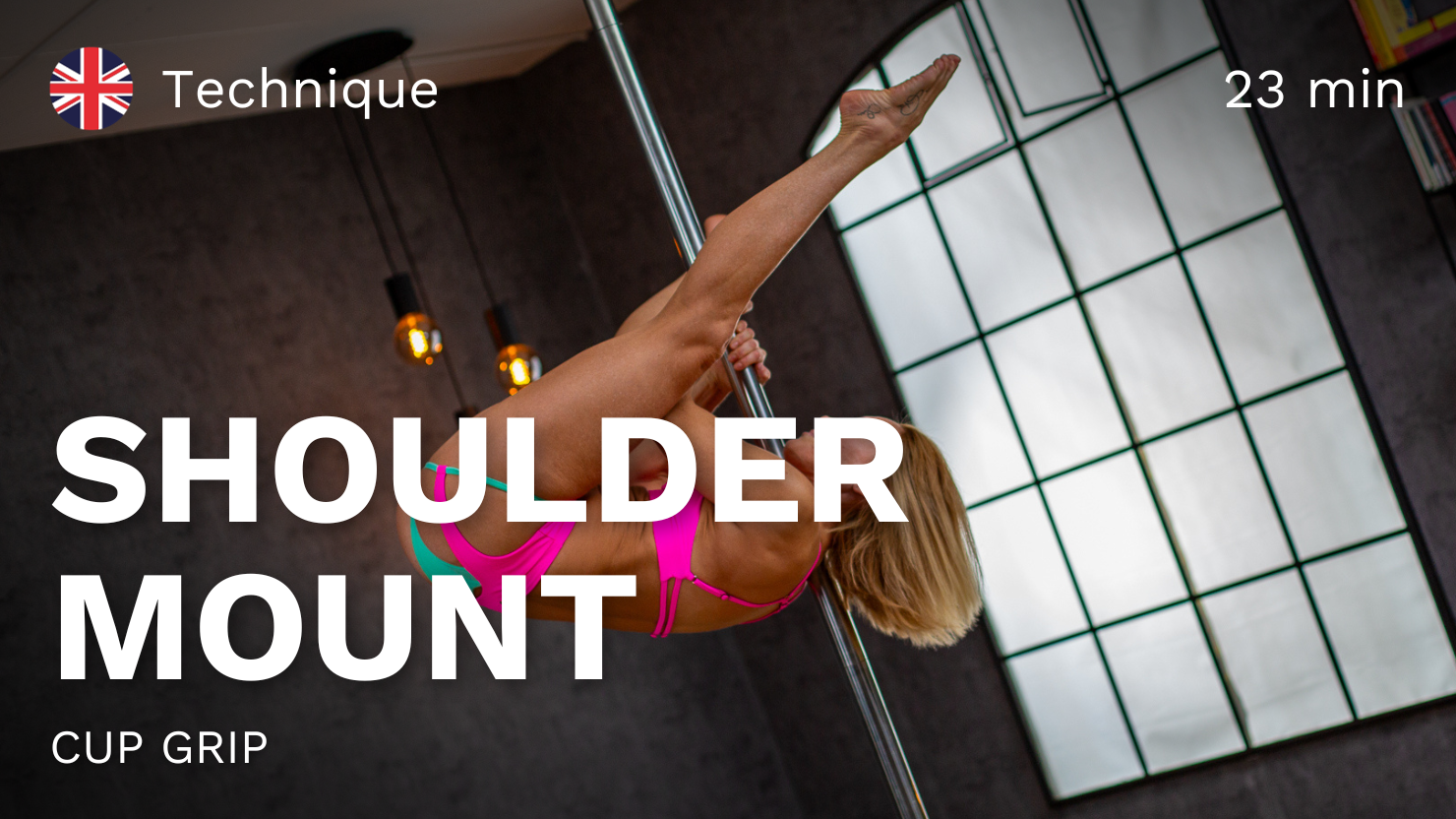
In the Iguana your upper body stays close to the pole while your arms hold you, and your hips and legs lift you from standing into an inverted position. Together with the Swing Mount and the Shoulder Mount it belongs to the group of mounts that start from standing, and in the air it is related to the deadlift family, where strength lifts you up instead of a jump or a kick. The exact hand and arm positions and how you lift your legs are something the tutorial and your coach take you through step by step, because those details are what keep you safe.
Is the Iguana good for beginners?
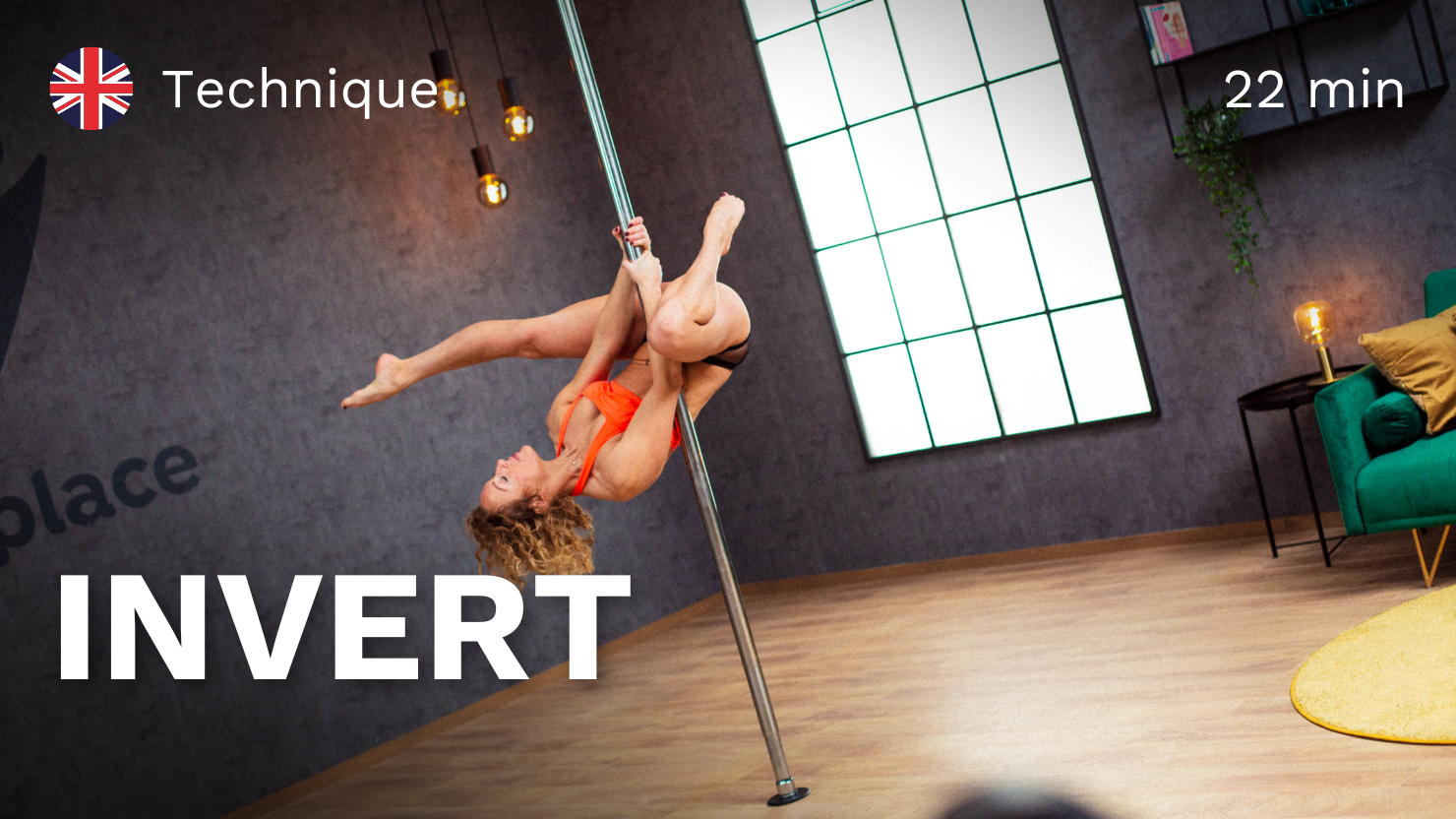
Not yet, and that is completely fine. The Iguana comes once going upside down feels calm and controlled. It builds on your Invert and on the upper-body and core strength you develop through climbs, spins and conditioning. If it feels far away right now, you are simply collecting the strength it is built on, and every invert you practise today already counts towards it.
What it builds: strength, grip and control
The Iguana is a strength move. Your shoulders, arms, back and core work together to lift and control your body, and your grip keeps you connected to the pole the whole way. Conditioning for the upper body and core makes a big difference here. The practical basics matter too: clean, dry hands, a clean pole and no body lotion on training days. Train your first attempts with a coach or experienced spotter and a crash mat, and if something hurts or you feel you are losing control, stop and come back to it fresh.
Static or spinning pole?
Most dancers learn the Iguana on a static pole first. The pole stays still, so you can focus fully on the lift and on staying in control while you go upside down. On a spinning pole the pole turns with you, which adds movement to an already demanding moment. Spinning is a fun next challenge once your static Iguana feels calm.
How you learn it at POLEPLACE
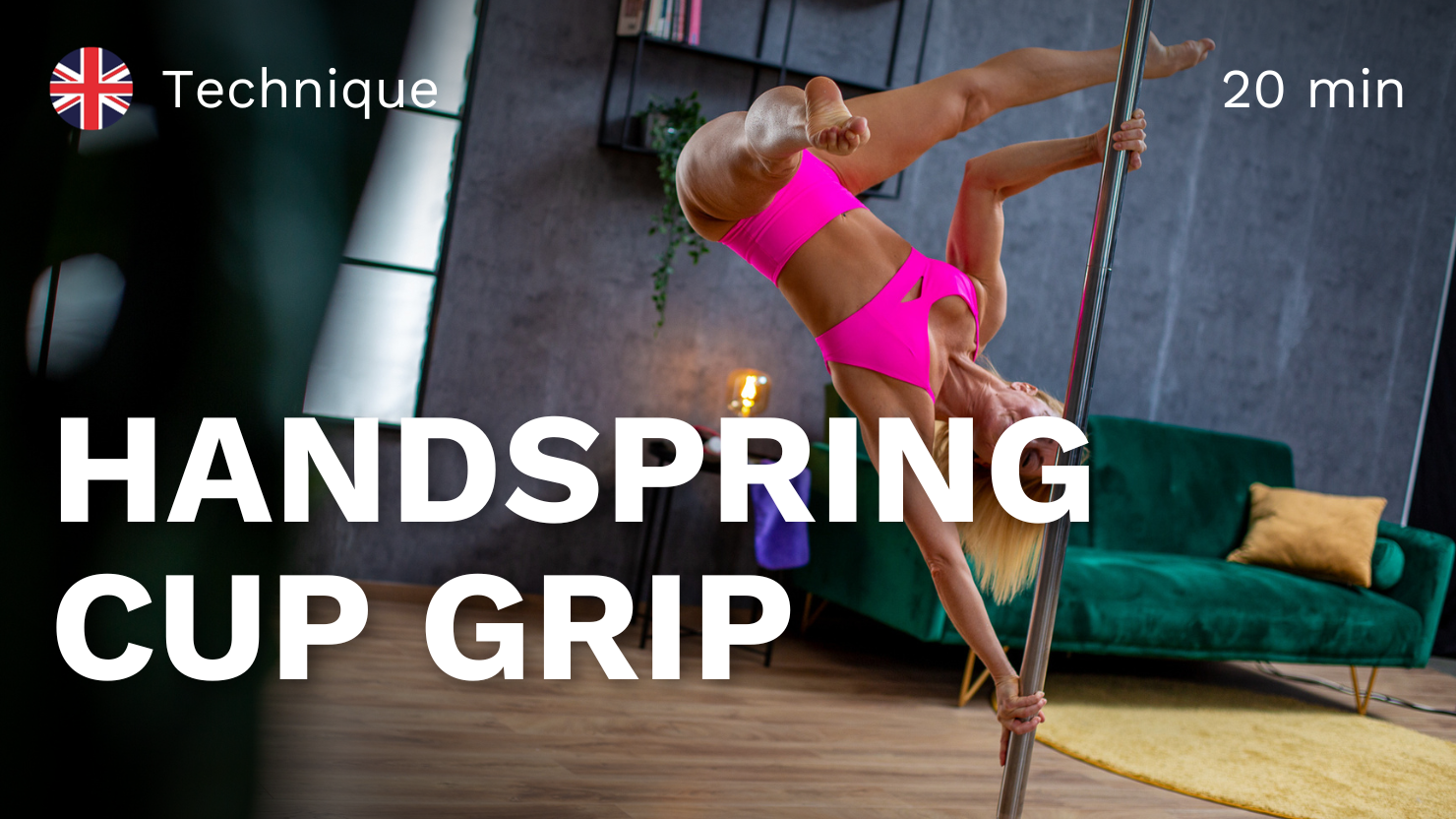
With the Floor-Stand-Air Method™, you do not jump straight into the full mount. You build the strength and the body positions on the floor, then work on the preparation standing at the pole, and only then take it into the air. At POLEPLACE the Iguana is part of the Mounts program, next to inverts, a Handspring tutorial and conditioning for the Shoulder Mount, so you can build up to it in a clear order.
Iguana tips and what comes next
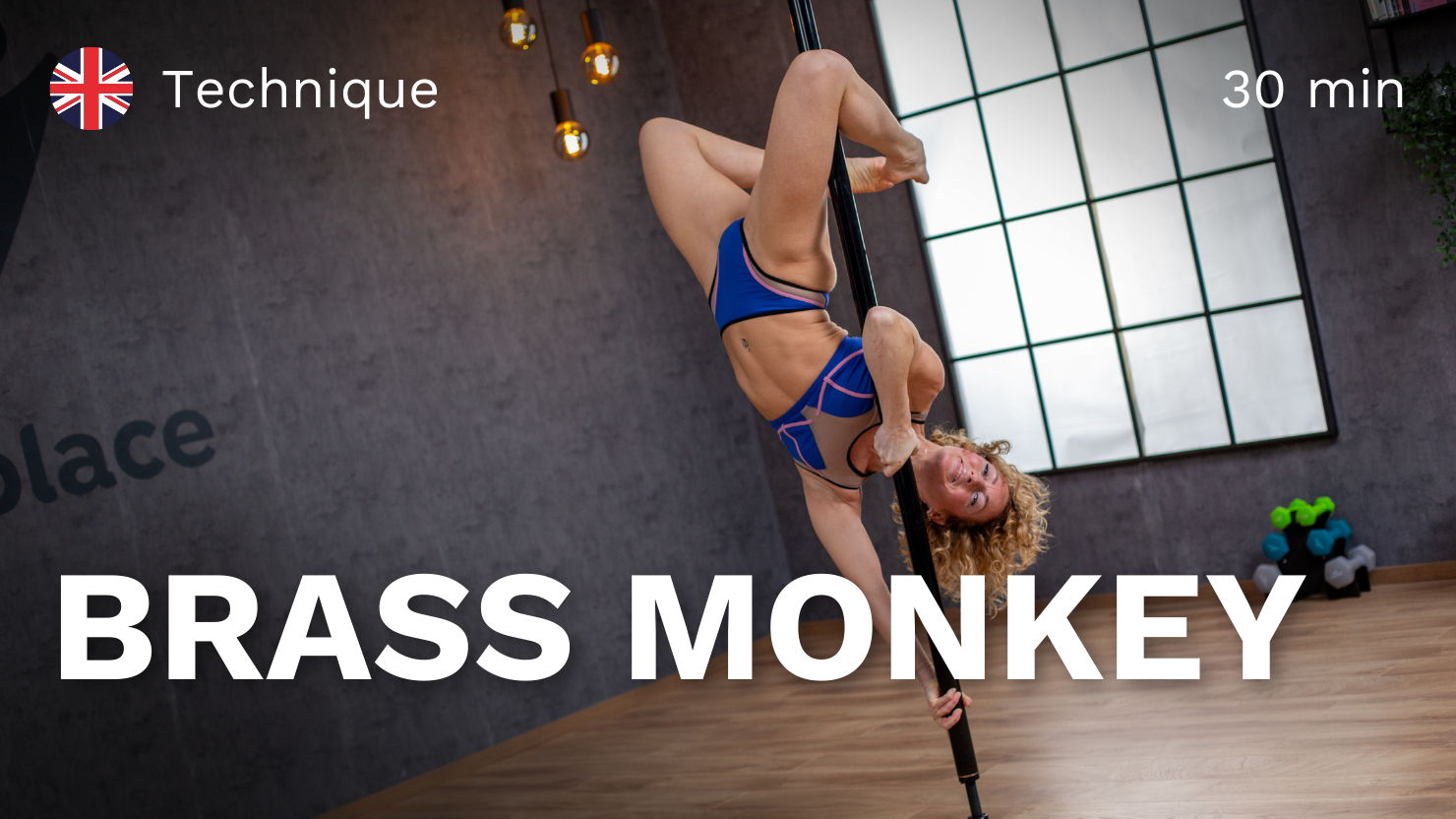
Patience is your best friend with this move. Celebrate the small wins, like lifting your hips a little higher or feeling calmer in the preparation. Once your Iguana feels steady, it opens up flowing combos. On POLEPLACE you will find a combination tutorial that links an Invert Back Support, the Iguana and the Brass Monkey, and the Shoulder Mount and the Handspring are natural companions on the same strength journey.