The Headstand, explained
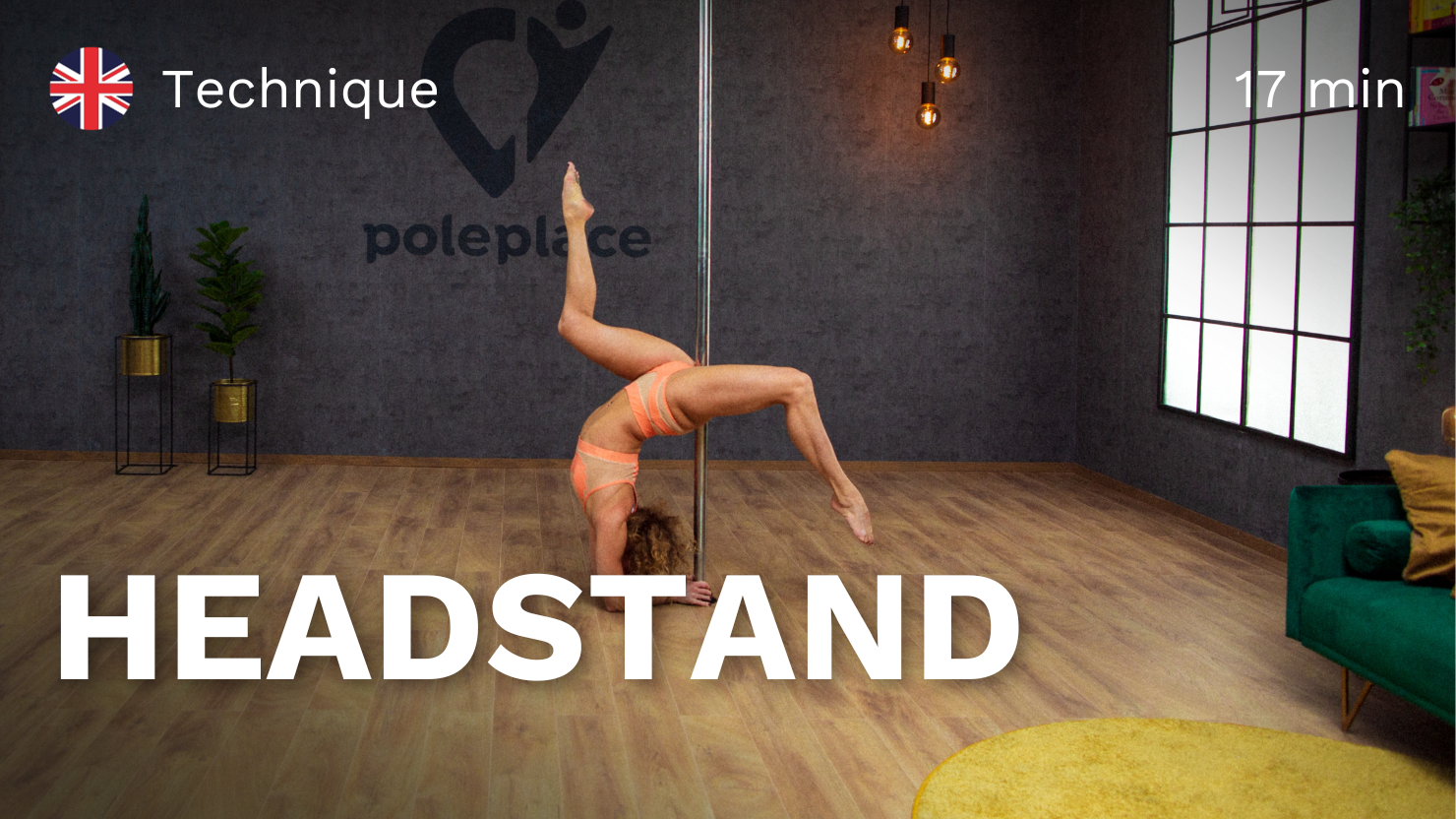
The Headstand pole move turns the base of the pole into your stage. Your head is close to the floor, your legs climb up the pole, and your body draws a soft arc that looks both strong and graceful. It is a beautiful upside-down shape for your floorwork, and it teaches you to feel calm and present with your world turned around.
What is a Headstand in pole dance?
In this pole dance move, you are upside down right at the foot of the pole. Your head rests on the floor near the pole, your hands are close by, and your hips rise above you while your legs travel up along the pole. In the classic shape one leg stretches long towards the ceiling and the other bends and opens away, with your back gently arched. The pole gives your legs a place to lean, so the Headstand feels very different from a free headstand in the middle of the room.
Headstand pole dance: who is it for?
This shape puts weight through your head, neck and shoulders, so it is a move to learn with care and with guidance. Where your head goes, how your weight is shared between head and hands, and how you come up and down again are details the tutorial and your coach guide you through. Please take your time with the setup rather than copying a photo. The Headstand is usually not a first-week move. It fits once you feel at home with the basics, have some upper body strength and feel relaxed being upside down. If it takes many tries before it feels steady, that is part of the journey.
What it builds
The Headstand trains your shoulders, arms and core, and it builds body awareness upside down: knowing where your hips and legs are without seeing them. It also opens your back and the front of your hips, which helps with every arched line later. Conditioning off the pole makes the shape feel lighter over time. And the basics apply here too: shorts or bare legs for skin contact on the pole, no body lotion before training and clean, dry hands.
Static or spinning pole?
This shape lives at the base of the pole, and you are not meant to turn in it. Most dancers learn it on a static pole, so everything stays calm and you can focus on your line.
How you learn it at POLEPLACE
With the Floor-Stand-Air Method™, you explore strength and shape on the floor first, prepare the positions standing at the pole, and only then bring your legs up. At POLEPLACE you can repeat every stage as often as you like, at home and at your own pace, with the tutorial showing you the details.
Headstand variations and what comes next
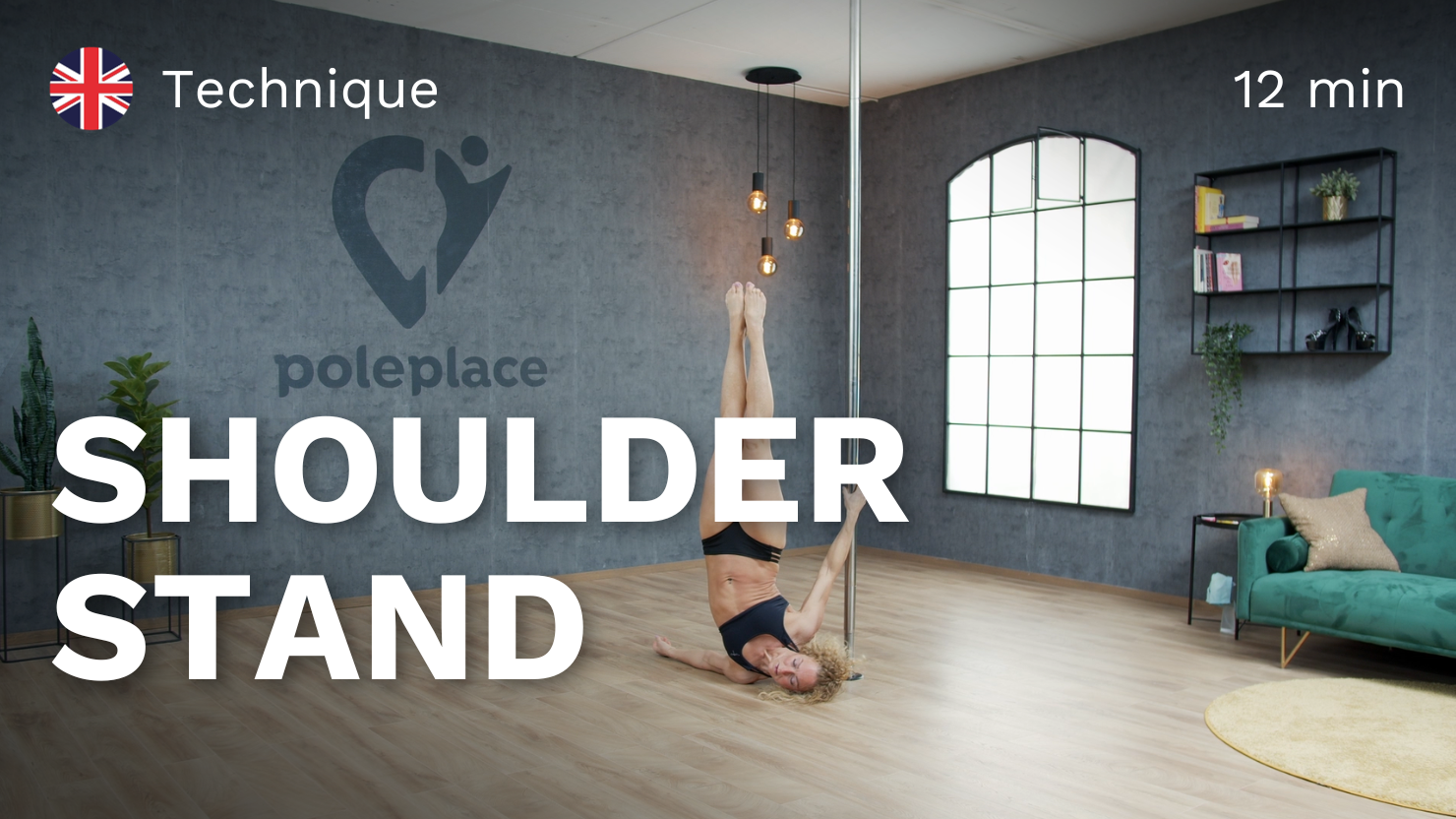
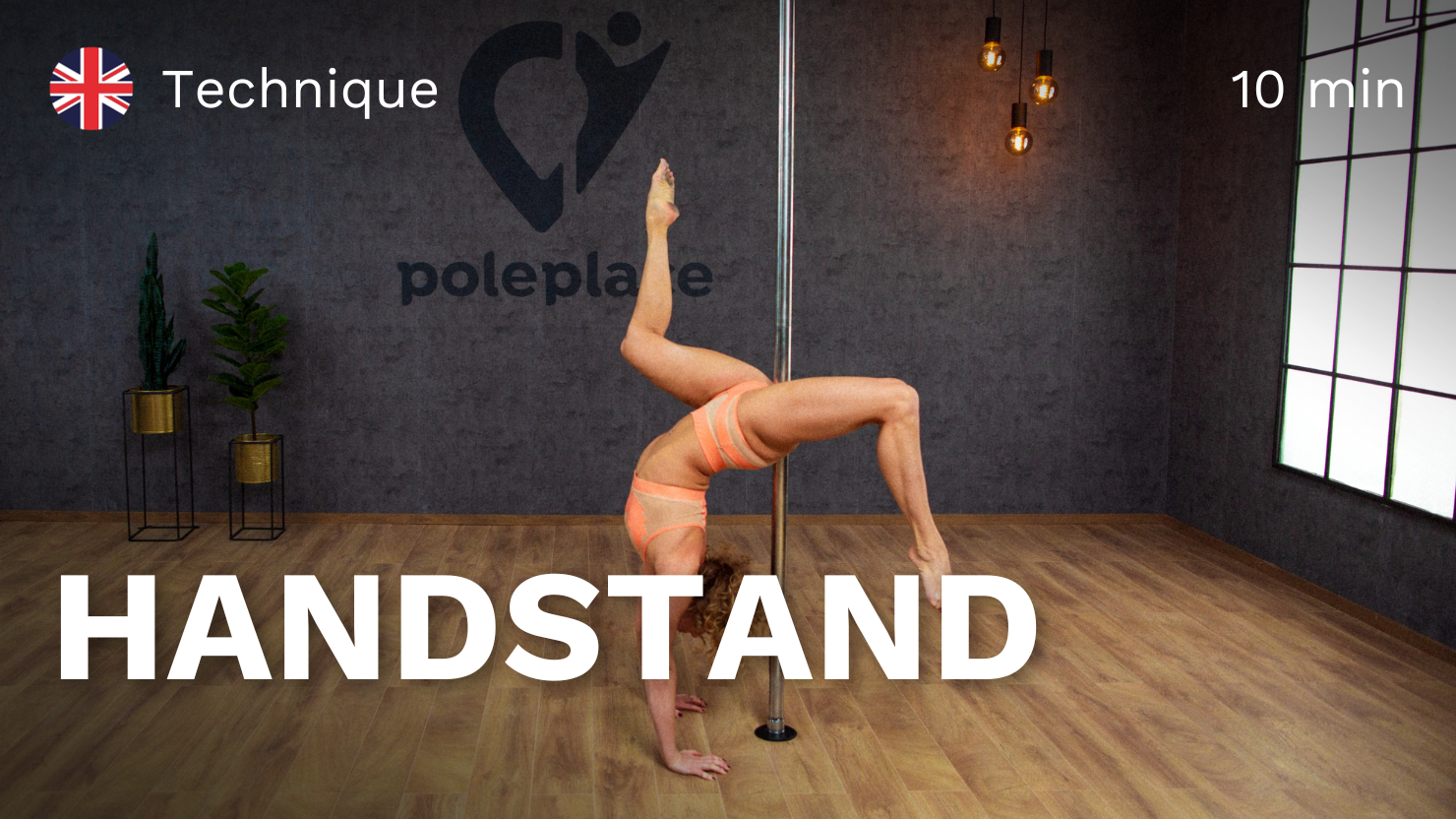
Once your Headstand feels steady, play with your leg shapes, the depth of your arch, or how you flow in and out of it. The Shoulder Stand at the pole is a gentle sister shape, the Handstand takes the same line onto your hands, and the Handstand Vertical Split opens it into a long split. Each one builds on the trust you are growing upside down.