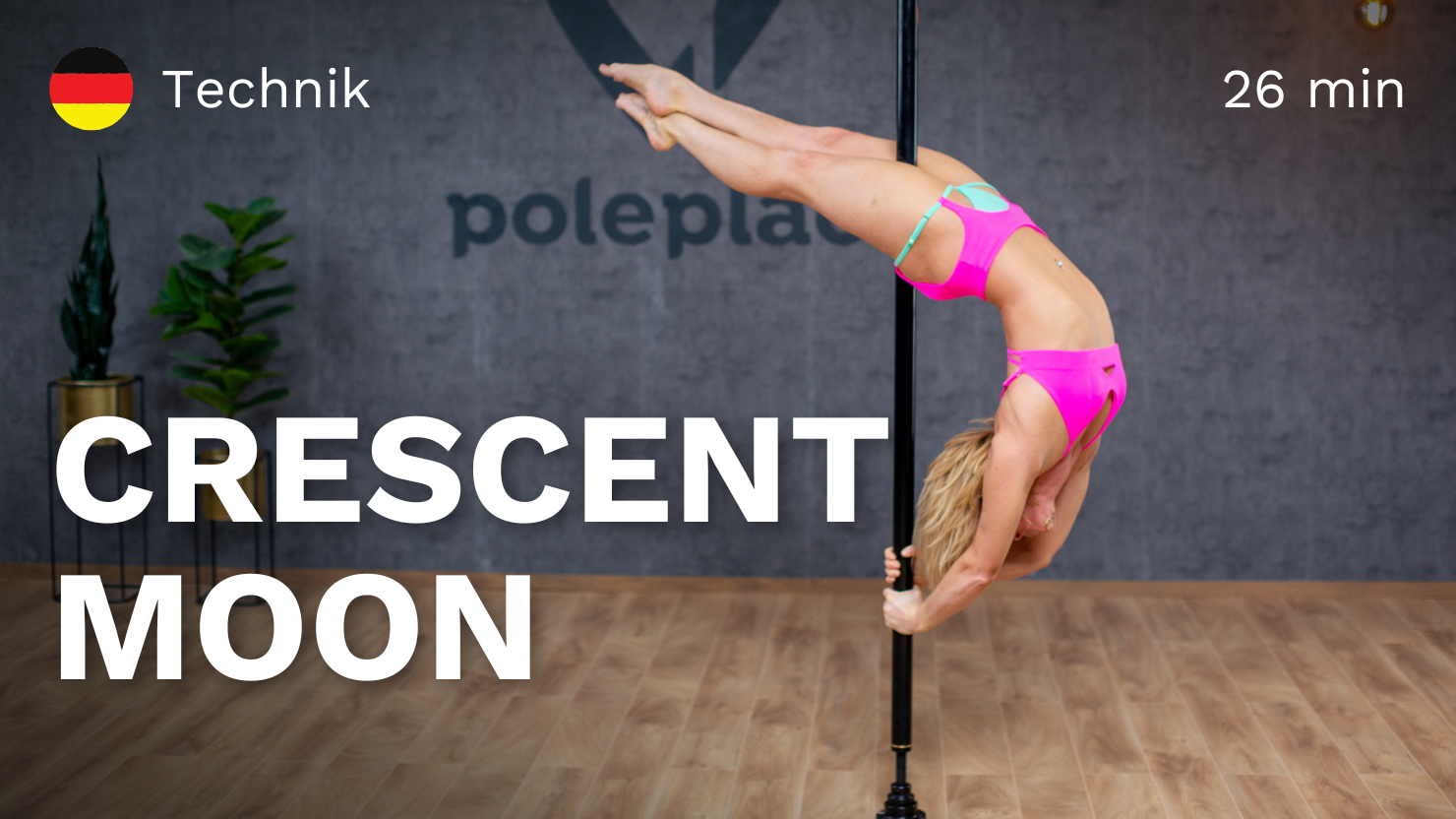
The Crescent Moon, explained
The Crescent Moon pole move is one of those shapes that makes people stop scrolling. You hang upside down beside the pole with your back softly arched and your legs reaching long and together, so your whole body draws a curve like a moon on a clear night. It is a beautiful goal for the moment when being inverted starts to feel like home.
What is a Crescent Moon in pole dance?
In this pole dance move, your head travels down towards the floor while your hips and legs stay higher, and your body opens into a deep, flowing arch. Seen from the side, the line from your toes to your head looks like a crescent, which is exactly where the name comes from. It is a hold rather than a spin, so the magic lies in staying in that curve for a breath or two and letting it look calm. How you get into it and how exactly you stay connected to the pole is something the tutorial and your coach show you in detail.
Is the Crescent Moon pole move for beginners?
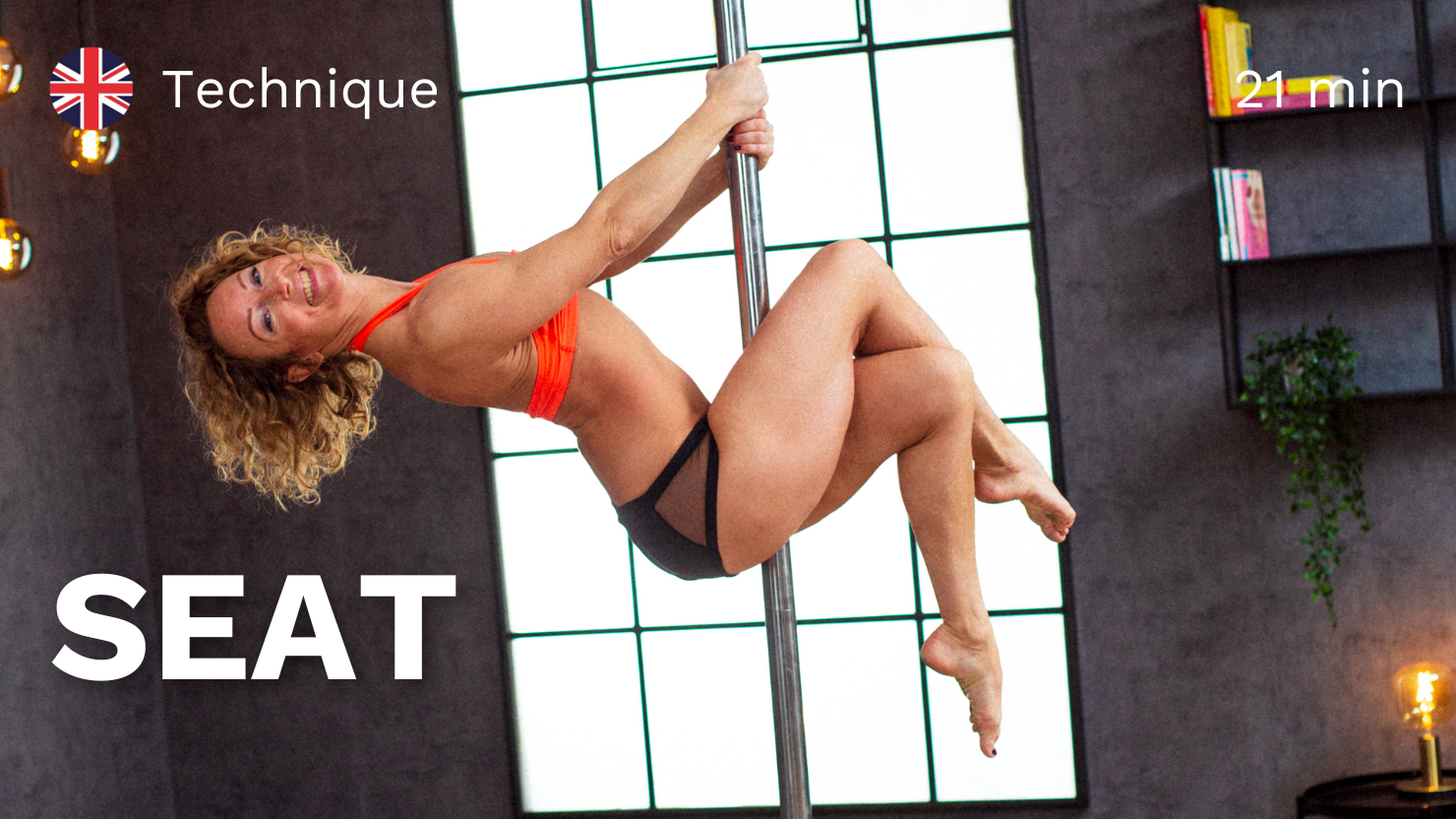
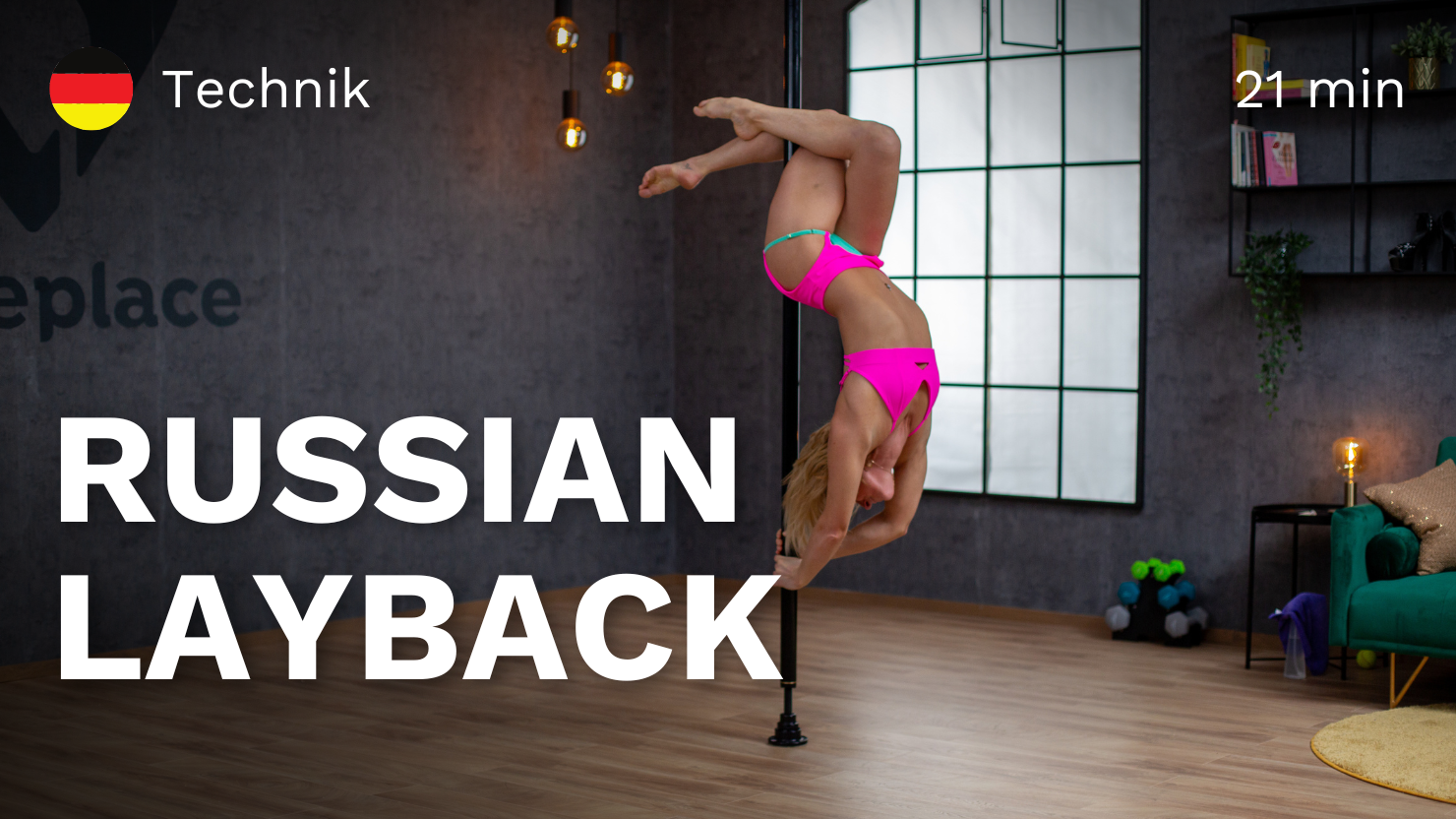
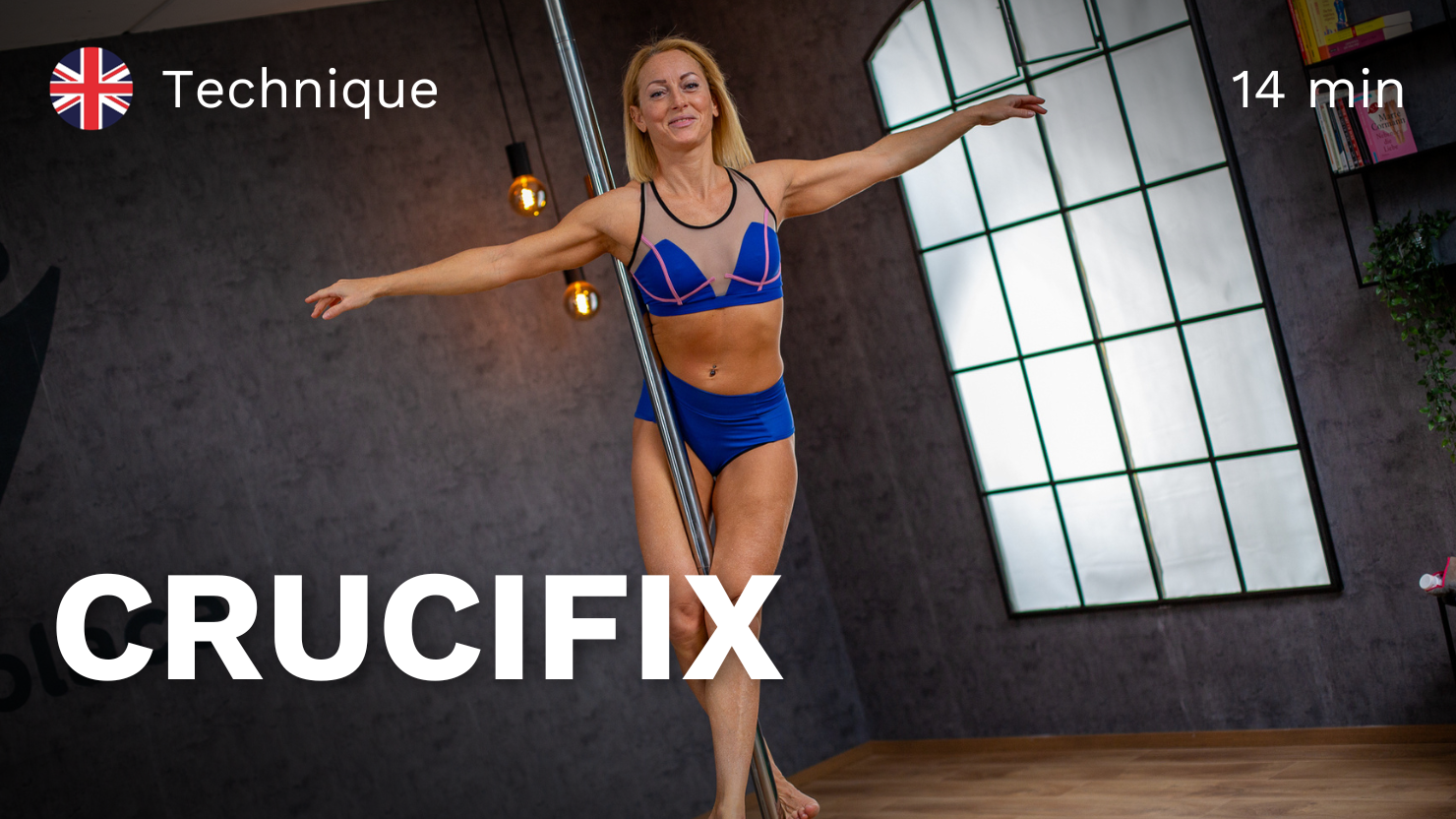
It usually is not a first-month move, and that is perfectly fine. The Crescent Moon comes once you feel safe sitting on the pole, leaning back and being upside down. If moves like the Seat, the Crucifix and the Russian Layback already feel familiar, you are building exactly the trust this shape needs. And if your first attempts feel stiff or a little scary, that is part of how every arch begins.
What it builds: back, strength and body awareness
The Crescent Moon asks your back to open and your legs, core and shoulders to stay engaged at the same time. That mix of softness and strength is what makes it so rewarding. It also trains your body awareness upside down, because you learn to feel the curve without seeing it. Back flexibility makes the crescent deeper, but you do not need a full bridge to start. Conditioning for your core and a little regular backbend work on the floor will carry you a long way.
Static or spinning pole?
Both are possible. On a static pole you can take your time, find the shape and breathe into it. On a spinning pole the crescent slowly turns with you, which is gorgeous to watch and feels like floating, but it also adds movement while you are inverted. Many dancers enjoy the static version for a while before they let the pole spin.
How you learn it at POLEPLACE
With the Floor-Stand-Air Method™, you meet the arch on the floor first, then explore the positions standing at the pole, and only then take the Crescent Moon into the air. That way each stage gives you a small win before the next one. Wear shorts or keep your legs bare so your skin has contact with the pole, and skip body lotion on training days so you do not slip. Clean, dry hands help too.
Crescent Moon tips, variations and what comes next
Once the shape feels steady, play with your lines: point your feet, change your arms, or slow down the way you arrive and leave. Filming yourself is a lovely way to see how your curve grows from session to session. From here, other backbend and inverted shapes will feel more within reach, because your body already knows how it feels to open up while upside down.