
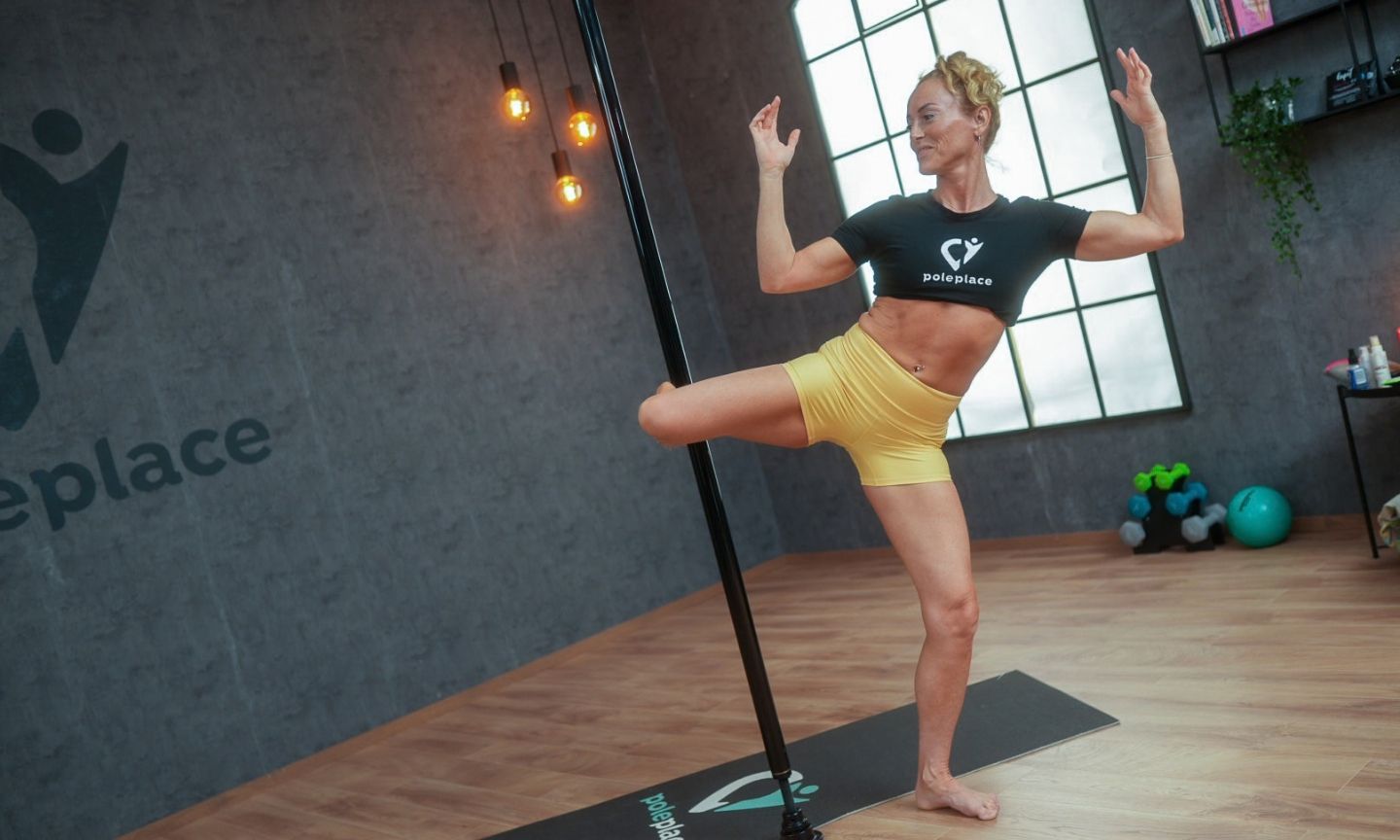
For pole dancing you wear shorts and a sports bra or a fitted top, because your bare skin is what holds you on the pole. Leggings are fine for warm-ups, floorwork and many spins, but once you climb or sit on the pole, your legs need contact. Shoes are optional: most people train barefoot, and pole heels come later, if at all.
That is the short version. Below you will find what to wear for each part of a pole class, what to leave at home, and when pole heels are worth thinking about.
Why do pole dancers wear so little?
It looks like a style choice, but it is mostly physics. Fabric slides on a metal pole, skin sticks to it. Many pole moves rely on that contact: the back of your knee in a hook spin, the inside of your thighs when you sit, your waist and the side of your body when you lean into a hold.
These are the places where your skin does the work:
- Hands: always bare, in every move.
- Inner thighs and knees: climbs, sits and most holds.
- Back of the knee: hook spins and knee hooks.
- Arms, armpit and sides of the body: many spins and poses where you lean into the pole.
- Feet and ankles: climbs and some holds, which is why most people train barefoot.
So when you see pole dancers in tiny shorts, it is not about showing off. It is about not sliding down. You can still choose what makes you feel good, and there is a lot of room between full coverage and very little.
What should a beginner wear to pole dancing?
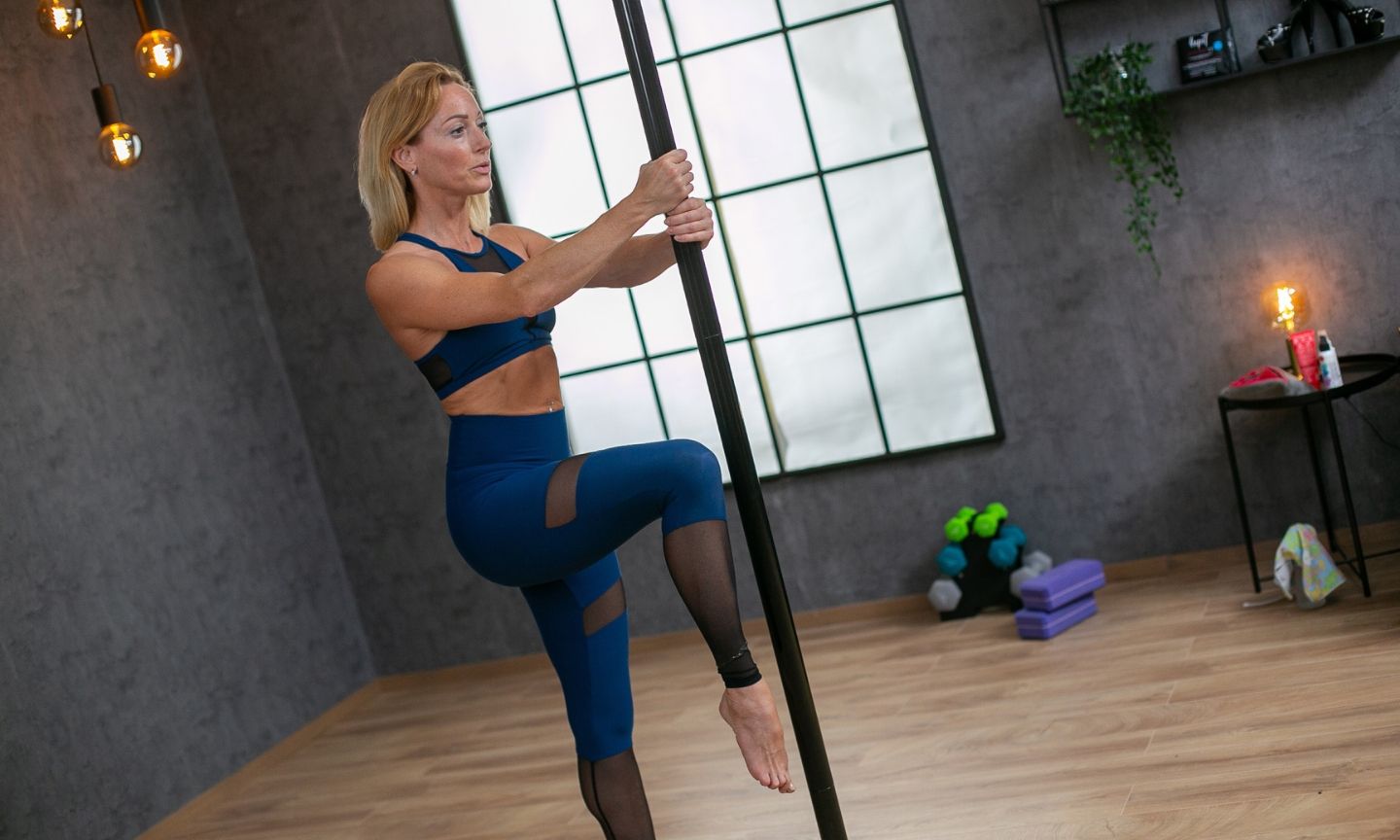
For your first class you do not need special pole dance wear. A few things from your sports drawer will do.
Shorts
Shorts are the most important piece. They should sit well, stay in place when you lift your legs and leave your thighs free. Regular gym shorts work for a start. Many dancers later switch to shorter, tighter pole dance shorts because nothing rides up or gets in the way, but that is a choice, not a requirement.
Sports bra or fitted top
Pick a sports bra or a top that stays put when you turn, lean back or go upside down later. A loose T-shirt slides up and can cover the skin you need on your sides and back. A fitted tank top is a good middle ground if you prefer more coverage.
Leggings
Leggings are great for warm-ups, floorwork and many beginner spins. In a spin like the Fireman Spin your hands do most of the holding, so leggings are fine. As soon as your legs have to hold you, for example in the Basic Climb or the Knee Hook Back, you need bare legs. Many dancers wear shorts and pull leggings over them for the warm-up, then take them off.
Something warm for later
Bring a hoodie or a jumper for the cool-down and stretching, when you are not moving much. Warm muscles stretch more comfortably.
What should you not wear to pole?
Some things get in the way of grip or can scratch you or the pole.
| Leave it at home | Why |
|---|---|
| Body lotion, oils, self-tan | Make your skin slippery for hours, even if it feels dry |
| Rings, bracelets, watches | Scratch the pole, catch in a grip, can hurt your fingers |
| Long or sharp nails | Get in the way of a full grip, can break |
| Loose clothes | Slide on the pole and cover the skin you need |
| Fabrics with zips, studs or sequins | Can scratch the pole and your skin |
| Glitter on your body | Feels fun, but makes the pole slippery for the next person |
The lotion point surprises most beginners. Skip the body lotion and oil on training days. If your skin gets dry, apply it after training instead.
Do you need knee pads for pole dancing?
You do not need them for your first class, but many dancers like them for floorwork. Floorwork means moving on the ground: knee slides, rolls and transitions in and out of the pole. On a hard floor that can be tough on your knees.
Soft knee pads protect you there without stopping you from moving. Some pole knee pads leave the back of the knee free, so you can still use it for hook spins. If you are curious about floorwork, the Floorwork: The Basics program is a good place to start.
Pole dance shoes and heels: do beginners need them?
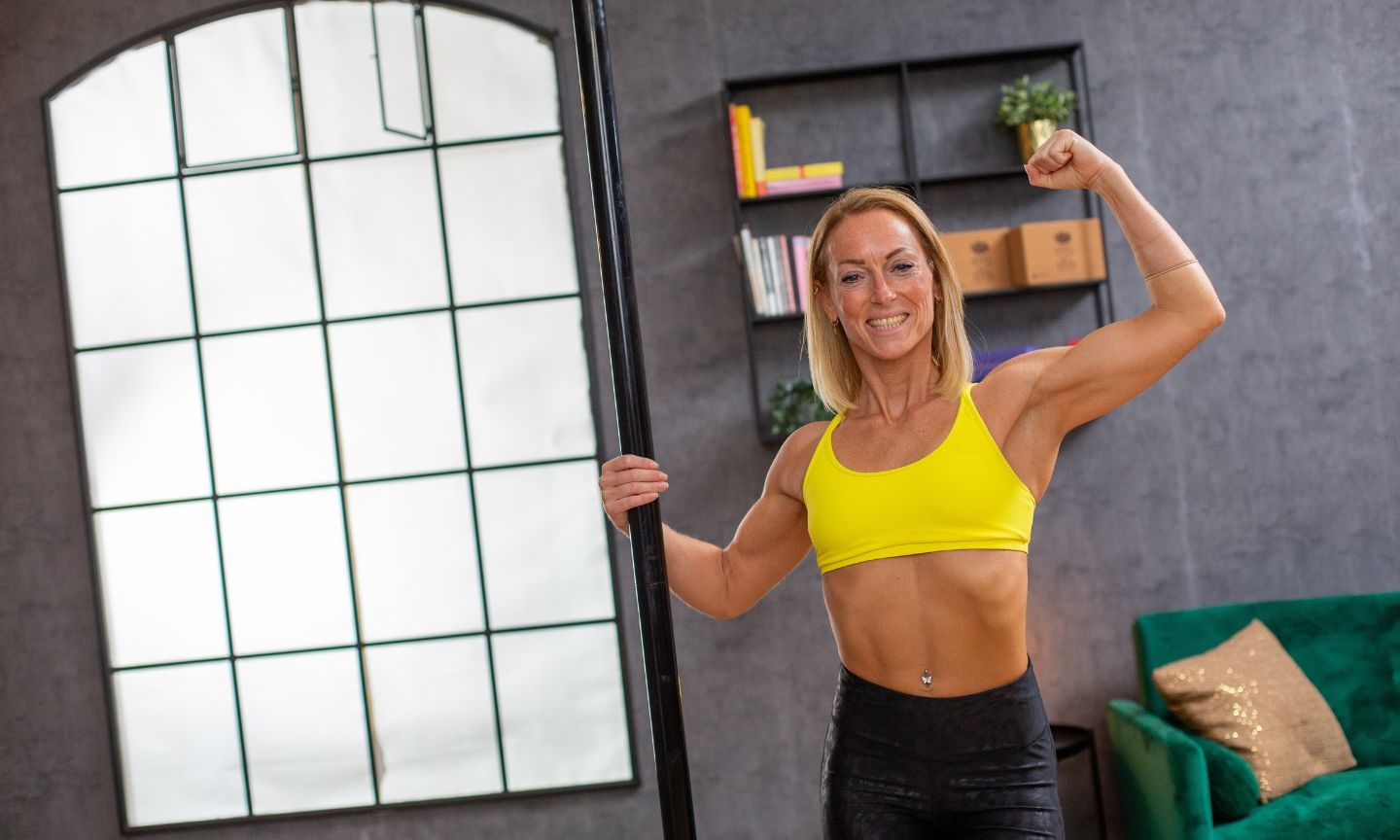
No. Most people learn pole barefoot, and that is the best way to start. Bare feet give you a feel for the floor and the pole, and your feet can help you in climbs and holds.
When pole heels make sense
Pole dance heels, often also called pole fitness heels, are high platform shoes or boots made for dancing. They are part of more sensual and expressive styles, often called exotic pole, and they change how you move: your legs look longer, slides and floorwork feel different, and the extra weight changes how spins and kicks feel.
Pole heels are a good idea when:
- you already feel at home with the basic spins and transitions,
- you want to explore a heels or exotic style,
- you take a class that is made for heels.
Take care of your ankles
Heels put your ankles in a new position, so start slowly. Walk and dance on the floor before you add spins. Keep your first sessions short and stop when your ankles or feet feel tired. If you have had ankle or knee problems, talk to your doctor or physio before you start dancing in heels.
Other pole dance shoes
Some dancers like soft dance socks or grip socks for warm-up and floorwork. For anything that needs your feet on the pole, bare skin works best.
What to wear for pole fitness at home vs in a class
At home you have the advantage that nobody sees you, so you can wear whatever feels right. The rules for grip stay the same: shorts for climbs and sits, bare hands, no lotion. A few small things help:
- Room temperature: a cold room makes your skin dry and your muscles stiff. Warm up properly, and keep a hoodie close for breaks.
- Floor: if you train floorwork on a hard floor, knee pads or a soft mat help.
- Pole: clean your pole before you train, especially if it has been a few days. If you are still setting up your space, have a look at the equipment you need to train at home.
In a studio class, ask the studio what they expect. Some have rules about grip products or heels on their floor.
What about grip aids?
When your hands or skin feel too sweaty or too dry, a grip aid can help. There are products for sweaty skin and products for dry skin, so the right one depends on your skin type. A grip aid is a support, not a must. Most beginners do well without one at first, because grip also grows with training.
How should you feel in your pole outfit?
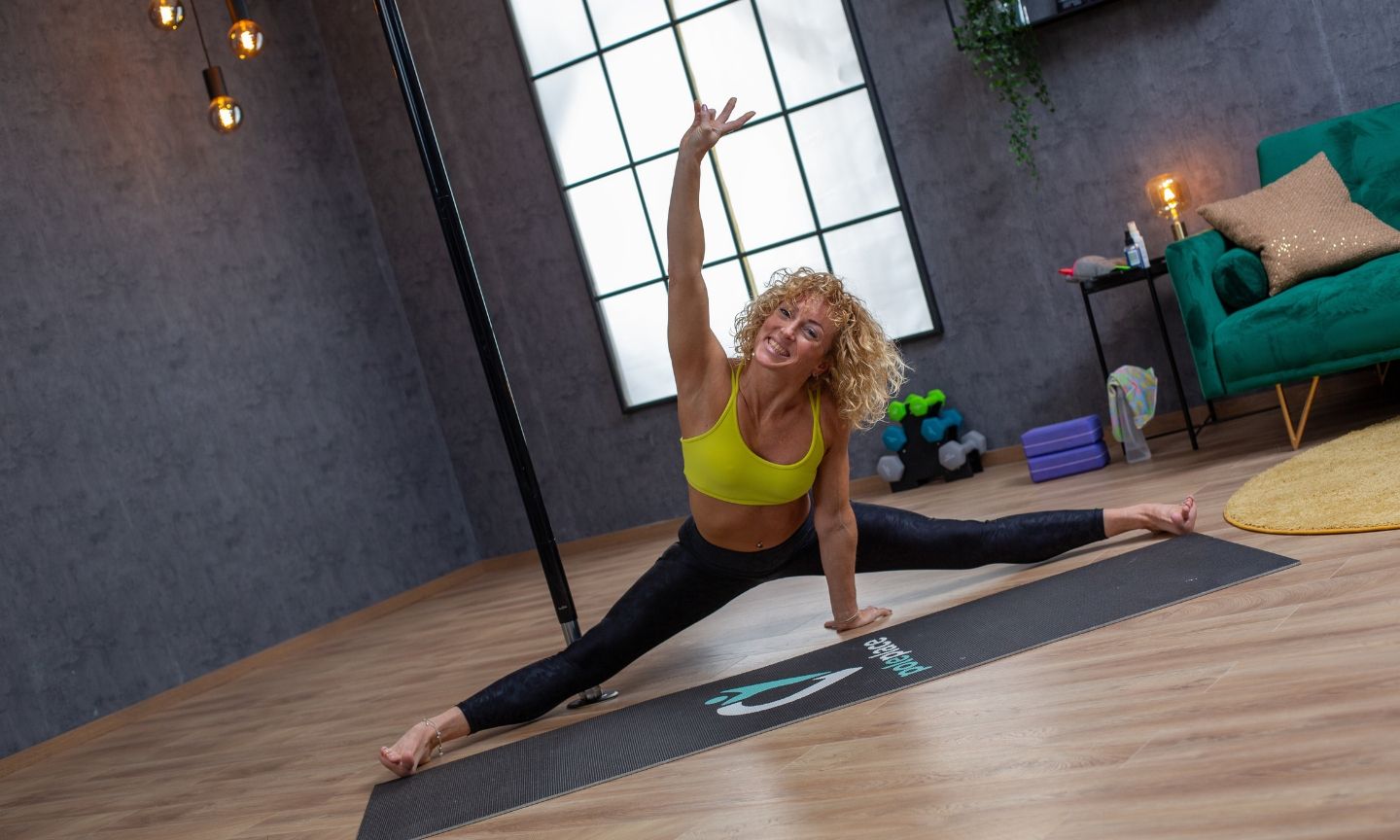
Comfortable. That is the most useful rule. You will move more freely in clothes that do not need constant fixing. If very short shorts do not feel like you yet, start with a longer pair and leggings for the warm-up. Many dancers find that their outfits change on their own over time, when they notice how much easier the moves feel with more skin contact. There is no right look, only what lets you train well and feel good.
FAQ
What do I wear to my first pole dance class?
Shorts, a sports bra or a fitted top, and something warm for the cool-down. Leave jewellery at home and skip the body lotion that day. You will train barefoot, so you do not need shoes.
Can I pole dance in leggings?
Yes, for warm-ups, floorwork and many spins where your hands do most of the holding. For climbs, sits and hook spins you need bare legs, so wear shorts underneath.
Do I need pole dance heels as a beginner?
No. Beginners learn barefoot. Pole heels make sense once you feel at home with the basics and want to explore a heels or exotic style.
Why can’t I use body lotion before pole?
Lotion and oil leave a film on your skin that makes you slide, even hours later. Put it on after training instead.
Are knee pads necessary for pole dancing?
They are not necessary, but they are nice for floorwork on a hard floor. Look for pads that leave the back of the knee free if you also want to do hook spins.
What next?
Now you know what to wear, the next step is to try it out. The 12-Week Starter Course takes you step by step through your first spins, seats and climbs, at home and at your own pace. You can try it 7 days for free.
What next?
Start with Class 1 of our 12-Week Starter Course. Every move is taught with our Floor-Stand-Air Method™: on the floor first, then standing, then in the air.