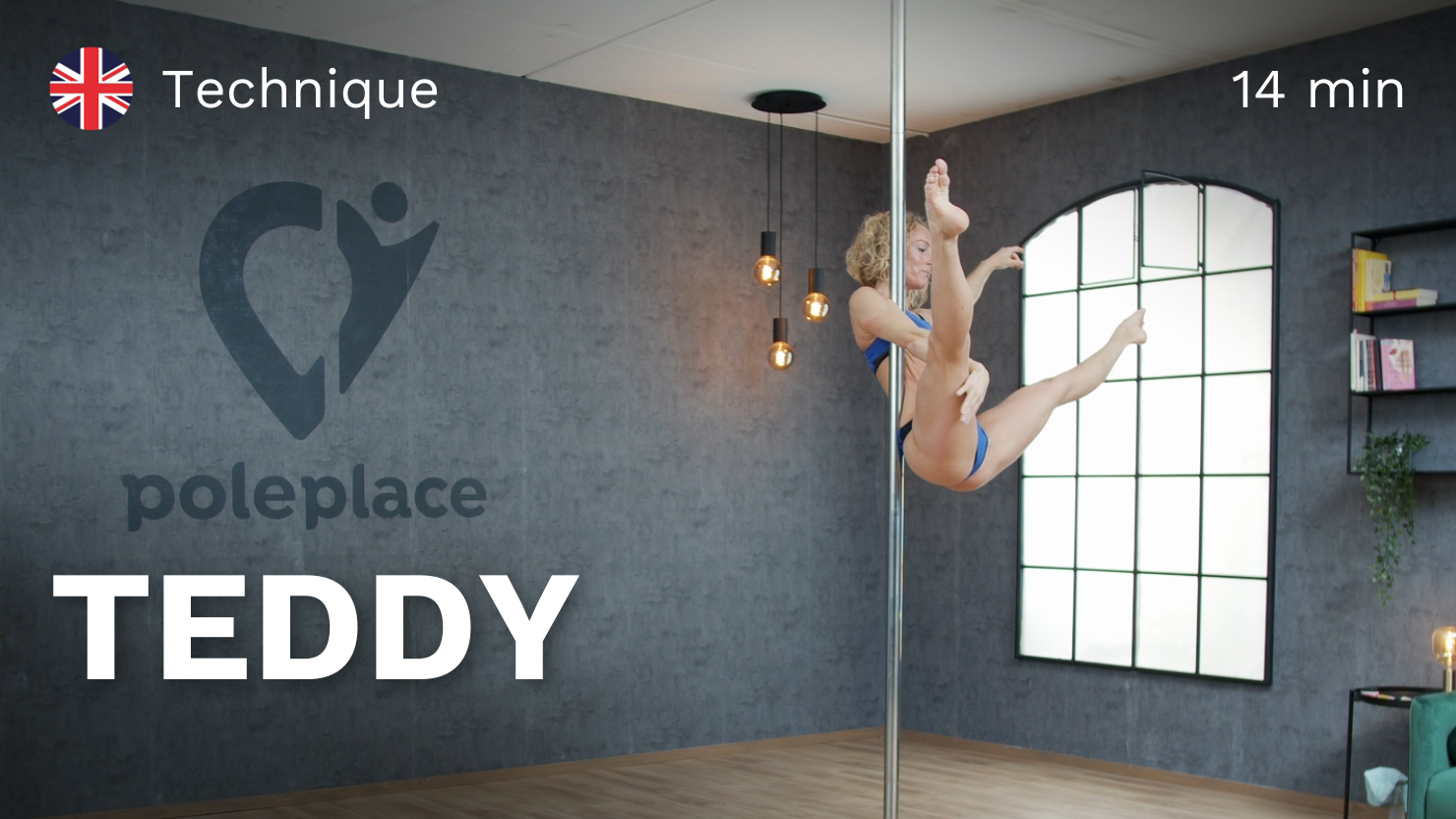
The Teddy, explained
The Teddy pole move is one of those shapes that makes people ask “wait, how is she holding on?” Your upper body stays snug against the pole while your legs leave it completely and float out into the air. It is a lovely step towards trusting your arms and torso, and a shape you will return to in many combos.
What is the Teddy in pole dance?
In the Teddy, you are upright beside the pole, held close to it by your upper body and arm, with no legs on the pole at all. Your legs are free, so you can tuck them, open them into a straddle or play with a split line in the air. That freedom is what makes the Teddy so photogenic: the pole almost disappears and it looks as if you are hovering next to it. The exact hold and how you get into it is what the tutorial and your coach show you, because those details matter.
Is the Teddy good for beginners?
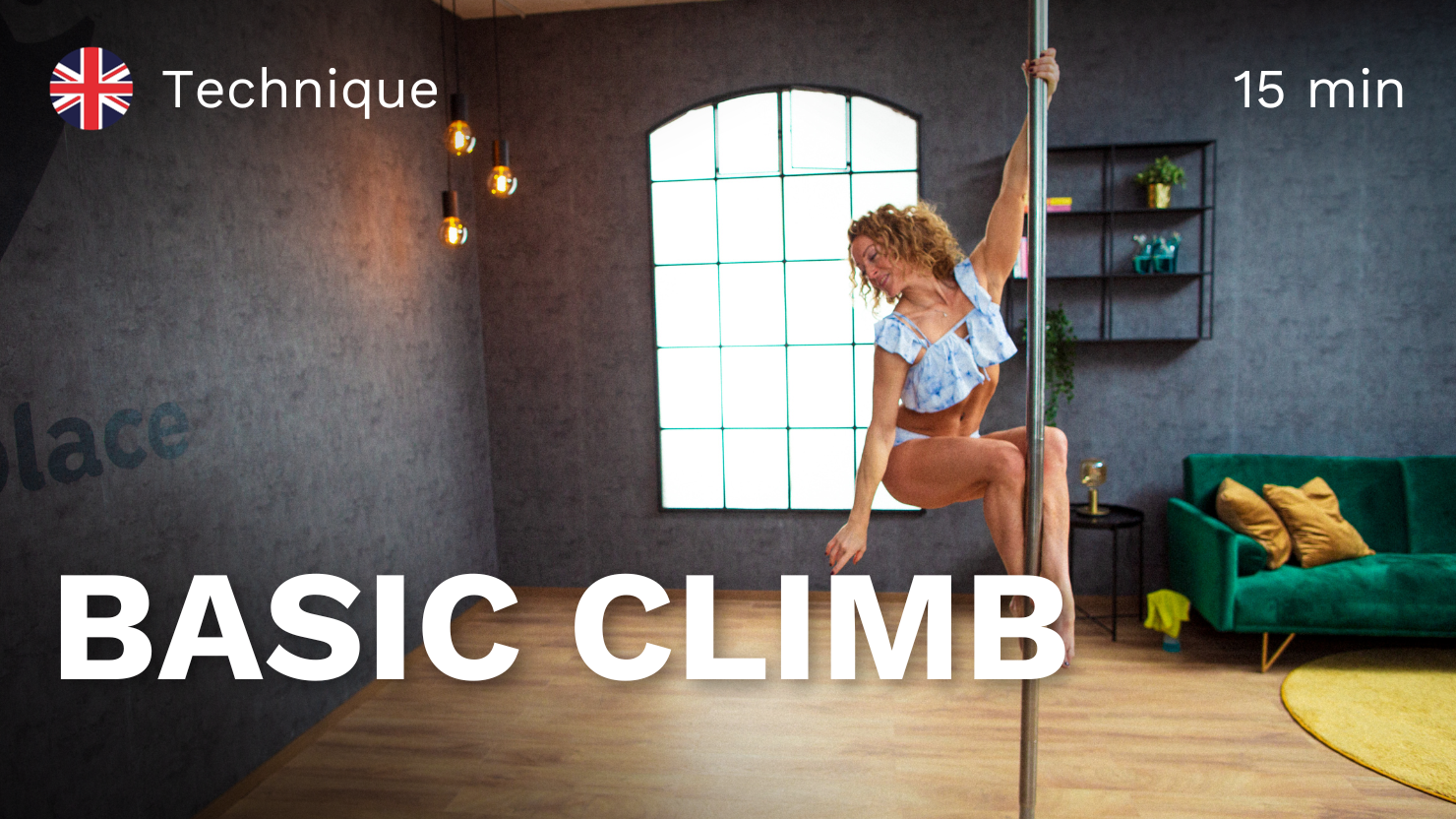
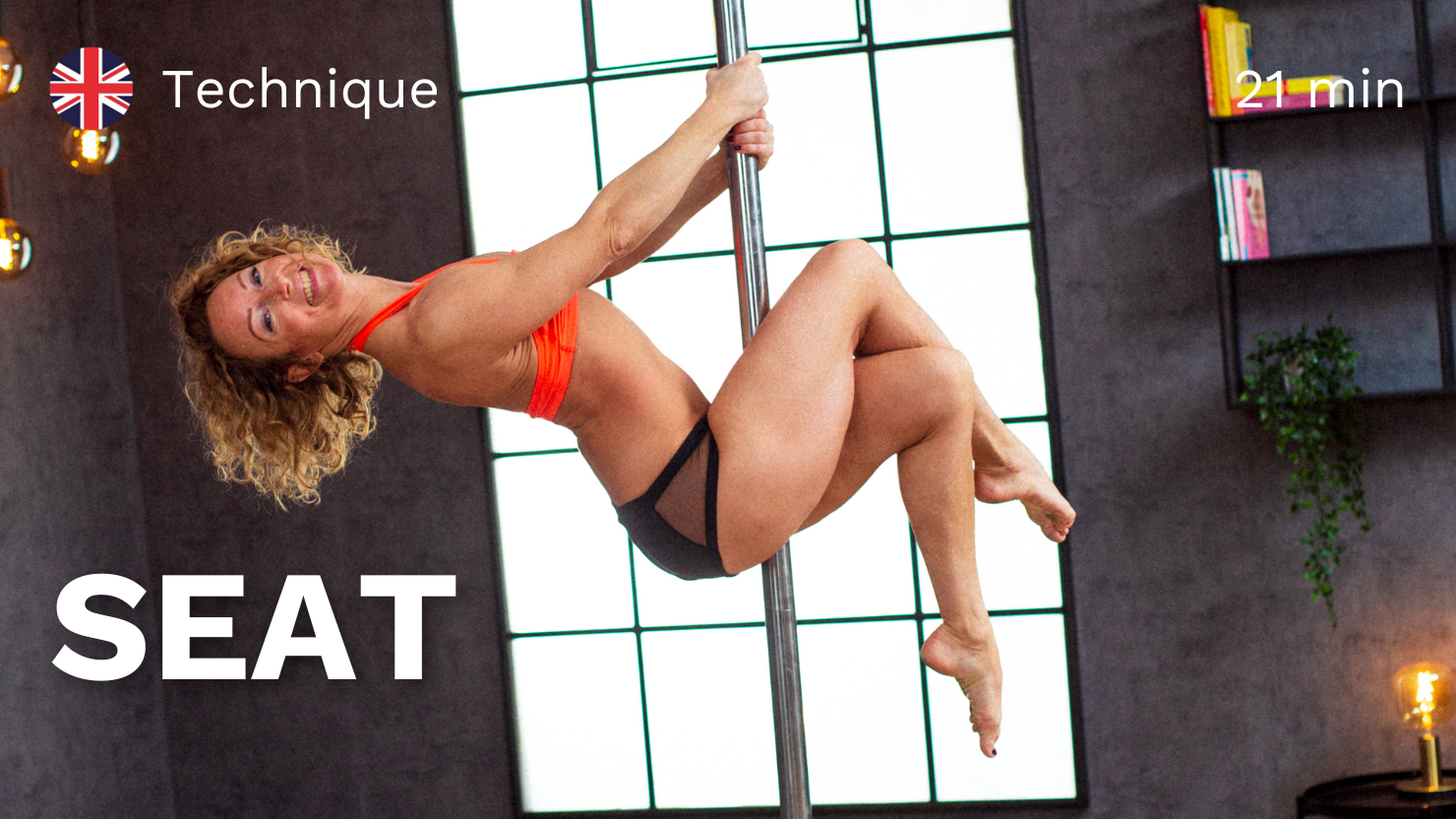
It is not usually a first-week move, and it does not have to be. The Teddy comes once you feel comfortable with beginner spins, a basic climb and simple holds like the Seat, so you already know how your body feels off the floor. If your first tries feel heavy or a little uncomfortable on the skin, you are in very good company. That is part of getting to know a new kind of contact with the pole.
What the Teddy builds: strength and skin grip
This pole dance move asks a lot of your upper body. Your shoulders, arms, back and core work together to keep you close to the pole, and your legs learn to stay light and lifted on their own. It also trains skin grip, because the contact between your skin and the pole helps hold the shape. That is why bare arms, shorts and no body lotion on training days make such a difference. Regular conditioning helps the Teddy feel calmer over time.
Teddy on a static or spinning pole?
Many dancers meet the Teddy on a static pole first, so the pole stays still and you can focus on the hold and the shape of your legs. On a spinning pole the Teddy turns slowly with you, which looks dreamy and feels a bit like floating, but it adds movement while you are still finding your balance. Once your static version feels steady, spinning mode is a fun next challenge.
How you learn it at POLEPLACE
At POLEPLACE you learn the Teddy with the Floor-Stand-Air Method™. You explore the shape on the floor first, then practise the upper-body position standing at the pole, and only then let your legs leave the ground. Each stage is a small win, in your own space and at your own pace.
Teddy variations and what comes next
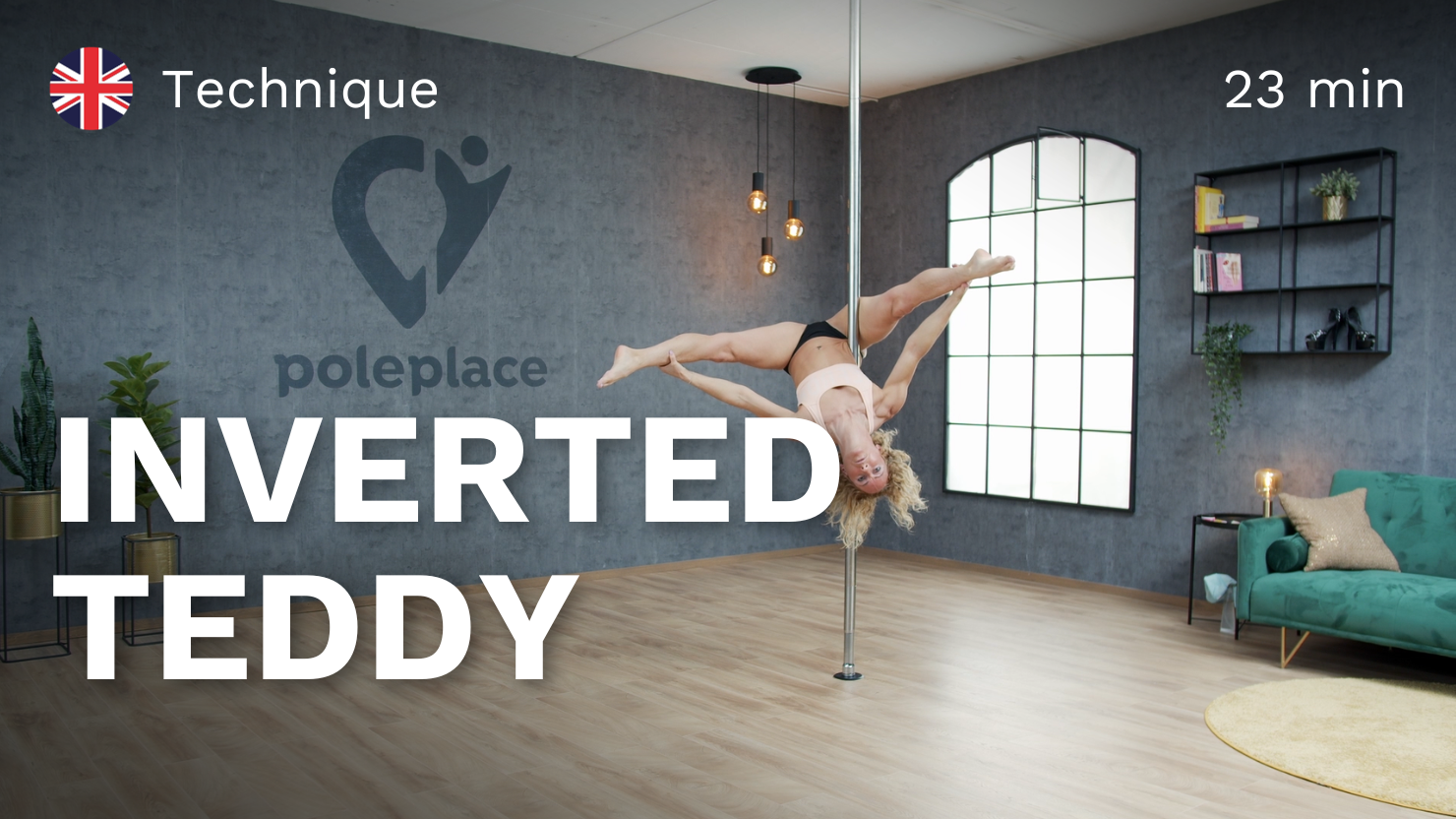
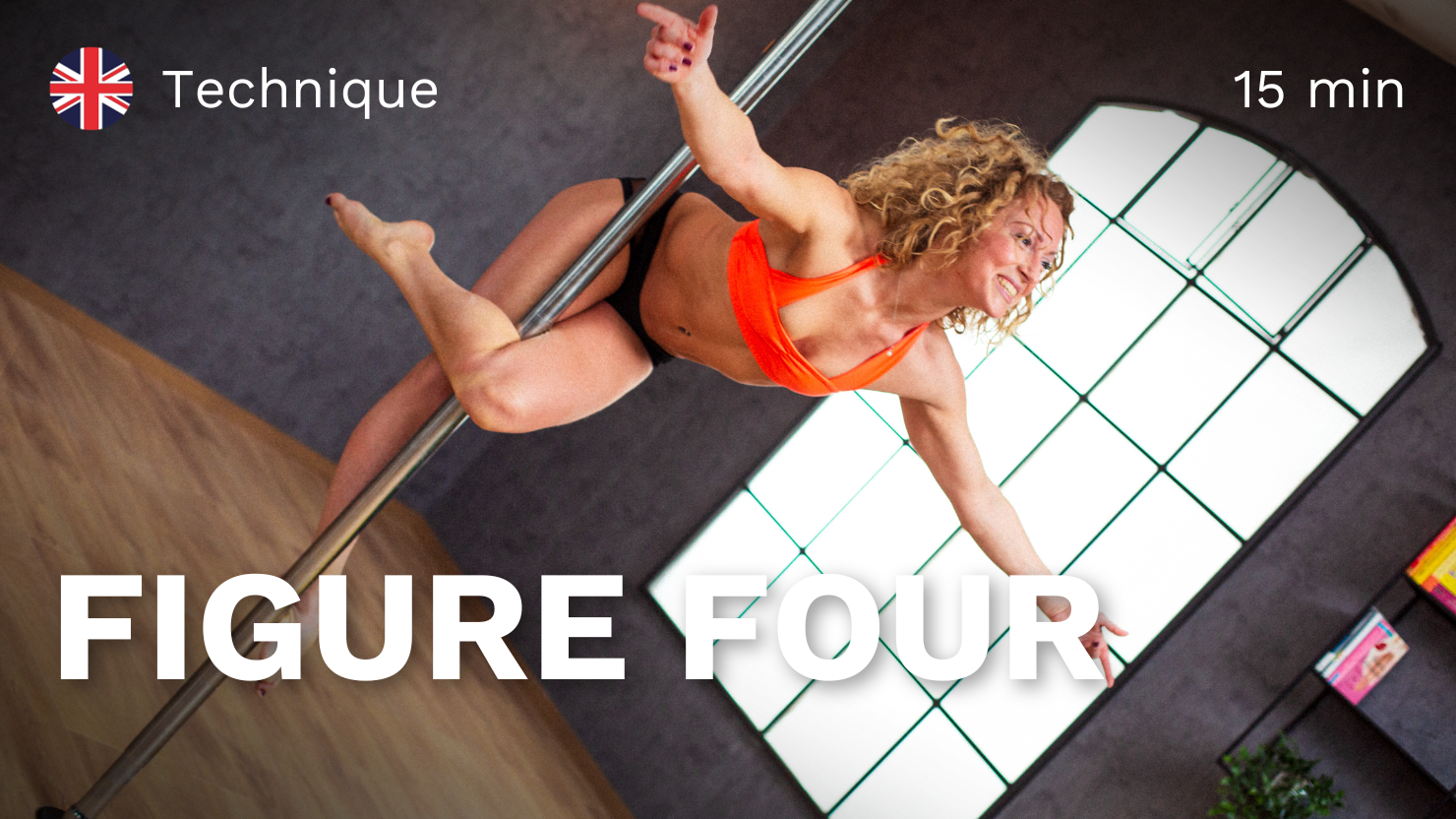
Once your Teddy feels familiar, play with your legs: a tight tuck, a wide straddle, one leg reaching high. You can link it with spins and climbs into short combos too. When you are ready for something new, the Inverted Teddy takes a similar upper-body hold upside down, and the Figure Four is another hold where you lean away from the pole in a completely different way.