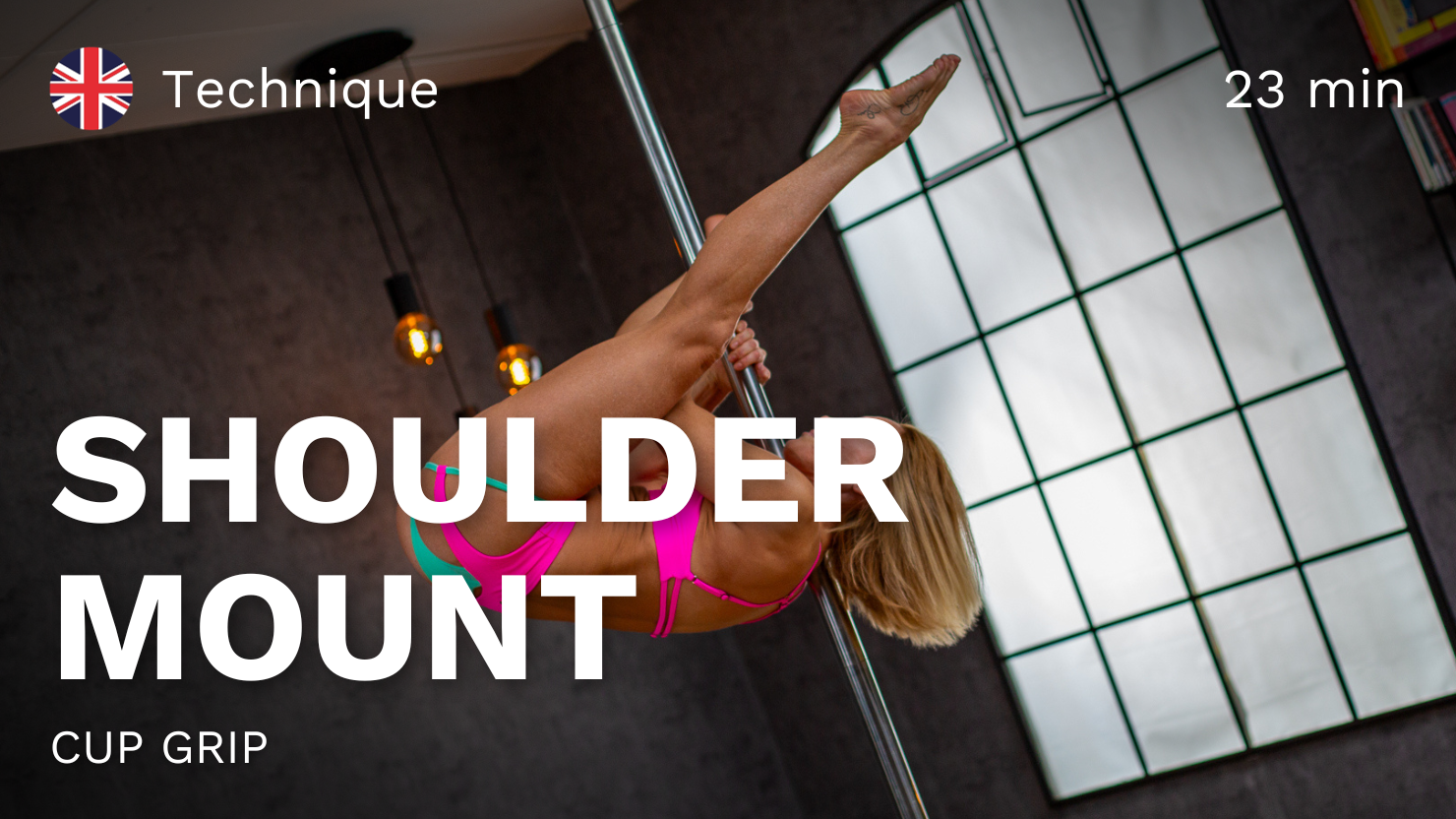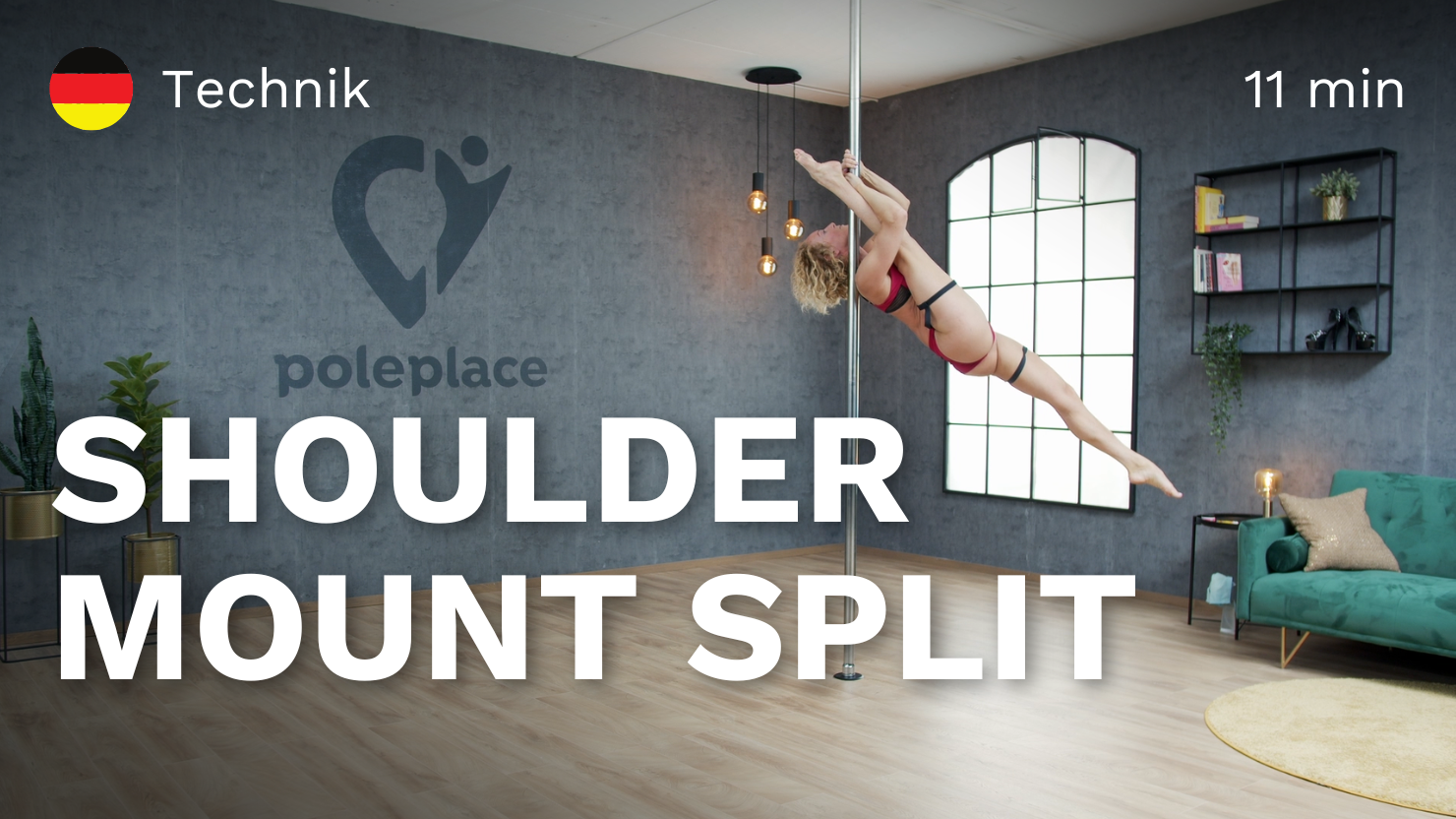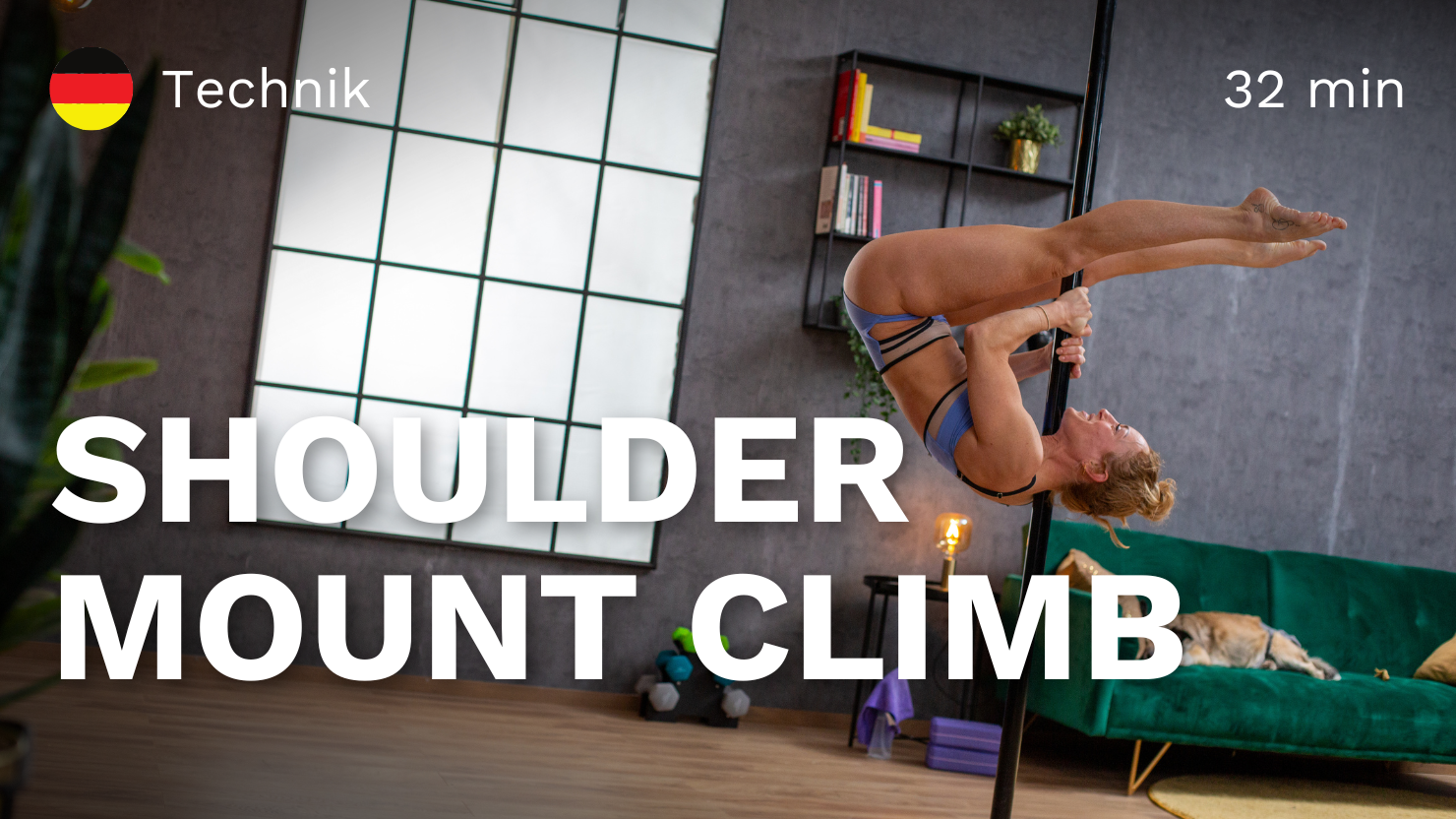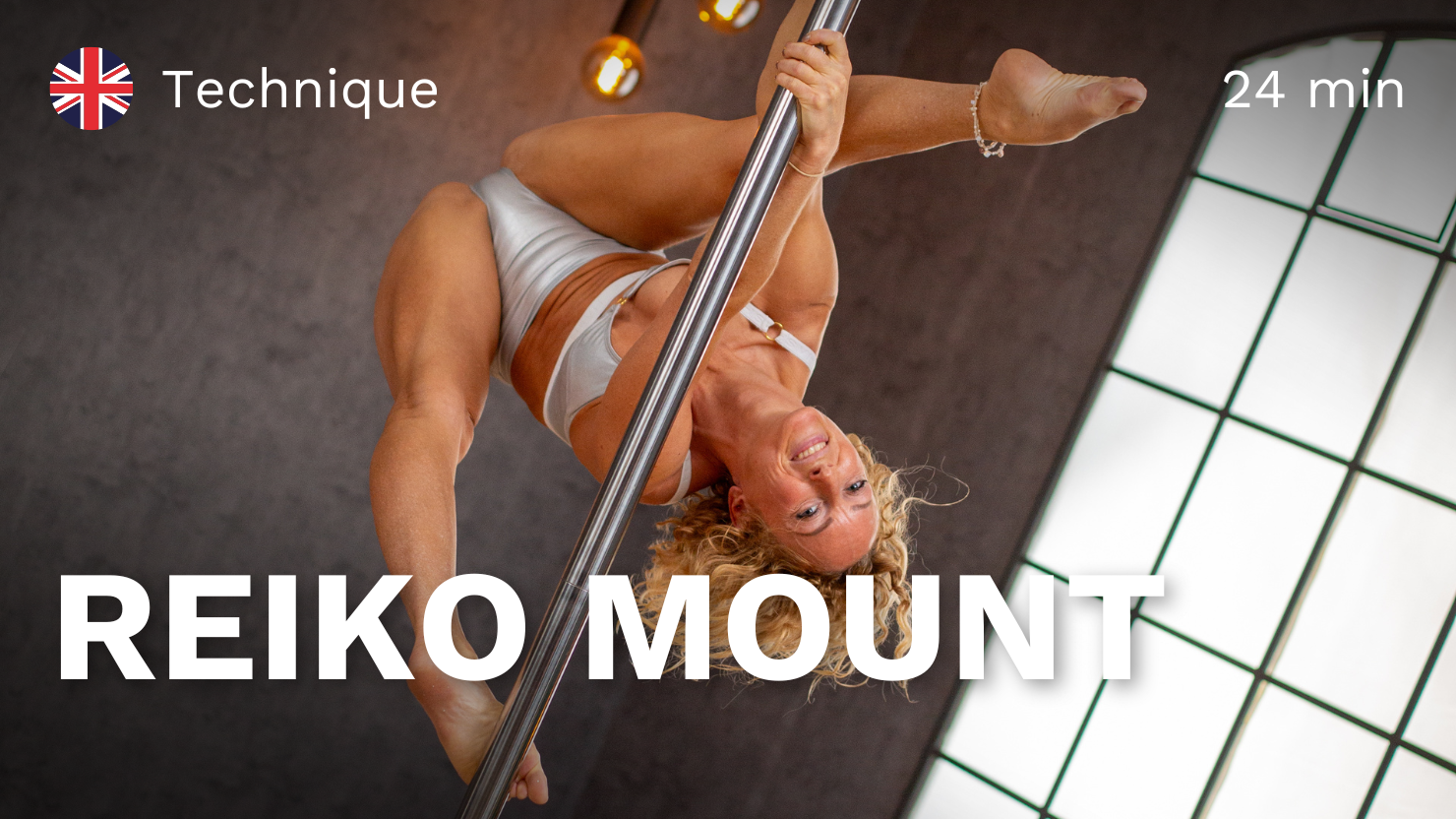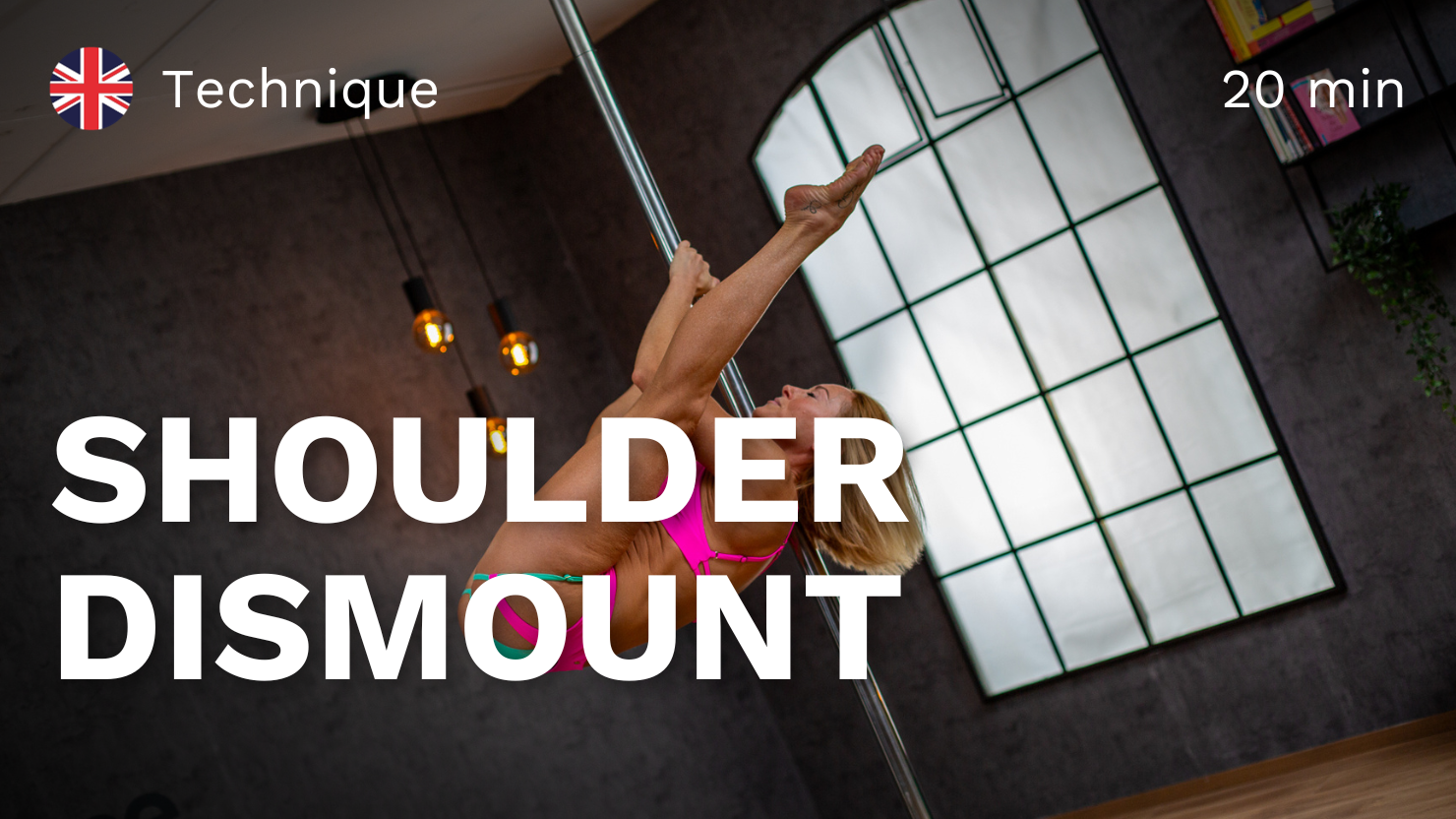
The Shoulder Dismount, explained
Every trick needs a way out, and the Shoulder Dismount is one of the most elegant ones. Instead of sliding or dropping down, you use your shoulder and your grip to come back to the floor slowly and with control. It might not be the flashiest move, but it makes everything else feel safer.
What is the Shoulder Dismount?
A dismount is a way to come down from the pole. In the Shoulder Dismount, your shoulder and hands work together with the pole to bring you back down in a calm, controlled movement. It belongs to the same family as the Shoulder Mount. How your grip is set, how you lower yourself and how you land safely is explained step by step in the tutorial, in English and German.
Is the Shoulder Dismount good for beginners?
It is an intermediate move. You should know the Shoulder Mount position and feel comfortable upside down. If your first attempts feel fast or a bit clumsy, that is normal: slow, controlled lowering takes strength and practice.
Static or spinning pole?
Learn it on a static pole first, where the pole stays still and you can focus on control. On a spinning pole the dismount turns with you, which looks lovely but needs extra practice.
What it builds: shoulder strength and control
The Shoulder Dismount trains your shoulders, arms and core, especially in the lowering phase, which is one of the best ways to build strength. It also gives you more confidence for all moves where you are upside down. A crash mat under the pole gives you peace of mind while you learn.
How you learn it at POLEPLACE
With the Floor-Stand-Air Method™ you build the strength on the floor first, practise the position standing at the pole and only then lower yourself from the air. Step by step, in your own space and at your own pace.
Related moves and what comes next
The Shoulder Dismount completes your shoulder mount toolbox. Use it after the Shoulder Mount Split or the Shoulder Mount Climb, and later after strong mounts like the Reiko Mount.