The Knee Hook, explained
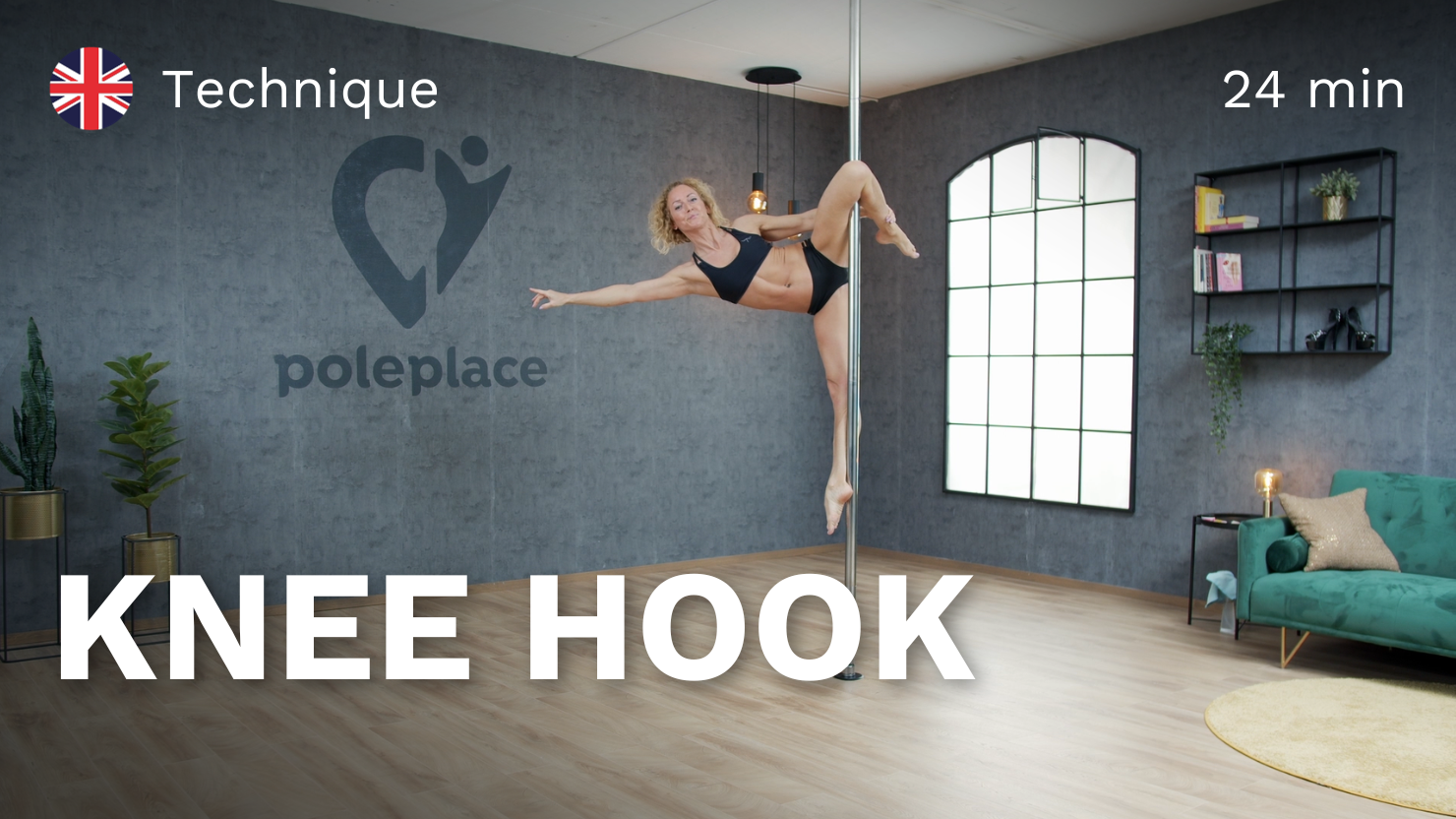
The Knee Hook pole dance move is the moment you discover that your knee can hold you while the rest of you lets go a little. One knee hooks high on the pole, the other leg reaches long underneath, and your body leans out to the side with your free arm opening wide, so you look like you are floating away from the pole.
What is the Knee Hook pole dance move?
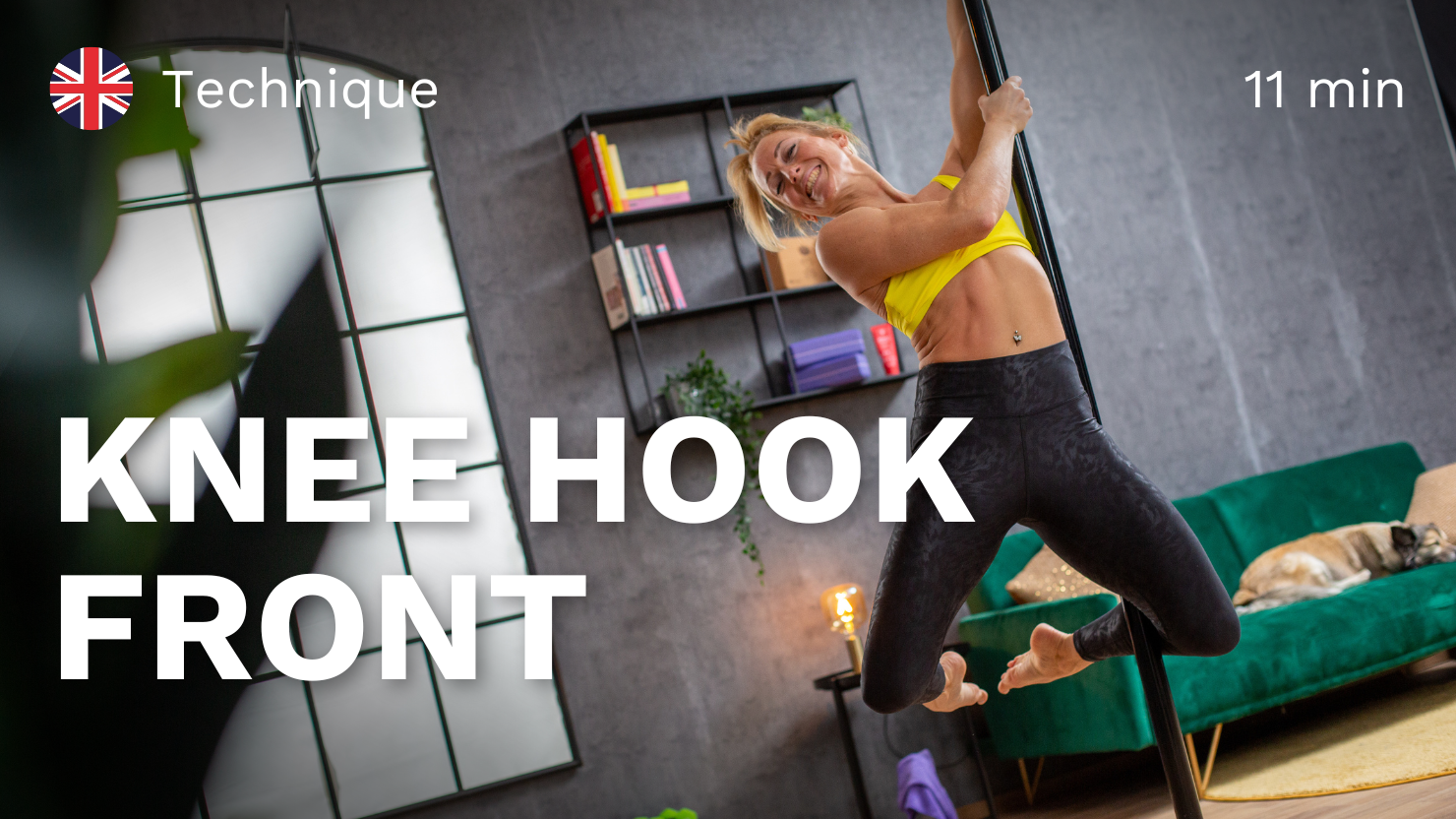
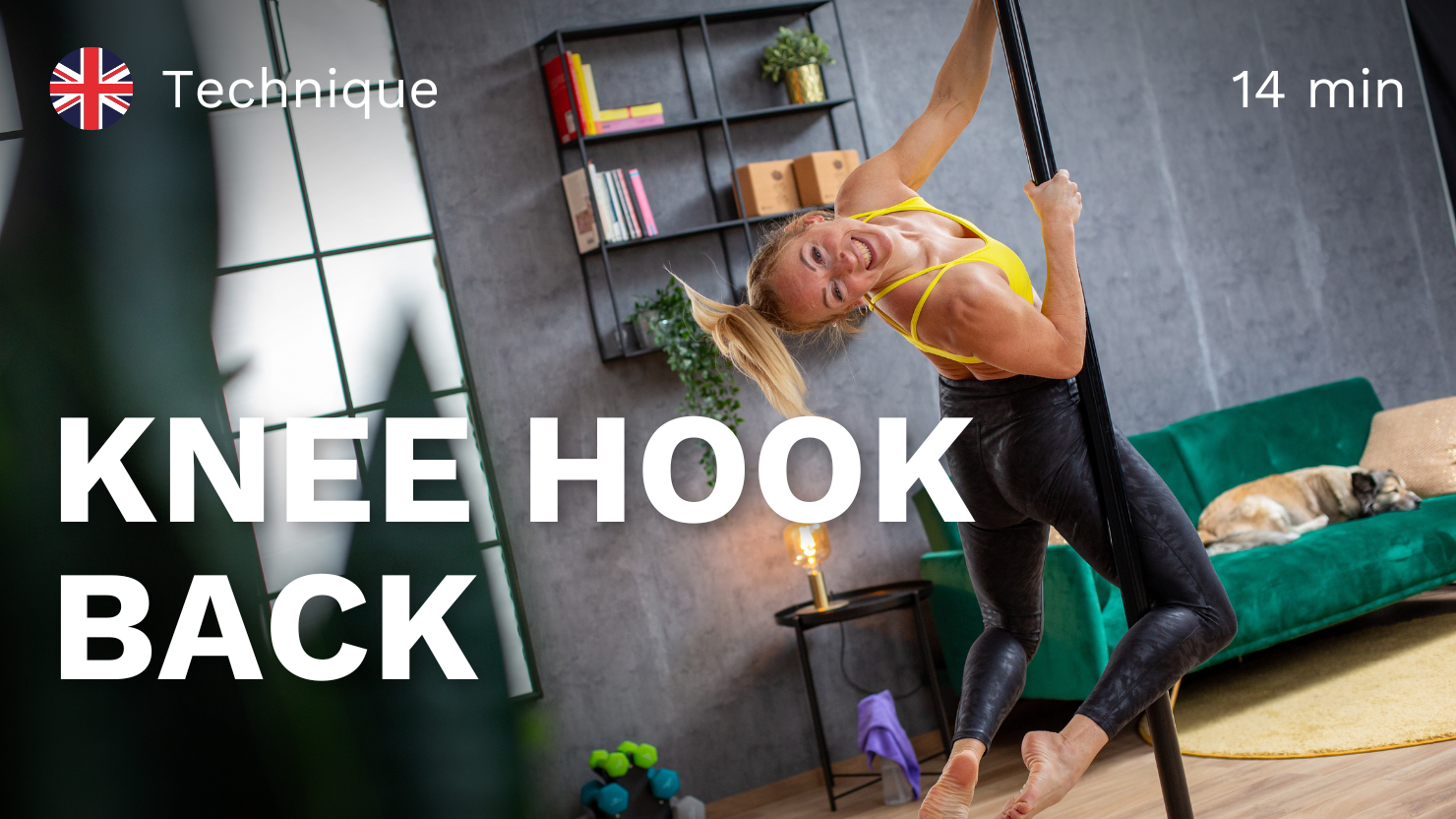
The name describes the key part of the shape: the back of one knee wraps around the pole and becomes your anchor. From there, your body leans away from the pole in a long, open line, with the other leg stretched along or away from the pole and your free arm reaching into the room. Unlike the Knee Hook Back and the Knee Hook Front, which are quick spins that stay close to the floor, the Knee Hook is a shape you settle into off the floor. It is more about leaning, opening and showing a line than about travelling around the pole.
Is the Knee Hook good for beginners?
It is a beautiful next goal once your first spins feel familiar, rather than a first-day move. The hook spins are perfect preparation, because they already teach you to trust your knee as a contact point. The new part is leaning away and opening up while you are off the floor, and that can feel exciting and a little wobbly at the same time. That wobble is part of learning it, and it settles with practice.
Knee Hook on a static or spinning pole?
On a static pole the Knee Hook is a calm pose where you can take your time and lengthen every line. On a spinning pole the shape turns slowly with you, which creates a soft, dreamy rotation. Many dancers learn it on static first and then enjoy how different it feels in spinning mode.
What it builds: leg grip, core and openness
This pole dance move strengthens the connection between your knee pit and the pole and trains your core to keep the open shape steady. It also builds something less visible: the confidence to lean away from the pole instead of hugging it. A little flexibility helps the long leg look graceful, but control matters more than range. One practical tip: bare legs or shorts so your skin can grip, and no body lotion on training days.
How you learn it at POLEPLACE
At POLEPLACE you learn the Knee Hook with the Floor-Stand-Air Method™. You explore the open shape on the floor first, then prepare the hook standing at the pole, and only then take it into the air. You practise at home, at your own pace, and the tutorial gives you every detail.
Variations and what comes next
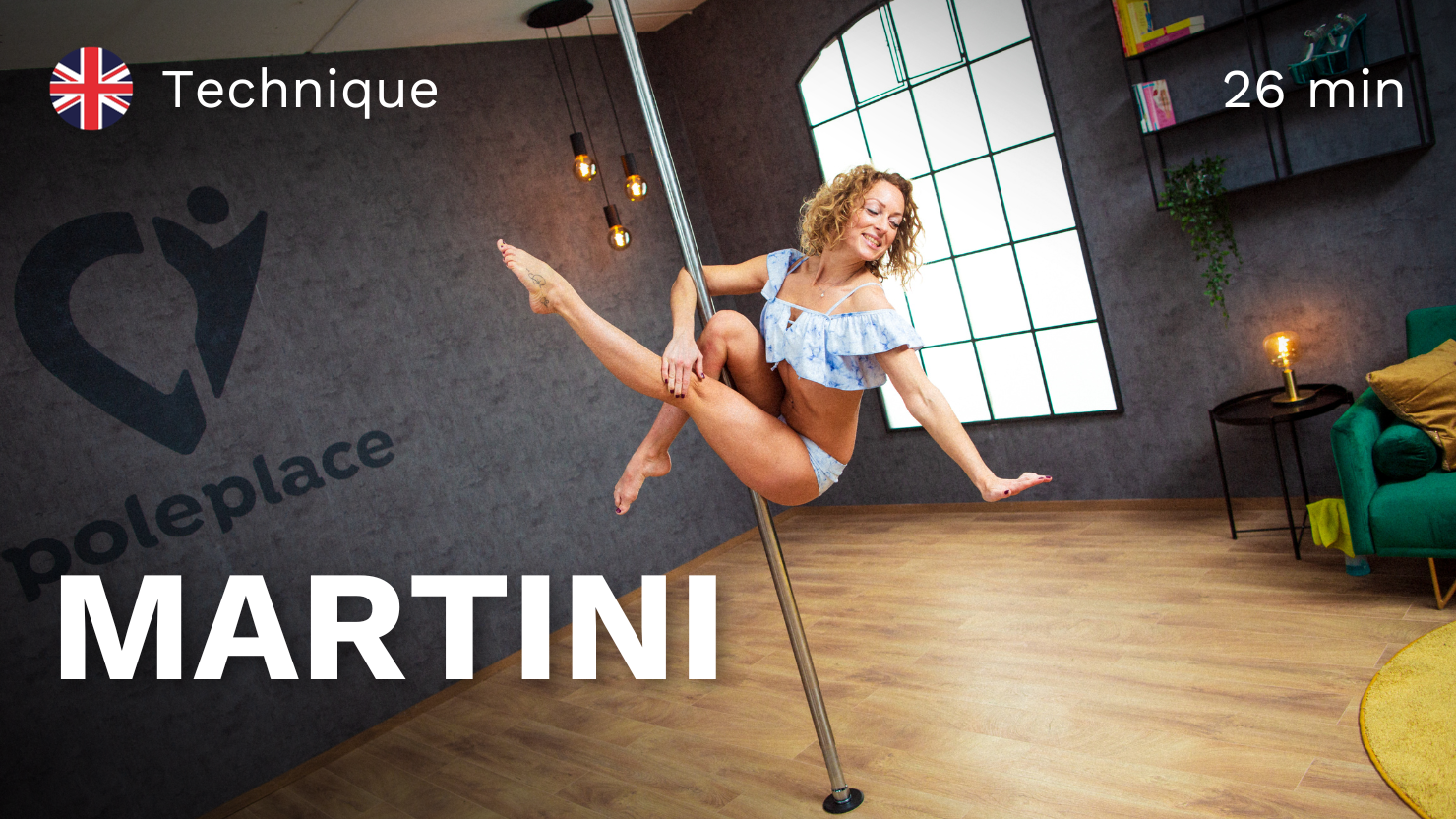
Once your Knee Hook feels steady, play with your arm, your head and your free leg to change the mood from soft to dramatic. The Baby Knee Hook is a close relative, and the Martini builds on the same hooked knee with a different leg line. Combined with the Knee Hook Front or Knee Hook Back, it turns into a small flowing sequence.